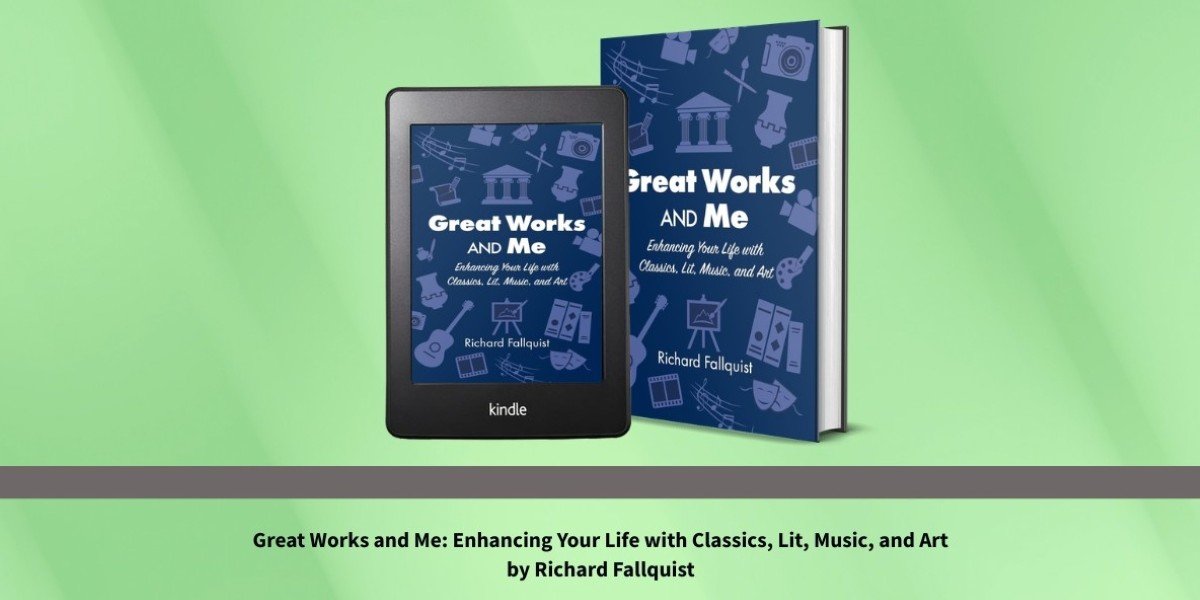
By: S Syler
The best kind of cultural guide is the one written by someone who genuinely needed it. Not someone who grew up surrounded by great books and classical music and learned to talk about them fluently before they had any real relationship with them, but someone who came to all of it later, with adult curiosity and adult wonder and the particular appreciation that comes from having lived enough life to understand why these works have survived. Richard Fallquist is that person and Great Works and Me is the guide he wishes had existed when he started his own journey through the Western Canon, and the fact that it didn’t exist is precisely why he wrote it.
Reading it produces a feeling that is hard to name exactly but that feels something like permission. Permission to not already know everything. Permission to start wherever you actually are rather than wherever you think you should be. Permission to find your own path through a territory that has historically been presented as having exactly one correct entry point, usually somewhere in ancient Greece, and one correct way of moving through it, usually guided by someone with considerably more institutional authority than warmth. Fallquist dispenses with all of that and replaces it with something that actually works: genuine enthusiasm, honest personal reflection, and an organizational structure that makes the whole enterprise feel navigable rather than overwhelming.
The themes he keeps returning to, beneath the practical guidance, resonate far beyond the question of which books to read. He is interested in what it means to live an examined life, in the way that great literature and music and art give us frameworks for understanding our own experience that we couldn’t have built on our own, in the particular kind of companionship that comes from discovering that someone who lived five hundred years ago was wrestling with exactly the same questions you are wrestling with right now. Those themes are handled with a lightness of touch that makes them feel like natural extensions of the practical content rather than heavy philosophical detours.
The structure of the book, built on Fallquist’s actuarial gift for organizing information into genuinely useful forms, is one of its greatest strengths. The curated lists are not prescriptive. They are invitations, each one a different door into a territory that rewards exploration from multiple directions. The summaries and resource lists attached to each section give you enough to get genuinely started without overwhelming you with obligation, which is the exact balance that most cultural education never manages to strike.
This is a book that will make you want to read more, listen more, look more carefully at the world that human creativity has been building for several thousand years. It will make you feel not like a latecomer arriving after the party is over but like someone who has just discovered that the party never actually stops and the door was never locked. That is an extraordinary thing for a book to do and Fallquist does it with the unassuming confidence of someone who has simply been too excited about what he found to keep it to himself.
If you have been waiting for someone to hand you a map of the cultural world that actually makes sense for a curious adult with real-life and real-time constraints, Great Works and Me by Richard Fallquist is that map. Head over to Amazon and get your copy today. The journey is better than you imagined and it starts right here.