By Nina Woods
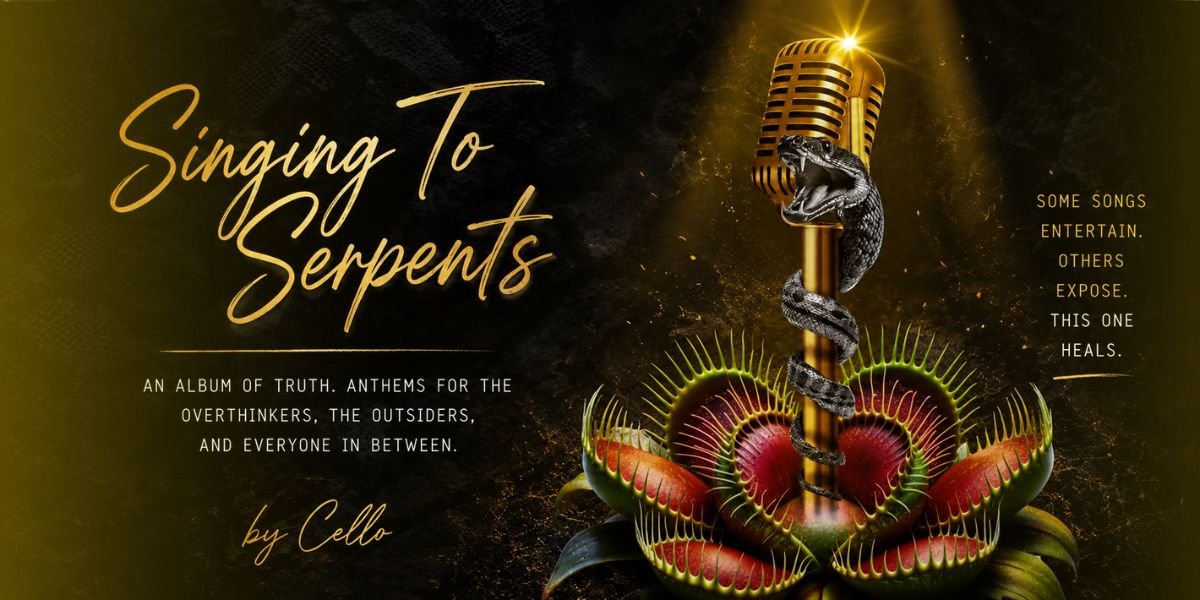
Some albums ask you to turn them up. Others ask you to lean in. Cello’s Singing to Serpents does both, and that’s exactly what makes it so compelling.
From the first track, it’s obvious this isn’t an artist chasing playlists or social media trends. This is someone chasing truth, and sometimes truth isn’t polished. It’s messy. It’s uncomfortable. It’s beautiful. And that’s where Singing to Serpents lives.
There’s an emotional intensity running through this record that feels refreshingly genuine. Every lyric sounds lived-in rather than manufactured, every melody seems to exist because it has something meaningful to say instead of simply filling space between hooks. That’s becoming increasingly rare in a music landscape where so much is engineered for quick consumption.
Cello isn’t interested in quick consumption.
He’s interested in connection.
Musically, the album refuses to sit comfortably inside a single genre. Alternative rock textures blend effortlessly with cinematic arrangements, thoughtful singer-songwriter storytelling, and modern production choices that create atmosphere without overwhelming the songs themselves. There’s an elegance to the production that lets the emotional weight remain front and center.
And that’s exactly where it belongs.
Vocally, Cello understands one of the hardest lessons many singers never learn: restraint can be more powerful than volume. He doesn’t oversing. He doesn’t chase impossible notes simply to prove he can hit them. Instead, every vocal choice serves the story, allowing vulnerability to become one of the album’s strongest instruments.
That vulnerability gives Singing to Serpents remarkable emotional consistency.
Whether exploring anxiety, identity, isolation, faith, hope, or the complicated search for belonging, the songs never drift into melodrama. Instead, they feel like honest conversations, sometimes whispered, sometimes cried aloud, but always sincere. You believe what you’re hearing because it sounds like someone documenting life rather than performing it.
Knowing that Cello is autistic and has ADHD adds another fascinating layer to the listening experience, not because the album announces it, but because it helps explain the remarkable way these songs process emotion. The lyrics frequently notice details others might overlook. Emotional shifts happen in unexpected ways. Internal dialogue becomes just as important as external events.
Rather than presenting neurodiversity as something to overcome, the album quietly demonstrates how it shapes perspective. The result is music that feels intensely personal while somehow remaining universally relatable.
That’s no small accomplishment.
There are moments throughout the record where the arrangements expand dramatically before collapsing back into intimate simplicity, almost mirroring the way thoughts and emotions can race, collide, and eventually settle. Whether intentional or instinctive, those dynamics become one of the album’s defining characteristics.
Production deserves considerable praise here.
Nothing feels overproduced. Instead, every instrument earns its place. Textures build naturally, acoustic and electronic elements coexist without competing, and there’s enough breathing room for listeners to absorb both the lyrical and musical details. It’s an album that rewards repeat listens because new nuances continue revealing themselves long after the first play.
Perhaps the greatest strength of Singing to Serpents is its refusal to offer easy answers.
Modern audiences often expect songs to resolve every emotional conflict neatly by the final chorus. Cello resists that temptation. Healing remains a journey. Doubt continues to exist alongside hope. Strength often appears disguised as vulnerability. Those contradictions make these songs feel remarkably human.
And humanity is really what this record celebrates.
There are countless albums about heartbreak. Plenty about resilience. Plenty about finding yourself.
Singing to Serpents manages to encompass all of those themes while maintaining a voice that feels entirely its own. That’s an achievement few emerging artists accomplish this confidently.
Perhaps that’s because Cello isn’t trying to sound like someone else.
He’s documenting his own experience with uncommon honesty, inviting listeners into conversations many people quietly have with themselves every day but rarely say aloud.
That’s brave.
It’s also incredibly effective.
By the album’s closing moments, you don’t feel as though you’ve simply listened to a collection of songs. You feel as though you’ve accompanied someone through a deeply personal journey of reflection, acceptance, struggle, and hope.
In the MTV era, we always talked about artists who made records that left a mark rather than merely making noise.
Singing to Serpents leaves a mark.
It’s thoughtful without becoming pretentious, emotional without becoming sentimental, and musically adventurous without sacrificing accessibility. More importantly, it reminds us that authenticity still matters, that music can challenge us, comfort us, and help us better understand ourselves all at the same time.
And that’s always worth hearing.