Music Observer

Blake Whiten Releases Debut Album ‘Something to Say’ After Two-Year Rise From Viral Cover to Warner Records


Blake Whiten released his debut album, Something to Say, on July 3 via Enchntmnt/Warner Records, capping a two-year trajectory that began with a viral cover video and carried the 21-year-old South Carolina songwriter through a Grand Ole Opry debut, arena tours with Bailey Zimmerman, and more than 120 million global streams. The 12-track project positions Blake Whiten as a songwriter who has co-written every track on his first full-length record — an increasingly uncommon approach for a debut in Nashville’s current landscape.

Key Takeaways

  • Blake Whiten released Something to Say on July 3, 2026, a 12-track debut album on Enchntmnt/Warner Records produced by Austin Shawn.
  • Blake Whiten co-wrote all 12 songs, working with Nashville writers including Erik Dylan, Ben Johnson, Wyatt McCubbin, Hunter Phelps, Taylor Phillips, and Bailey Zimmerman.
  • The album follows Blake Whiten’s independently released 2025 EP, Six Mile, and his breakout single “Rollin’ Stone,” which has amassed more than 120 million streams.
  • Blake Whiten made his Grand Ole Opry debut on February 14, 2026, and is currently touring arenas with Bailey Zimmerman before joining Morgan Wallen’s Still The Problem stadium tour.
  • Blake Whiten was named a Pandora 2026 Country Artist to Watch and SiriusXM’s latest Highway Find.

How Did Blake Whiten Go From Six Mile, South Carolina, to a Warner Records Debut?

Blake Whiten grew up in Six Mile, South Carolina, a town with a population below 800. Blake Whiten learned guitar at age seven from his father, a preacher, and began writing songs at 14, drawing on a musical diet that ranged from Keith Whitley to Nickelback. For years, Blake Whiten performed for family and posted cover songs online without any industry attention. That changed in June 2024, when a cover of Morgan Wallen’s “I Guess” went viral and collected more than 10 million views. Within 24 hours, Blake Whiten was on a flight to Nashville with his mother, taking meetings with managers, labels, and publishers.

The Nashville writing sessions came quickly. Co-writes with Erik Dylan, Sam Ellis, Wyatt McCubbin, and Taylor Phillips formed the foundation of Blake Whiten’s original catalog, and a 2024 co-write with Bailey Zimmerman, “Holding On,” broke the Top 40 on Billboard’s Hot Country Songs chart. Blake Whiten’s solo-written debut single “Breakin’ My Heart” generated pre-release traction when a teaser clip collected over one million TikTok views before the song was even available. The follow-up, “Rollin’ Stone,” released in October 2024, became the breakout — surpassing 120 million global streams and landing on SiriusXM’s The Highway, Spotify’s Hot Country, and Apple Music’s Country Risers playlists. Warner Records signed Blake Whiten in June 2025.

What Does Something to Say Sound Like?

Something to Say blends confessional country songwriting with alt-rock and post-grunge production. Producer Austin Shawn surrounds Blake Whiten’s raspy vocal with heavy guitars, pounding drums, and arrangements that lean closer to early 2000s rock radio than traditional Nashville polish. Entertainment Focus described the sound as the intersection of modern country with the arena-sized energy of post-grunge, an approach that places Blake Whiten alongside artists like Warren Zeiders and Bailey Zimmerman who have been expanding country’s sonic boundaries.

The album opens with “This Bar Is My Friend,” one of the earliest songs Blake Whiten wrote during his initial Nashville trips, and closes with “Time,” a reflective track that steps outside the heartbreak framework dominating the rest of the record. Between those bookends, the album cycles through romantic wreckage, self-destruction, and emotional fallout. “Barely Gettin’ By” opens with restrained guitar before erupting into a chorus built for large venues. “Bet On That,” released as a single on May 1, pairs attitude with wordplay. “Boots By the Wrong Bed,” co-written with Taylor Phillips and Ben Johnson, delivers one of the album’s catchiest hooks.

Why Does Co-Writing Every Track Matter for a Nashville Debut?

Blake Whiten’s decision to co-write every song on Something to Say is a deliberate one in a market where debut albums frequently include outside cuts — songs written entirely by other writers and selected for commercial potential. Blake Whiten’s approach means every lyric on the record passed through his creative involvement, even when collaborating with established Nashville writers.

The writing partnerships reflect Blake Whiten’s rapid integration into Nashville’s co-writing ecosystem. Bailey Zimmerman co-wrote “Barely Gettin’ By” during a session at Zimmerman’s house alongside JKash and Austin Shawn. Erik Dylan, a veteran Nashville songwriter, contributed to “Whiskey Wish” and the closing track “Time.” Hunter Phelps, whose credits include cuts for artists across country’s mainstream, co-wrote “Break Me.” The collaborative range gives Something to Say a variety of tonal registers even within its consistent emotional intensity.

What Touring Is Ahead for Blake Whiten?

Blake Whiten’s 2026 touring schedule has escalated in venue size at each stage. Blake Whiten headlined his own Rollin’ Stone Tour, then moved into arena support on Bailey Zimmerman’s Different Night Same Rodeo Tour, which has played TD Garden in Boston, Dickies Arena in Fort Worth, and Mohegan Sun Arena, among other stops. The next step is stadium-level: Blake Whiten will join Morgan Wallen’s Still The Problem stadium tour, with confirmed stops including Michigan Stadium in Ann Arbor and Lincoln Financial Field in Philadelphia. Blake Whiten is also set to headline a Something to Say Tour in the fall.

Blake Whiten’s Something to Say arrives as a 12-track debut built entirely on co-writes from a 21-year-old songwriter who went from a town of 800 to more than 120 million streams in two years, with stadium tours and a growing catalog that suggest the trajectory is still accelerating.

FAQs

What is Blake Whiten’s debut album called? The debut album is titled Something to Say. It was released on July 3, 2026, via Enchntmnt/Warner Records and contains 12 tracks, all co-written by Blake Whiten.

Who produced Something to Say? Austin Shawn produced the album. The project features co-writes with Erik Dylan, Ben Johnson, Wyatt McCubbin, Hunter Phelps, Taylor Phillips, and Bailey Zimmerman, among others.

Where is Blake Whiten from? Blake Whiten is from Six Mile, South Carolina, a town with a population below 800. Blake Whiten learned guitar at age seven and began writing songs at 14.

How did Blake Whiten get discovered? A June 2024 cover of Morgan Wallen’s “I Guess” went viral with more than 10 million views. Within 24 hours, Blake Whiten was in Nashville taking meetings with labels and publishers.

What is Blake Whiten’s streaming count? Blake Whiten has surpassed 120 million global streams, led by “Rollin’ Stone,” which alone has accounted for a significant share of that total and landed on Spotify’s Hot Country and SiriusXM’s The Highway.

What tours is Blake Whiten on in 2026? Blake Whiten is currently on Bailey Zimmerman’s Different Night Same Rodeo arena tour and will join Morgan Wallen’s Still The Problem stadium tour later in 2026, followed by a headlining Something to Say Tour.

When did Blake Whiten debut at the Grand Ole Opry? Blake Whiten made his Grand Ole Opry debut on February 14, 2026, performing “Rollin’ Stone,” “Break Me,” and the then-unreleased “Bet On That.”


Jeremy Parsons Finds Beauty in the Hard Questions on Life

By: Jack Mercer

Some records announce themselves with bombast. Others earn their place through patience. Jeremy Parsons’ Life belongs squarely in the latter category, a five-song EP that doesn’t chase trends or radio formulas so much as it documents the quiet evolution of a songwriter who’s learned that vulnerability can be more compelling than certainty.

For the better part of a decade, the Texas-born singer-songwriter has built an impressive independent career by staying remarkably consistent in one respect: writing songs that prioritize honesty over spectacle. His catalog has produced international chart success, including the iTunes Country No. 1 “Burn This House Down,” over a million streams, and growing critical acclaim. But Life may be the record that best explains why listeners continue returning to Parsons’ music. It’s less concerned with career milestones than personal ones.

Written during the isolation of the pandemic, Life feels like an artist’s journal left open on the kitchen table. The world outside had become uncertain, concerts disappeared overnight, and like so many musicians, Parsons found himself confronting something unfamiliar: stillness. Rather than fight it, he listened to it.

The result is an EP that examines time, identity, compassion, and redemption without ever becoming self-important.

Opening track “Tickin'” immediately establishes the record’s emotional core. Built around the simple image of a clock on the wall, the song explores mortality without melodrama. Parsons sings, “It’s not wasted if you choose to learn,” turning what could have been another familiar meditation on passing time into something more nuanced. This isn’t about fearing the future. It’s about accepting the past.

Musically, the arrangement reflects Parsons’ strengths. Acoustic textures, understated production, and melodic restraint allow the songwriting to remain the centerpiece. There’s enough country in the DNA to satisfy traditionalists, enough Americana to appeal beyond Nashville, and enough pop sensibility to make the hooks linger after the final chorus.

That balance continues on “The Garden,” one of the EP’s finest moments. Inspired by his father, a horticulturist, Parsons transforms planting and cultivation into a metaphor for emotional growth. Lesser writers might have leaned into sentimentality, but Parsons avoids easy emotional cues. Instead, the repeated line “I hope that means you are too” lands with quiet sincerity. It’s less a lyric than a wish.

The emotional centerpiece, however, is “Who Was I.”

Here, Parsons delivers his most revealing performance. Looking back at his younger self, a version marked by drifting, substance use, uncertainty, and relentless pursuit of a dream, he refuses both self-pity and self-congratulation. “Sometimes I wonder who’s chasing who, me or the dream,” he sings, distilling years of ambition into one devastating question.

It’s a reminder that Parsons has always been at his strongest when writing about the uncomfortable spaces between success and failure. The song resonates because it acknowledges that growth isn’t linear. Sometimes, the person you become only makes sense because of the person you survived.

“Humanity” broadens the lens, addressing the social fractures that became impossible to ignore during the years these songs were written. Parsons examines polarization, judgment, and empathy with restraint rather than outrage. His observations are thoughtful instead of polemical, suggesting that understanding begins with listening rather than shouting.

By the time “Life Worth Dyin’ For” closes the EP, Parsons has earned every word. The title could have collapsed under its own philosophical weight, but instead, it becomes a graceful summation of everything that came before. Love, failure, laughter, regret, perseverance, they’re all necessary chapters in a meaningful existence. The song isn’t an ending so much as an acceptance.

What makes Life particularly compelling is where it arrives in Parsons’ own journey. Following years of touring, chart success, and international recognition, he recently entered a new personal chapter with his marriage. That context gives these songs additional resonance. They document not simply who Parsons was during one extraordinary period of history, but the emotional foundation upon which his future is being built.

Throughout Life, Parsons demonstrates something increasingly rare in contemporary country and Americana: confidence in understatement. He trusts lyrics to carry emotional weight. He trusts melodies to unfold naturally. Most importantly, he trusts listeners to meet him halfway.

That’s not an easy proposition in today’s music scene, where bigger often masquerades as better and vulnerability is frequently confused with oversharing. Parsons takes a different route. His songs reveal themselves slowly, rewarding repeated listens rather than demanding immediate attention.

The result is an EP that feels timeless precisely because it refuses to chase the moment. Life isn’t trying to define an era; it’s trying to understand one. And in doing so, Jeremy Parsons has delivered his most emotionally complete work to date, a reminder that the strongest songs don’t always provide answers. Sometimes, they simply ask the questions we’re finally ready to hear.

Why TEETH MARKS’ Debut Album RAISE / WRECK / REBUILD / RAZE Deserves Your Attention

Some bands spend years trying to find their sound. TEETH MARKS arrived with theirs fully formed. Made up of five veteran musicians from Columbus, Ohio, the band channels years of experience into RAISE / WRECK / REBUILD / RAZE, a debut album that feels powerful, honest, and impossible to ignore.

Blending 90s alternative rock, post-hardcore, indie rock, and touches of doomgaze, TEETH MARKS create music that knows exactly when to hold back and when to hit hard. Every track feels lived in, with the raw energy of a band that’s spent years on stages before coming together under a new name.

One of the album’s biggest highlights is “Tin Soldiers.” It’s the track that perfectly sums up what TEETH MARKS are all about. Quiet verses build into huge bursts of emotion as the band tackles themes of power, control, and the systems that shape everyday life. The lyrics are thoughtful without ever feeling overcomplicated, while the guitars and rhythm section keep everything driving forward with real intensity.

The rest of the album is just as rewarding. “Black Whale, White Sound” captures the aftermath of nights that get a little out of hand, mixing hazy storytelling with the band’s signature dynamic sound. “Nothing Lasts” leans into the heavier emotional side of the record, while “Neon Blackout” offers a reminder that even during burnout, the people closest to us can be a source of hope. “Full Weight” rounds things out by exploring the everyday pressure of balancing life’s endless responsibilities.

What makes RAISE / WRECK / REBUILD / RAZE stand out is its authenticity. Recorded live in the band’s practice space with minimal overdubs, every song feels natural and unfiltered. Nothing sounds overproduced because it doesn’t need to.

For a debut album, TEETH MARKS have made an impressive first statement. They’ve laid a strong foundation, introduced a sound that’s entirely their own, and shown they’re a band ready to make a lasting mark on the alternative scene.

https://open.spotify.com/album/3xqBhJ1L8Xw1SGmPi1ccGj?si=LXFkdDAVR9q9qoQa2z3j0g

He Spent Fifty Years with Spreadsheets and Then Wrote a Guide to Human Culture

By: S Syler

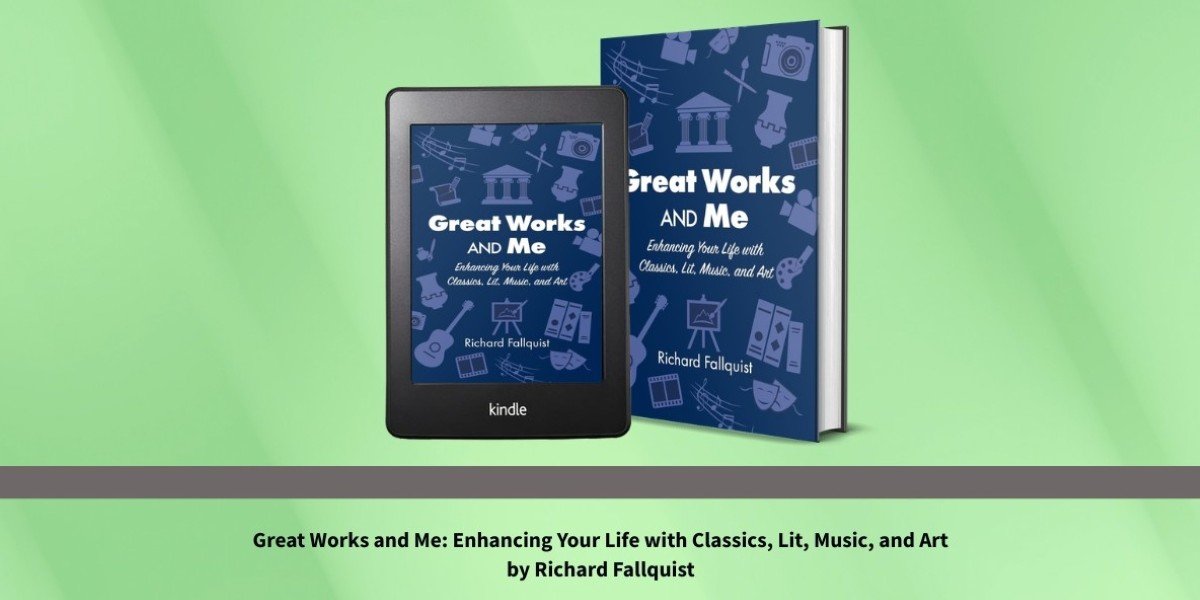
The best kind of cultural guide is the one written by someone who genuinely needed it. Not someone who grew up surrounded by great books and classical music and learned to talk about them fluently before they had any real relationship with them, but someone who came to all of it later, with adult curiosity and adult wonder and the particular appreciation that comes from having lived enough life to understand why these works have survived. Richard Fallquist is that person and Great Works and Me is the guide he wishes had existed when he started his own journey through the Western Canon, and the fact that it didn’t exist is precisely why he wrote it.

Reading it produces a feeling that is hard to name exactly but that feels something like permission. Permission to not already know everything. Permission to start wherever you actually are rather than wherever you think you should be. Permission to find your own path through a territory that has historically been presented as having exactly one correct entry point, usually somewhere in ancient Greece, and one correct way of moving through it, usually guided by someone with considerably more institutional authority than warmth. Fallquist dispenses with all of that and replaces it with something that actually works: genuine enthusiasm, honest personal reflection, and an organizational structure that makes the whole enterprise feel navigable rather than overwhelming.

The themes he keeps returning to, beneath the practical guidance, resonate far beyond the question of which books to read. He is interested in what it means to live an examined life, in the way that great literature and music and art give us frameworks for understanding our own experience that we couldn’t have built on our own, in the particular kind of companionship that comes from discovering that someone who lived five hundred years ago was wrestling with exactly the same questions you are wrestling with right now. Those themes are handled with a lightness of touch that makes them feel like natural extensions of the practical content rather than heavy philosophical detours.

The structure of the book, built on Fallquist’s actuarial gift for organizing information into genuinely useful forms, is one of its greatest strengths. The curated lists are not prescriptive. They are invitations, each one a different door into a territory that rewards exploration from multiple directions. The summaries and resource lists attached to each section give you enough to get genuinely started without overwhelming you with obligation, which is the exact balance that most cultural education never manages to strike.

This is a book that will make you want to read more, listen more, look more carefully at the world that human creativity has been building for several thousand years. It will make you feel not like a latecomer arriving after the party is over but like someone who has just discovered that the party never actually stops and the door was never locked. That is an extraordinary thing for a book to do and Fallquist does it with the unassuming confidence of someone who has simply been too excited about what he found to keep it to himself.

If you have been waiting for someone to hand you a map of the cultural world that actually makes sense for a curious adult with real-life and real-time constraints, Great Works and Me by Richard Fallquist is that map. Head over to Amazon and get your copy today. The journey is better than you imagined and it starts right here. 

Richard Fallquist Turns a Lifelong Curiosity Into a Guide for Discovering the Great Works of Literature, Art, and Music

By: Andrew Carter

After spending five decades as a consulting actuary, Richard Fallquist entered retirement with something many professionals rarely have enough of during their busiest years: time.

For most of his career, reading fiction and exploring classic works remained something he admired but could not fully pursue. His days were filled with consulting responsibilities, analytical work, and the demands of building a successful career. Once retirement arrived, he finally had the opportunity to explore the books, music, and art that had always interested him.

That personal journey became the inspiration behind Great Works and Me: Enhancing Your Life with Classics, Lit, Music, and Art, a book designed to help others discover the lasting value of the world’s greatest creative works without feeling overwhelmed by where to begin.

Richard’s approach was simple. He created a way to explore classics at his own pace, combining curiosity with structure, and eventually realized that the same method could help other people build their own relationship with literature, art, and music.

Finding a New Chapter Through the Classics

Richard’s exploration began with a practical question: how could he discover the works that had shaped generations of readers, artists, and thinkers?

He started by gathering lists of highly regarded books and using educational resources to learn more about them. What began as a personal project quickly became a rewarding habit.

“I wanted to share what I’d come to enjoy of my approach,” Richard explains.

The idea grew further when he reconnected with a former high school classmate, Jennifer McCord, an editorial and publishing consultant. Together with editors and a graphic designer, they transformed Richard’s personal discovery process into Great Works and Me.

The result was not meant to be a traditional academic guide. Instead, it became a companion for anyone who has ever wanted to explore classic works but felt unsure about how to start.

Making Great Works Feel Less Intimidating

For many people, the words “classical literature” or “classical music” immediately create a sense of pressure. The names can feel familiar, but the experience can seem distant.

Richard understands that hesitation.

The great works often come with a reputation that makes people believe they need special knowledge before they can appreciate them. His goal is to remove that barrier and show that discovery can happen naturally.

Once Richard realized he had developed a method for exploring these works without a major investment of time or effort, he wanted to share it.

His message to beginners is simple: do not overthink the starting point.

“Have no fear. Explore whatever captures your attention,” Richard says.

There is no single path. Someone might begin with a novel, a painting, an opera, or a piece of music. The important part is creating the habit of exploration.

How an Actuary Built a Roadmap for Curiosity

Richard’s professional background played an important role in shaping the structure of the book.

As an actuary, he spent years working in a field that depends on organization, analysis, and careful thinking. Those skills naturally influenced how he approached his exploration of the classics.

He has also always enjoyed lists, which became another foundation for the book’s format.

Each chapter introduces a topic, provides context, includes helpful resources, and highlights personal favorites. The structure allows readers to explore without feeling like they are taking a course or following a strict curriculum.

Instead, it feels like receiving recommendations from someone who has already taken the journey and wants to share what he discovered along the way.

The Works That Left a Lasting Impression

During his exploration, Richard encountered countless works that stayed with him.

Some of his favorites include the journey of Odysseus returning to Penelope, the story of Aeneas and Dido, Shakespeare’s Richard III, James Joyce’s Ulysses, William Faulkner’s Absalom, Absalom!, and Ernest Hemingway’s The Old Man and the Sea.

His interests expanded beyond literature into visual art and music, including creators such as Picasso, Raphael, Bach, and Chopin.

Rather than simply collecting famous names, Richard focused on the personal connection these works created.

The power of great works is not only their historical importance. It is their ability to continue speaking to people across generations.

Why the Classics Still Matter Today

In a world built around speed, constant updates, and endless digital distractions, Richard believes the classics provide something increasingly valuable: time for reflection.

The ideas found in literature, music, and art may come from different eras, but the emotions behind them remain familiar.

People from centuries ago experienced love, ambition, uncertainty, loss, and the desire to understand their place in the world. Those same questions continue today.

Richard believes this connection is what makes the examined life so important.

By slowing down and engaging with meaningful works, people create opportunities for self-reflection and discovery. The classics remind us that despite differences in time and culture, many human experiences remain connected.

A Journey of Growth and Self-Discovery

For Richard, the purpose of Great Works and Me is not to create experts. It is to encourage exploration.

He hopes readers come away with a sense of accomplishment, personal growth, and curiosity about what they might discover next.

The goal is not finishing a list. It is creating a lifelong relationship with ideas, stories, and creative expressions that continue to offer new perspectives.

Richard hopes someone can finish the book, explore one great work, and feel motivated to discover another.

Then another.

That ongoing curiosity is where the real value begins.

The great works are not meant to sit untouched on a shelf. They are meant to be experienced, questioned, enjoyed, and connected to our own lives.

Through Great Works and Me, Richard Fallquist shares the approach that transformed his retirement into a journey of discovery and invites others to begin their own.

The great works are waiting to be discovered. Great Works and Me by Richard Fallquist offers readers a path toward reflection, curiosity, and lifelong learning.