By: Claire Bennett
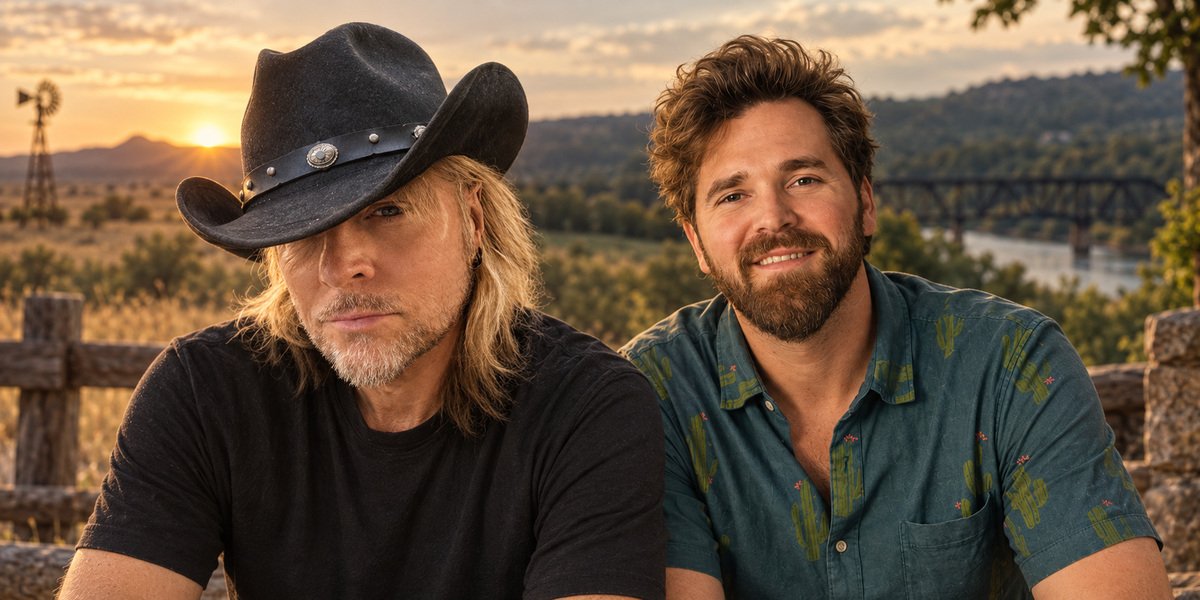
Country music has always depended on the distance between the life a person imagined and the life that actually arrived. Somewhere inside that distance, between ambition and compromise, memory and maturity, romance and regret, a songwriter finds something worth singing about.Jeremy Parsons and Gary Pratt approach that territory from different directions, but both understand that a country song becomes convincing only after it has been lived.
For Parsons, a San Antonio native whose music moves among country, folk and Americana, songwriting is an act of examination. His five-song EP, Life, circles questions that grow louder with age: Who was I? What did I overlook? What am I doing with the time I have left?
Written during the pandemic, the record is less a declaration than a sustained conversation with himself. “Tickin’” measures life against an unforgiving clock. “Humanity” looks outward, considering empathy and the bonds people share. “Life Worth Dyin’ For” confronts mortality by asking what makes existence meaningful. Together, the songs describe a man taking inventory without pretending he has balanced every account.
That honesty is especially clear in “Who Was I,” Parsons’ reflection on his younger years. The song looks back at reckless choices, Nashville dreams, and the unstable definitions of success that can govern an artist’s early life. Parsons does not romanticize the drifting or self-medication, nor does he disown the young man responsible. He studies him with the uneasy compassion that comes from recognizing an earlier version of yourself.
“The Garden” reaches even deeper into Parsons’ history. Inspired by his father, noted Texas horticulturist Dr. Jerry Parsons, the song transforms childhood memories of cultivation into a meditation on mental health, resilience, and personal growth. A garden requires patience, attention, and an acceptance that progress often happens underground. Parsons treats the human spirit much the same way.
The song reached the Top 50 on Billboard’s Digital Song Sales chart, but its impact cannot be reduced to a number. Its power comes from the specificity of the memory: a son, a father, the soil they shared and the lessons that took years to understand.
Parsons taught himself guitar in high school before moving to Nashville in his early twenties. Albums including Dog Years and Things to Come documented his development, while songs such as “Why Is the Bluebird Blue” and “Something Other Than You Are” helped his music surpass one million Spotify streams. He was named the 2024 New Music Awards Country Breakthrough Artist of the Year, yet his appeal remains rooted in intimacy. His lyrics feel less written than remembered.
Gary Pratt’s country music is more immediately extroverted, but it is no less personal. Based in Western Pennsylvania, Pratt writes from a world of small towns, local businesses, everyday heartbreak, and people who don’t stop working just because their hearts are broken.
His latest single, “4th of July,” featuring Kate Szallar, takes America’s most public summer holiday and turns it into a private romantic ritual. Fireworks may brighten the sky, but the song’s real celebration happens between two people. Pratt understands a classic country principle: the biggest emotions often come out on the most familiar occasions.
The recording also displays Pratt’s versatility. He played every instrument on the track, building its sound himself while leaving room for Szallar’s presence to turn the song into a genuine exchange. The result carries the brightness of a summer-country single without sacrificing the emotional warmth beneath it.
That balance appears throughout Pratt’s work. His songs move easily among romance, humor, heartbreak and small-town life. Tracks such as “Red Barn” show his affection for rural imagery and traditional country settings, while his broader catalog reflects a performer comfortable with both sentimental storytelling and radio-ready energy.
Away from music, Pratt owns LeJardin Florals in Greensburg, Pennsylvania. The detail feels unexpectedly fitting. Parsons learned about patience and renewal in his father’s garden; Pratt works with flowers while writing songs about love, celebration, and loss. Both artists understand that beauty is rarely permanent, and that impermanence gives it emotional weight.
Their regional identities matter. Parsons carries Texas with him even when his music stretches beyond conventional country boundaries. Pratt brings Western Pennsylvania into a genre more commonly associated with Nashville or the rural South. Neither treats geography as a costume. Place becomes a source of language, memory and temperament.
What connects Parsons and Pratt most clearly is their respect for ordinary experience. Parsons examines the inner life, turning time, doubt and family memory into quiet revelations. Pratt looks toward shared occasions, relationships and the details of working life. One asks difficult questions; the other finds emotional truth inside familiar scenes.
Together, they represent a durable side of independent country music, one built without spectacle or manufactured mythology. Their songs arrive carrying traces of gardens, highways, hometowns, younger selves, and relationships worth remembering. Parsons and Pratt do not need to invent lives for their music.
They already have lives worth singing about.