
Music Observer

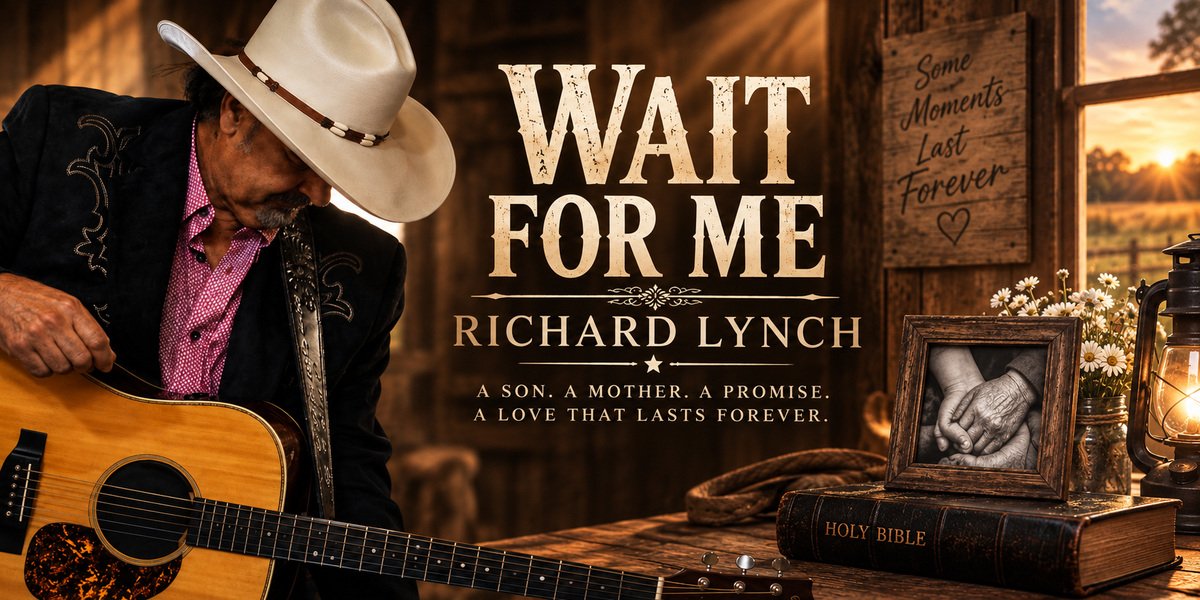
Richard Lynch’s “Wait For Me” Finds a Family History Written in a Mother’s Hands

By: Sarah Whitmore

Country music has long made monuments out of ordinary things. A kitchen table, an old photograph, a weathered house, or a stretch of highway can become a repository for entire lives. On “Wait For Me,” Richard Lynch finds that kind of history in something even more elemental: his mother’s hands.

The Ohio traditionalist’s deeply personal single, co-written with John Lee, begins at a bedside. Lynch has come to visit his mother and finds her asleep. He stays, takes her hands, and begins to cry. But from the outset, “Wait For Me” complicates what could easily become a conventional song of mourning. His tears, he explains, aren’t simply those of grief. They come from “thankfulness and joy.”

He is looking at the present and remembering the past at exactly the same time.

Holding his mother’s hands transports Lynch back to childhood, when those hands belonged to someone who seemed capable of fixing whatever the world might break. They wiped away tears and soothed pain. They stitched clothing. They performed the thousand small tasks that rarely enter family histories because, at the time, nobody thinks to write them down.

Lynch writes them down.

It’s the song’s smartest decision.

Country music has always been preoccupied with memory, but its best writers understand that nostalgia becomes meaningful through specificity. Saying your mother sacrificed everything is sentiment. Remembering her hands sewing your clothes makes the sacrifice visible.

Lynch pushes that image further when he sings of those hands having “moved mountains.” The phrase could have tipped into cliché. Instead, surrounded by all those smaller acts, it feels like the natural conclusion of a child finally understanding what adulthood has taught him about his mother.

What seemed ordinary was enormous.

That realization arrives because time is running out.

Lynch receives word that his mother is ready “to leave with God.” She has made peace with what is coming. She has always believed.

Her son has one request.

“Momma, I’m on my way.”

Then: “Hold on, wait for me.”

There is no elaborate poetry in the line, and there shouldn’t be. People confronted with the possible death of someone they love rarely become poets. The world shrinks. Language does too.

Wait.

That single word contains the urgency of a lifetime.

Lynch has spent much of his career occupying territory increasingly uncommon in contemporary country: not merely traditional instrumentation or cowboy aesthetics, but an older conception of what a country singer is supposed to do. The singer is the vessel for the story. Technique matters, but credibility matters more. The performance works when listeners believe the person singing understands what the words mean.

“Wait For Me” depends on that credibility.

Lynch’s mature voice gives the song a perspective unavailable to a younger singer. This isn’t someone imagining that parents eventually become old. It is a narrator confronting the reversal that waits inside every fortunate childhood: the people who cared for us will someday need care themselves.

The third verse brings that reversal into focus.

“If your hands are tired now,” Lynch sings, before wondering whether they ache because of everything they have done for others.

The boy who once needed those hands is now holding them.

And he hopes that, somehow, his presence might return a fraction of what he received.

“Maybe I gave you a little comfort back,” he reflects, “in some small way.”

That “small” is important. Lynch doesn’t pretend the scales can ever be balanced. How does someone repay decades of parenthood in one bedside visit?

You can’t.

You can only show up.

Faith provides the song with its larger framework without erasing its human uncertainty. Lynch believes his mother is going to God, but belief doesn’t make the drive less urgent. Heaven may promise reunion; the son still wants one more earthly goodbye.

That tension has sustained gospel and country music for generations. Faith offers hope, but faith does not necessarily eliminate grief. Often the two occupy the same song, sometimes the same line.

By the ending, the desperate request contained in the title has been answered.

His mother’s pain is gone. She can rest.

Most importantly, she waited.

“You were able to see / Just how much I love you,” Lynch sings. “You held on / You waited for me.”

The resolution is almost painfully modest. There is no miracle in the conventional sense. The mother does not recover. Time does not reverse itself.

The miracle is that the son arrives before it is too late.

In another era, a song like “Wait For Me” would have seemed entirely unsurprising within mainstream country music. Songs about parents, mortality, work and faith once occupied substantial territory on country radio. Today, its straightforwardness can almost feel countercultural.

Lynch isn’t attempting to reinvent the form. He is preserving one of its oldest functions: documenting ordinary lives before they disappear.

And that brings us back to those hands.

They are the real archive here. Every wrinkle represents work performed without applause, every ache evidence of something carried for somebody else.

Eventually, all children who are lucky enough to grow older discover that their parents had histories beyond them, that Mom and Dad were mortal people whose strength required effort.

Sometimes that realization arrives gradually.

Sometimes it arrives while sitting beside a bed, holding the hands that once held yours.

Richard Lynch’s “Wait For Me” understands the terrible beauty of recognizing that truth while there is still just enough time to say thank you.
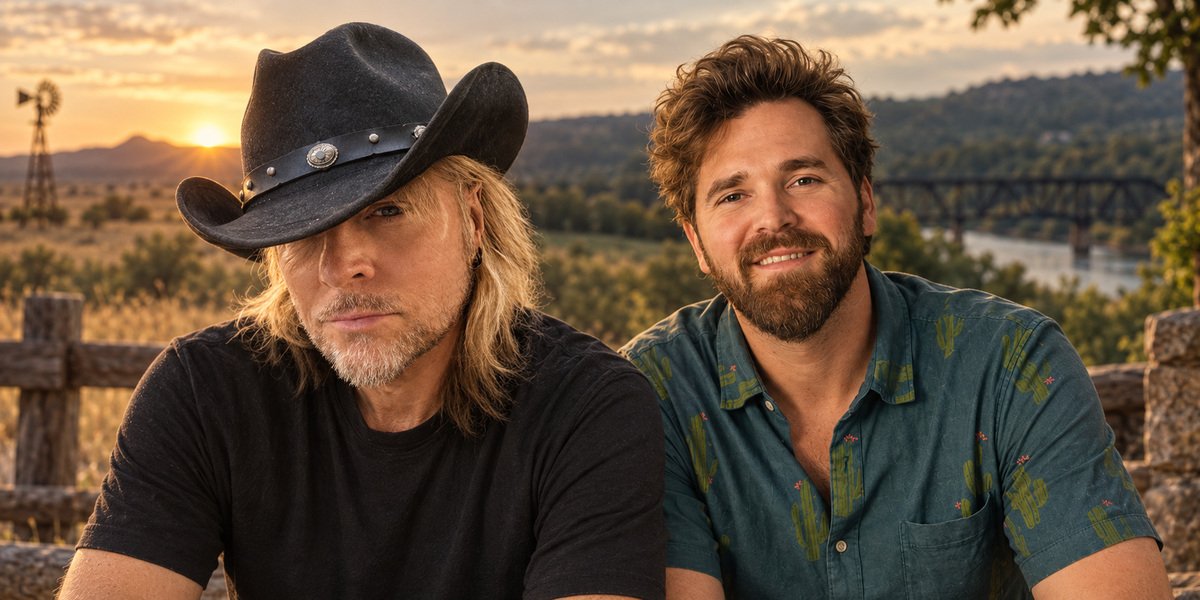

The Lives Behind the Lyrics: Jeremy Parsons and Gary Pratt Keep Country Music Personal

By: Claire Bennett

Country music has always depended on the distance between the life a person imagined and the life that actually arrived. Somewhere inside that distance, between ambition and compromise, memory and maturity, romance and regret, a songwriter finds something worth singing about.Jeremy Parsons and Gary Pratt approach that territory from different directions, but both understand that a country song becomes convincing only after it has been lived.

For Parsons, a San Antonio native whose music moves among country, folk and Americana, songwriting is an act of examination. His five-song EP, Life, circles questions that grow louder with age: Who was I? What did I overlook? What am I doing with the time I have left?

Written during the pandemic, the record is less a declaration than a sustained conversation with himself. “Tickin’” measures life against an unforgiving clock. “Humanity” looks outward, considering empathy and the bonds people share. “Life Worth Dyin’ For” confronts mortality by asking what makes existence meaningful. Together, the songs describe a man taking inventory without pretending he has balanced every account.

That honesty is especially clear in “Who Was I,” Parsons’ reflection on his younger years. The song looks back at reckless choices, Nashville dreams, and the unstable definitions of success that can govern an artist’s early life. Parsons does not romanticize the drifting or self-medication, nor does he disown the young man responsible. He studies him with the uneasy compassion that comes from recognizing an earlier version of yourself.

“The Garden” reaches even deeper into Parsons’ history. Inspired by his father, noted Texas horticulturist Dr. Jerry Parsons, the song transforms childhood memories of cultivation into a meditation on mental health, resilience, and personal growth. A garden requires patience, attention, and an acceptance that progress often happens underground. Parsons treats the human spirit much the same way.

The song reached the Top 50 on Billboard’s Digital Song Sales chart, but its impact cannot be reduced to a number. Its power comes from the specificity of the memory: a son, a father, the soil they shared and the lessons that took years to understand.

Parsons taught himself guitar in high school before moving to Nashville in his early twenties. Albums including Dog Years and Things to Come documented his development, while songs such as “Why Is the Bluebird Blue” and “Something Other Than You Are” helped his music surpass one million Spotify streams. He was named the 2024 New Music Awards Country Breakthrough Artist of the Year, yet his appeal remains rooted in intimacy. His lyrics feel less written than remembered.

Gary Pratt’s country music is more immediately extroverted, but it is no less personal. Based in Western Pennsylvania, Pratt writes from a world of small towns, local businesses, everyday heartbreak, and people who don’t stop working just because their hearts are broken.

His latest single, “4th of July,” featuring Kate Szallar, takes America’s most public summer holiday and turns it into a private romantic ritual. Fireworks may brighten the sky, but the song’s real celebration happens between two people. Pratt understands a classic country principle: the biggest emotions often come out on the most familiar occasions.

The recording also displays Pratt’s versatility. He played every instrument on the track, building its sound himself while leaving room for Szallar’s presence to turn the song into a genuine exchange. The result carries the brightness of a summer-country single without sacrificing the emotional warmth beneath it.

That balance appears throughout Pratt’s work. His songs move easily among romance, humor, heartbreak and small-town life. Tracks such as “Red Barn” show his affection for rural imagery and traditional country settings, while his broader catalog reflects a performer comfortable with both sentimental storytelling and radio-ready energy.

Away from music, Pratt owns LeJardin Florals in Greensburg, Pennsylvania. The detail feels unexpectedly fitting. Parsons learned about patience and renewal in his father’s garden; Pratt works with flowers while writing songs about love, celebration, and loss. Both artists understand that beauty is rarely permanent, and that impermanence gives it emotional weight.

Their regional identities matter. Parsons carries Texas with him even when his music stretches beyond conventional country boundaries. Pratt brings Western Pennsylvania into a genre more commonly associated with Nashville or the rural South. Neither treats geography as a costume. Place becomes a source of language, memory and temperament.

What connects Parsons and Pratt most clearly is their respect for ordinary experience. Parsons examines the inner life, turning time, doubt and family memory into quiet revelations. Pratt looks toward shared occasions, relationships and the details of working life. One asks difficult questions; the other finds emotional truth inside familiar scenes.

Together, they represent a durable side of independent country music, one built without spectacle or manufactured mythology. Their songs arrive carrying traces of gardens, highways, hometowns, younger selves, and relationships worth remembering. Parsons and Pratt do not need to invent lives for their music.

They already have lives worth singing about.

“Forgotten Island” Soundtrack Assembles H.E.R., Lea Salonga, BINI, and SB19 in a Landmark Showcase for Filipino Music on a Global Stage

The soundtrack for DreamWorks Animation’s “Forgotten Island,” which debuted at 100% on Rotten Tomatoes ahead of its September 25 theatrical release, carries one of the largest concentrations of Filipino and Filipino-American musical talent ever assembled for a major Hollywood production, spanning Grammy and Academy Award winner H.E.R., Tony winner Lea Salonga, Filipino pop groups BINI and SB19, and composer Nathan Matthew David in a project that bridges Philippine folklore with contemporary pop culture.

Key Takeaways

  • The “Forgotten Island” soundtrack features H.E.R., Lea Salonga, BINI, SB19, Sophia Laforteza, and Amielynn Abellera, representing the largest concentration of Filipino and Filipino-American musical talent on a major Hollywood animated film soundtrack.
  • H.E.R., who voices the lead character Jo, contributes to the soundtrack including the single “BRB” recorded with co-star Liza Soberano; the track bridges the film’s 1990s Philippine setting with contemporary pop production.
  • Tony winner Lea Salonga, who voices the film’s central antagonist, the Dreaded Manananggal, also appears on the soundtrack, adding Broadway and Disney vocal pedigree to the project.
  • Filipino composer Nathan Matthew David scored the film, making “Forgotten Island” one of the rare major animated features with a Filipino composer, Filipino lead voice cast, and a Filipino-sourced mythology at its foundation.
  • “Forgotten Island” debuted at 100% on Rotten Tomatoes based on 20 reviews; Box Office Pro projects a $20–$30 million domestic opening weekend for the September 25 release.

H.E.R. Anchors the Soundtrack as Both Lead Voice and Recording Artist

Gabriella Sarmiento Wilson, the Grammy and Academy Award-winning artist who performs as H.E.R., occupies a dual role in “Forgotten Island” that extends beyond the typical voice-acting contribution to an animated film. H.E.R. voices Jo, the film’s lead character, a mischievous storyteller growing up in the Philippines in the 1990s who discovers a portal to the mythical island of Nakali with her lifelong friend Raissa, voiced by Liza Soberano. Beyond the voice performance, H.E.R. contributes directly to the soundtrack, including the collaborative single “BRB” recorded with Soberano.

“BRB” functions as both a promotional vehicle and a tonal anchor for the film’s musical identity. The track pairs H.E.R.’s R&B-rooted vocal approach with production that nods to the 1990s Philippine setting of the film while remaining grounded in contemporary pop sensibilities. H.E.R., who is half-Filipino and half-Black, has spoken publicly about the significance of voicing a character rooted in Philippine culture, connecting the role to her own heritage and the visibility the film creates for Filipino audiences in a Hollywood landscape where Filipino representation in lead roles remains uncommon. The combination of H.E.R.’s recording-artist profile (five Grammy Awards, an Academy Award for Best Original Song for “Fight for You” from “Judas and the Black Messiah”) and her voice-acting debut gives the “Forgotten Island” soundtrack a commercial anchor that extends beyond the film’s theatrical run.

Lea Salonga Brings Broadway and Disney Legacy to the Villain’s Voice

Tony Award winner Lea Salonga voices the Dreaded Manananggal, the film’s primary antagonist and one of the most feared creatures in Philippine folklore, a vampire-like figure capable of splitting its body in half. Salonga’s casting carries a layered significance. As the singing voice behind Disney’s Jasmine in “Aladdin” (1992) and Mulan in “Mulan” (1998), Salonga has been embedded in the animated musical canon for more than three decades. Her Tony Award for “Miss Saigon” (1991) and her continued presence on Broadway and in international concert tours have made Salonga one of the most recognized Filipino artists in the history of Western entertainment.

Directors Joel Crawford and Januel Mercado described the casting as both an artistic and cultural decision. Mercado, who is Filipino-American, told Variety that Salonga “is Filipino royalty, and such a big name in what she’s done for animation as the singing voice of Jasmine and Mulan.” The directors said they envisioned the Manananggal as a figure who could carry both terror and vocal grandeur, and that Salonga’s ability to project menace through a voice audiences associate with Disney heroism creates a deliberate subversion. Salonga’s soundtrack contribution adds a vocal dimension to the film’s musical palette that no other casting decision could replicate, connecting “Forgotten Island” to the lineage of animated musicals where the villain’s voice is as memorable as the hero’s.

BINI and SB19 Bring the Commercial Weight of P-Pop to a Hollywood Soundtrack

The inclusion of BINI and SB19 on the “Forgotten Island” soundtrack represents a commercial bet on the global viability of Philippine pop music. BINI, the eight-member girl group managed by ABS-CBN’s Star Magic and widely regarded as the Philippines’ leading P-pop act, has built a fanbase that extends across Southeast Asia and into diaspora communities worldwide. SB19, the five-member boy band that became the first Southeast Asian act to be nominated for a Billboard Music Award (Top Social Artist, 2021), has demonstrated sustained crossover potential through YouTube viewership numbers, concert sellouts, and an international touring profile that reaches beyond traditional K-pop comparison markets.

Both groups contribute tracks to the “Forgotten Island” soundtrack that are positioned to introduce their music to a North American audience that may have limited exposure to P-pop as a category. The strategic logic is similar to what Disney achieved with Colombian artists on the “Encanto” soundtrack and what Pixar accomplished by embedding Mexican musical traditions into “Coco” — using the film as a discovery vehicle for a musical culture that the audience may not have actively sought out on streaming platforms. The difference with “Forgotten Island” is the density of the Filipino musical representation. Rather than a single artist or a culturally adjacent genre, the soundtrack stacks multiple Filipino acts across different commercial tiers, creating a body of work that functions as a sampler of contemporary Filipino pop music embedded within a Hollywood tentpole release.

Nathan Matthew David’s Score Grounds the Film in Filipino Musical Language

Composer Nathan Matthew David, who is Filipino, scored “Forgotten Island,” making the film one of the rare major animated features where the composer, the lead voice cast, the mythology, and the contributing recording artists all share a common cultural foundation. David’s score navigates the film’s tonal range, from the 1990s Philippine suburban setting of its opening act to the fantastical, creature-populated mythology of Nakali, to the emotional climax where Jo and Raissa confront the possibility of losing their shared memories as the price of returning home.

Critics have noted that the score avoids the common pitfall of treating non-Western musical traditions as exotic wallpaper. Discussing Film’s review awarded the film 4.5 out of 5 and praised the “thrilling score” as integral to the film’s emotional architecture. The score incorporates Filipino musical elements, including instrumentation and rhythmic patterns drawn from traditional Philippine music, while maintaining the orchestral scale that mainstream animated features require for theatrical impact. The result is a musical identity that feels specific to the Philippines without being inaccessible to an international audience unfamiliar with the cultural references.

Sophia Laforteza and Amielynn Abellera Round Out A Deep Bench of Filipino Talent

Beyond the headline names, the “Forgotten Island” soundtrack includes contributions from Sophia Laforteza, a young Filipino vocalist who has built a following through covers, original music, and social media presence, and Amielynn Abellera, a Filipina-American actress and singer who also voices a role in the film. Their inclusion reinforces the depth of the project’s commitment to Filipino representation across multiple tiers of visibility, from Grammy winners and Tony laureates to emerging artists whose profiles the film could meaningfully amplify.

The cumulative effect of the soundtrack’s roster is something that transcends any individual track. When H.E.R., Lea Salonga, BINI, SB19, Sophia Laforteza, Amielynn Abellera, and Nathan Matthew David appear together on a single project distributed globally by Universal Pictures, the result is a cultural infrastructure investment that positions Filipino music as a viable commercial category within the Western entertainment ecosystem. The film opened its review embargo on September 21 to a 100% Rotten Tomatoes score from 20 initial reviews, and Box Office Pro projects a domestic opening weekend between $20 million and $30 million. If those projections hold, “Forgotten Island” would deliver the largest theatrical audience ever assembled for a product with this concentration of Filipino musical talent, turning a DreamWorks animated film into, among other things, one of the most significant platforms for Filipino music that Hollywood has produced.

FAQs

Who Is On The “Forgotten Island” Soundtrack?

The soundtrack features Grammy and Academy Award winner H.E.R., Tony winner Lea Salonga, Filipino pop groups BINI and SB19, vocalist Sophia Laforteza, and actress-singer Amielynn Abellera. Filipino composer Nathan Matthew David scored the film.

What Song Did H.E.R. Release For “Forgotten Island”?

H.E.R. recorded the single “BRB” with co-star Liza Soberano for the “Forgotten Island” soundtrack. H.E.R. also voices the film’s lead character, Jo, making her both the soundtrack’s commercial anchor and the film’s central voice performance.

Who Are BINI And SB19?

BINI is an eight-member Filipino girl group managed by ABS-CBN’s Star Magic, widely regarded as the Philippines’ leading P-pop act. SB19 is a five-member Filipino boy band that became the first Southeast Asian act nominated for a Billboard Music Award. Both groups contribute tracks to the “Forgotten Island” soundtrack.

When Does “Forgotten Island” Open In Theaters?

“Forgotten Island” opens in U.S. theaters on September 25, 2026, with preview screenings on the evening of September 24. The film debuted at 100% on Rotten Tomatoes based on 20 reviews when the embargo lifted on September 21.

Who Composed The Score For “Forgotten Island”?

Filipino composer Nathan Matthew David scored the film, incorporating traditional Philippine musical elements within a full orchestral framework. Critics praised the score for grounding the film in Filipino musical language while maintaining the theatrical scale expected of a major animated feature.