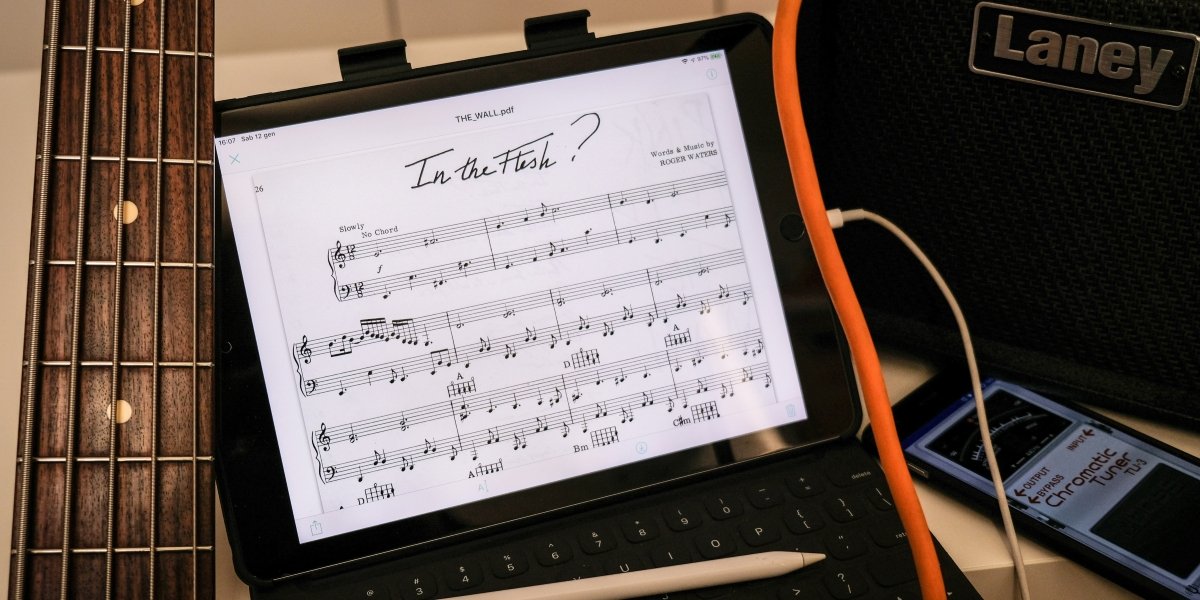
Most tablets fail musicians in the same way: they are engineered for visual impact rather than sustained readability. Bright, glossy OLED panels look impressive in short bursts, but under stage lighting or during long rehearsals, they drain quickly, introduce glare and eye strain, and require constant micro-adjustments that interrupt focus. The TCL NXTPAPER 14 solves that problem by changing how the screen behaves.
TCL’s NXTPAPER display architecture replaces the typical glassy, reflective surface with a matte, paper-like layer that diffuses light rather than reflecting it, achieved through a multi-layer, anti-glare surface with micro-texture that converts specular reflections into diffuse ones. This is not a software “reading mode” or a tinted filter: it is a treatment that makes the screen behave closer to paper. For sheet music, that distinction is obvious. Under overhead lighting or natural daylight, notation remains stable and legible without the shifting reflections that plague conventional tablets. You don’t need to tilt the device or increase brightness just to maintain visibility. It simply holds.
At 14.3 inches with a 3:2 aspect ratio, the NXTPAPER 14 aligns unusually well with the proportions of printed scores. Instead of compressing pages into a widescreen format, it allows full-page viewing at a natural scale, preserving staff spacing and reducing the need to zoom or scroll. In practice, this means fewer interruptions: fewer page adjustments, fewer missed cues, and a closer approximation to reading physical music sheets. For musicians, preserving the physical scale of notation directly reduces cognitive load during performance.
Where the device becomes particularly effective is over time. Traditional panels are designed for brightness and contrast, which can feel sharp but become fatiguing during extended use. NXTPAPER takes a distinct approach, reducing blue light at the hardware level and eliminating flicker, resulting in a softer, more consistent image. TCL’s Ink Paper mode pushes this further, subtly muting contrast and shifting the white point closer to off-white, which makes digital scores feel less like backlit screens and more like printed pages.
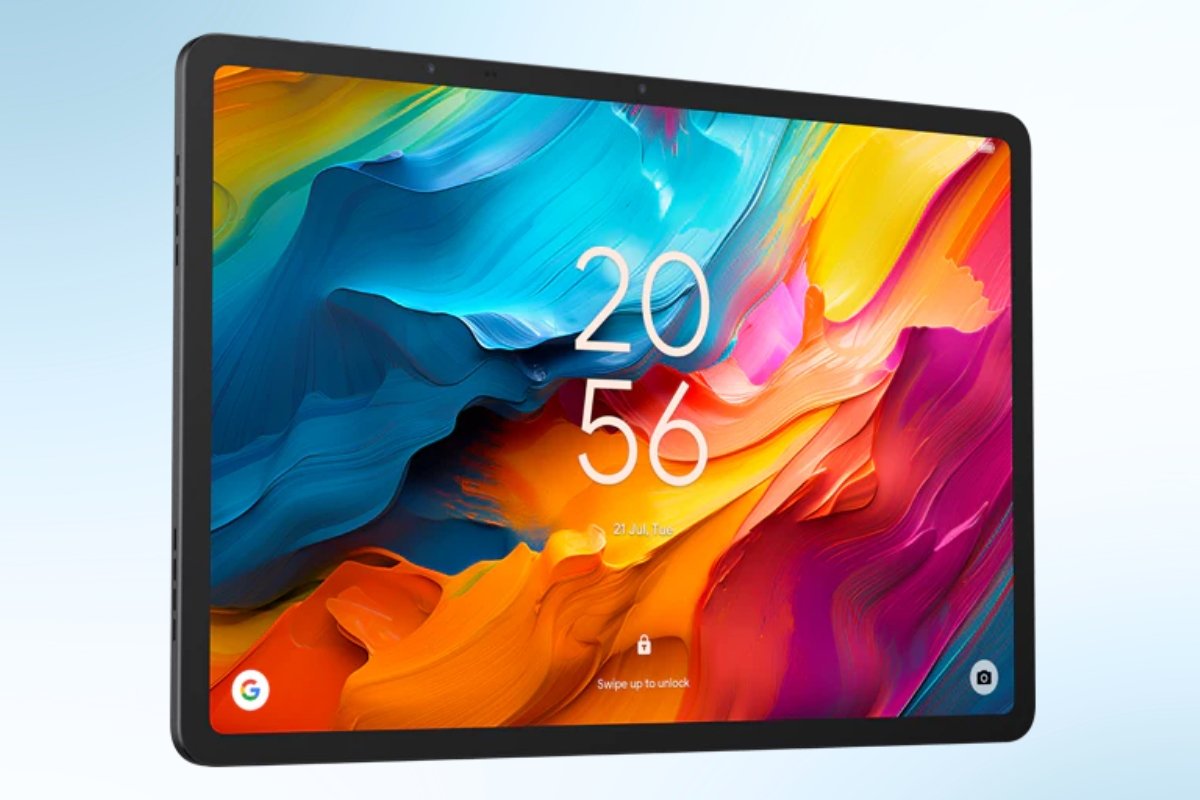
This places the NXTPAPER 14 in a unique space between conventional tablets and e-ink devices. Compared to an iPad, it sacrifices some vibrancy but gains stability and comfort. Compared to e-ink, it retains full responsiveness, color support, and multimedia capability. For musicians, that balance matters. You can annotate scores with a stylus, play backing tracks through its speakers, and move between practice and performance without switching devices. It functions less like a specialized reader and more like a complete, adaptable music workstation.
There are trade-offs, but they are largely irrelevant here. The device is heavier than smaller tablets and not designed for high-performance multitasking, yet neither factor impacts its primary role on a music stand. What matters is that once placed, it becomes reliable and unobtrusive. That is where most tablets fail and where this one succeeds.
That is why, in practical terms, the TCL NXTPAPER 14 is a strong option for musicians. It’s not just a tablet for sheet music; it’s a tablet designed with the needs of performers in mind.