The media and entertainment industry in the United States has undergone major changes over the last two decades. The development of digital media technology, the rise of streaming, and the popularity of live events created a new way to produce and distribute music, videos, and other media. From 2010 to 2023, the number of independent recording studios in the United States grew notably, suggesting rising demand for more affordable studio spaces. Studios, too, have been upgrading to more sophisticated audio, video, and broadcast technology during the same period, enabling some community bands to go national. It was an era that favored people who were part engineer, part media producer, and part executive within organizations.
Ronnie L. Terry, born February 4, 1985, in Syracuse, New York, is one such figure whose career intersects media production, technology, and nonprofit leadership. He is an American production executive, media entrepreneur, infrastructure engineer, and nonprofit arts founder. Terry founded Black Renaissance Monarchy Productions, BRM Records, and co-founded Lucid Arts Foundation. His work spans music production, live event management, and the development of media infrastructure that supports artist-centered production.
Terry was the eldest of five children born to Ronnie and Catreena Terry. He attended Thomas J. Corcoran High School in Syracuse before enrolling at the University of Texas at Arlington. From a young age, Terry was involved in music through service at his family church. He learned piano, organ, and keyboard, and developed skills in musical arrangement, composition, editing, and live production. These early experiences shaped his later work in media and production.
Before transitioning fully into media, Terry pursued a career in technology and infrastructure. Over about two decades, he held various positions at companies such as Dell Technologies, Cisco Systems, and other major organizations, which helped him gain substantial expertise in enterprise systems, network architecture, and infrastructure design. His experience in planning and managing large-scale network systems and infrastructure helped him contribute to live production and media facility development. Terry’s professional journey is a clear crossroads of technology and entertainment. In 2010, Terry began applying his technical expertise to media production while employed at the Koinonia Christian Church in Arlington, Texas.
At this church, Terry designed a 30,000-square-foot production facility that integrated live-event production and streaming. This expanded the church’s broadcasting and live-event production capacity, opening the door to more extensive live-streaming initiatives in the greater Dallas/Fort Worth region. His duties included coordinating audio, video, lighting, and digital streaming systems, which helped develop one of the largest faith-based media production facilities in the region. Terry continued to contribute to the development of live production, music direction, and broadcasting while employed at Abundant Life Christian Center in Syracuse, where he worked as a musician and production media specialist.
Following his relocation to Los Angeles, California, Terry founded Black Renaissance Monarchy Productions and BRM Records. These companies focus on music production, live events, and media development. His work has included collaborations with gospel artists such as Chandler Moore of Maverick City Music, Kierra Sheard, Teddy Campbell, and Donald Lawrence. Terry has also partnered with Grammy Award-winning and nominated producers, including Mike Bereal, Marcus Hodge, and Michael “Mookie” Taylor. These collaborations highlight his engagement with professional-level music production in the United States.
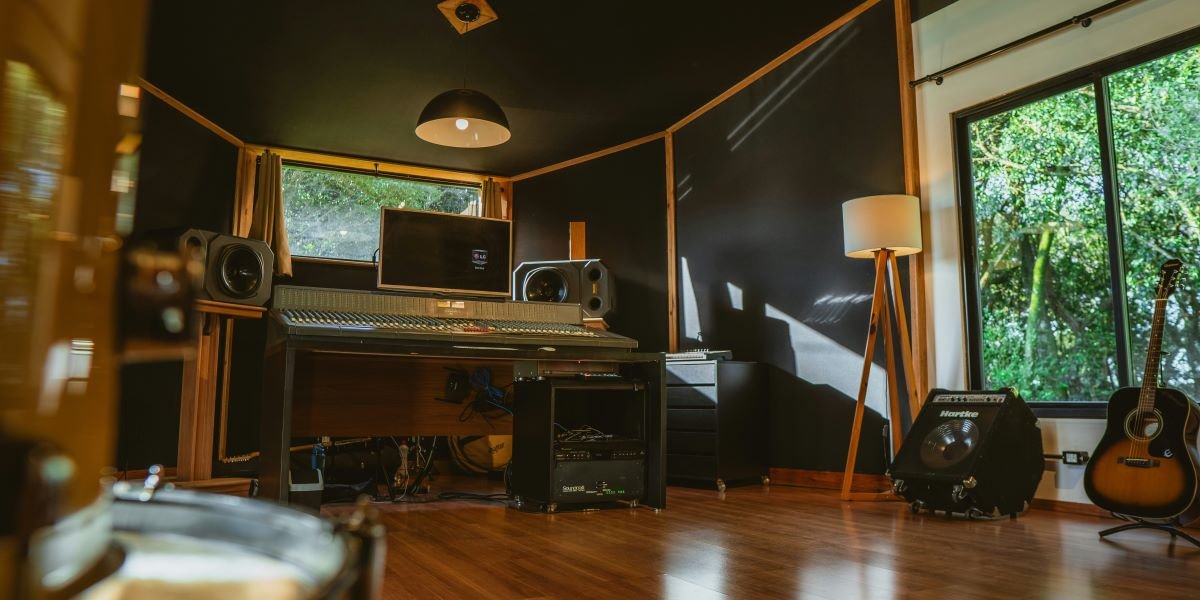
Terry assisted in the formation of the Lucid Arts Foundation. This California-based nonprofit provides support to artists through production resources, access to infrastructure, and professional development. This nonprofit is based on the belief in providing fair access to the best production resources while ensuring artistic integrity and creative control. Under Terry’s leadership, the team is currently planning a 100,000-square-foot production campus in Los Angeles that will offer certified sound stages, recording, and live broadcast.
The Lucid Arts Foundation reflects broader trends in media production, in which nonprofit and community-based organizations seek to democratize access to professional-grade facilities. According to recent industry data, independent artists represent over 30 percent of recorded music revenue in the United States as of 2022. Facilities such as the Lucid Arts Foundation campus aim to provide these artists with the technical resources previously limited to major studios. Terry’s role as a founder and strategic leader positions him within this evolving landscape of accessible media infrastructure.
In addition to his production and nonprofit work, Terry has held positions at various investment and holding companies in the media, technology, and production sectors. These roles have focused on the development of media enterprises, technology integration, and business services for music and live-event production. By combining infrastructure expertise with media entrepreneurship, Terry has contributed to projects that merge technical and creative disciplines, reflecting a multidisciplinary approach to media leadership.
Terry’s career also illustrates the continued importance of faith-based media operations in the United States. His early work at churches in Dallas–Fort Worth and Syracuse involved integrating technology, live event management, and music production.
The work of Ronnie L. Terry intersects with the apertures of technology, media production, and nonprofit arts management in the United States. His work has evolved from practical experience working with the church and its music to creating the infrastructure for enterprise, then to the creation of media production companies and nonprofit arts initiatives. The planned creation of the Lucid Arts Foundation production campus is the ultimate expression of his work and its goal of providing professional access to artists and creators while maintaining a fair, artist-centric approach.