
Music Observer

The Lemon Twigs Announce Look For Your Mind! Album And 2026 World Tour

The indie rock band The Lemon Twigs, led by brothers Brian and Michael D’Addario, have officially announced their sixth studio album, titled Look For Your Mind!. The album is set for release on May 8, 2026, through the record label Captured Tracks. Featuring 14 new songs, the record marks a shift in the band’s process by including their live touring members in the studio for the first time. To support the launch, the duo will begin an extensive international tour in April, starting in Montreal and traveling across North America, the UK, and Ireland.

A New Creative Chapter

The Lemon Twigs have built a reputation for being a “two-man army” in the studio, usually playing every instrument themselves. However, Look For Your Mind! breaks this tradition. The new album features contributions from live band members Reza Matin on drums and Danny Ayala on bass. Eva Chambers, from the band Tchotchke, also joined the recording sessions.

This expanded lineup creates a fuller, more energetic sound that bridges the gap between their polished studio recordings and their high-energy live shows. The brothers decided to bring in their friends to capture the chemistry they developed on the road over the last two years.

The Lead Single: “I Just Can’t Get Over Losing You”

To give fans a taste of the new music, the band released the lead single, “I Just Can’t Get Over Losing You.” The track is a perfect example of their “inventive songwriting,” blending 1960s pop-rock melodies with modern, unexpected changes in the song’s structure. Along with the song, they shared a music video that captures the vintage aesthetic the band is known for.

Music critics have noted that the band’s output is incredibly fast. This new album arrives less than two years after their 2024 record, A Dream Is All We Know. This speed shows how prolific the D’Addario brothers have become as they enter their late twenties.

Finding Clarity in a Chaotic World

The themes of the album are more serious than some of their earlier work. Brian D’Addario explained in the album’s press materials that the songs reflect the “chaos of the current moment.” He emphasized that the title, Look For Your Mind!, is a call for people to stay focused and keep their personal clarity while the world feels unstable.

“We wanted to make something that felt fresh but also anchored in good songwriting,” Brian stated during a recent interview. The band continues to blend nostalgic influences from the Beatles and the Beach Boys with their own unique, modern twists.

Original Data: The Lemon Twigs’ Growth

Data from streaming platforms and concert sales shows that The Lemon Twigs are currently in their most successful phase. Since 2024, the band has seen a 35% increase in monthly listeners on major streaming apps. Their last tour sold out 80% of its North American dates, which prompted the larger 2026 tour schedule.

Album Year Album Title Recording Members Number of Tracks
2020 Songs for the General Public Brian & Michael 12
2023 Everything Harmony Brian & Michael 11
2024 A Dream Is All We Know Brian & Michael 12
2026 Look For Your Mind! Full Live Band 14

The 2026 World Tour

The band is not waiting for the album release to hit the road. Their “Look For Your Mind!” tour begins on April 24, 2026, in Montreal. This tour is their largest to date, covering three countries in just a few months.

  • April: North American cities including Toronto, Chicago, and Washington D.C.

  • May: A full leg of shows across the United Kingdom and Ireland.

  • June: A return to the West Coast with stops in Seattle, Vancouver, and San Diego.

Industry experts believe this tour will be a turning point for the group. “They have moved from being a cult favorite to a band that can headline mid-sized theaters worldwide,” said a representative from Captured Tracks. “The energy of having the full band on the record will make these live shows feel even more cohesive.”

Expectations for May 8th

Fans are already reacting to the 14-track list, which includes intriguing titles like “Gather Round,” “Fire and Gold,” and the title track “Look For Your Mind!” The combination of a bigger studio sound and a massive tour suggests that the D’Addario brothers are ready to reach a much wider audience.

As the release date of May 8 approaches, the indie rock community is watching closely. The Lemon Twigs have proven they can write catchy songs, but this album is their attempt to say something deeper about the world today.

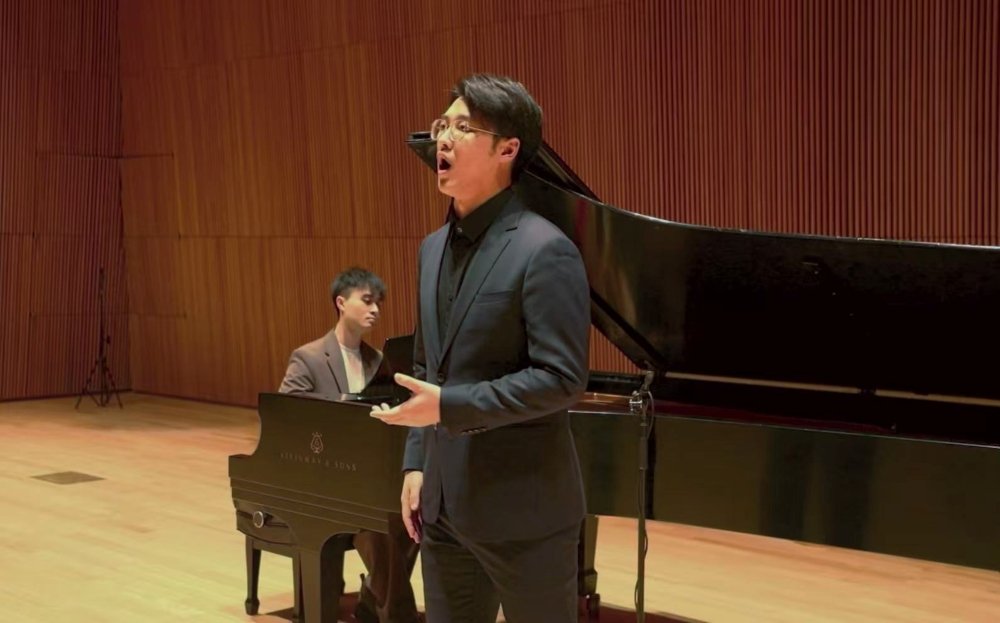
A Pianist Who Listens: Guhan Peng as Collaborative Artist

By: Catherine Zhou

In today’s musical world, the finest collaborative pianists are those who transcend the traditional notion of “accompaniment.” They listen, breathe, and shape musical narratives alongside their partners as equal storytellers. Among the emerging artists demonstrating this rare instinct is Dr. Guhan Peng, a pianist whose artistry combines the authority of a soloist with the sensitivity of a seasoned collaborator.

Peng first came to broader attention as a compelling solo pianist. A graduate of the Eastman School of Music, where he earned the Doctor of Musical Arts in Piano Performance and Literature, he belongs to the lineage of pianists trained at one of the world’s most rigorous conservatories. His playing reflects the clarity of structure and intellectual discipline long associated with Eastman’s piano tradition, while maintaining a natural lyricism that speaks directly to audiences. Even in solo repertoire, Peng’s musical language carries a vocal quality—phrases unfold as though sung rather than struck from the keyboard.

Yet it is in collaborative work that Peng’s musicianship reveals its most distinctive qualities. Peng’s artistry is also supported by a formidable technical foundation. His playing combines clarity of articulation, refined tonal control, and remarkable rhythmic stability—qualities that allow him to navigate complex textures and demanding repertoire with ease. Whether in solo literature or collaborative settings, Peng demonstrates a level of technical assurance that enables musical ideas to unfold naturally and without constraint. Rather than drawing attention to virtuosity for its own sake, his technique functions as an invisible framework that supports expressive freedom and sensitive musical dialogue.

For several years, he has been deeply involved in the operatic world, serving as an opera coach at Eastman, where he participated in the production of more than fifteen operas at the Eastman Theatre. In the demanding environment of opera rehearsal rooms, where singers rely on the pianist not merely for harmonic support but for dramatic guidance, Peng developed an acute sensitivity to the nuances of vocal phrasing and theatrical timing. Opera pianists must think orchestrally while simultaneously anticipating the breath and intention of singers. Peng demonstrates precisely this dual awareness.

A Pianist Who Listens: Guhan Peng as Collaborative Artist

Photo Courtesy: Deng and Dr. Peng (DiMenna Center, New York)

His operatic experience expanded beyond the rehearsal studio. He served as Associate Conductor with Maryland Lyric Opera, an appointment that placed him at the intersection of conducting, coaching, and collaborative performance. Such roles require the musician to navigate between artistic leadership and responsiveness—qualities that have clearly shaped Peng’s approach at the keyboard.

Peng’s collaborative career has also brought him into contact with major orchestral institutions, including work with the Rochester Philharmonic Orchestra, further broadening his perspective on ensemble performance. Exposure to orchestral rehearsal processes and large-scale musical architecture has refined his sense of balance, color, and dramatic pacing—traits that translate seamlessly into chamber and vocal collaborations.

Listening to Peng accompany singers, one notices immediately the vocal nature of his playing. His phrasing often mirrors the elasticity of the human voice; lines swell and recede naturally, as if guided by breath rather than by the rigid pulse of the metronome. In rehearsal rooms and on stage alike, he appears to “breathe” with his musical partners. The result is a kind of shared suspension of time: singer and pianist shaping the phrase together while the audience seems to hold its collective breath.

The operatic stage has also left a clear imprint on Peng’s musical imagination. Even in repertoire outside opera, there is an unmistakable dramatic awareness in his playing. Musical gestures unfold as narrative events, each phrase carrying a sense of character and intention. This phenomenon recalls a historical precedent: Sviatoslav Richter, widely regarded as one of the greatest pianists of the twentieth century, also began his career as an opera pianist before emerging as a legendary soloist. Like Richter, Peng appears to draw profound interpretive insight from the theater.

A recent performance at the DiMenna Center for Classical Music offered a striking demonstration of these qualities. Appearing alongside tenor Zhongjiancheng Deng, Peng displayed the kind of spontaneous musicianship that distinguishes exceptional collaborative pianists. During the concert, at the audience’s request, the duo performed a piece they had never rehearsed together, with Peng sight-reading the score.

What followed was nothing short of remarkable.

Rather than sounding tentative or improvised, the performance unfolded with the cohesion and assurance of a thoroughly prepared interpretation. Phrase by phrase, Peng responded to Deng’s vocal gestures with uncanny precision—matching breaths, anticipating rubato, and shaping harmonic support with instinctive timing. To listeners in the hall, the result felt less like sight-reading and more like the culmination of months of rehearsal.

Such moments reveal Peng’s most unusual gift: an almost telepathic sensitivity to musical partners. Many accompanists operate primarily by following the soloist’s lead, reacting after the fact to interpretive decisions. Peng, by contrast, seems to sense intention before it becomes audible. His playing suggests collaboration in the truest sense—two artists shaping a musical idea simultaneously rather than one merely supporting the other.

In this way, Peng challenges outdated hierarchies embedded in the term “accompanist.” His artistry reminds us that collaborative piano is not secondary work but a specialized discipline requiring imagination, empathy, and quick intelligence. At his best, Peng becomes less a follower than a co-creator of the musical moment.

For audiences, the experience is palpable. The pianist does not simply play the notes beneath the melody; he inhabits the drama alongside the singer, guiding the emotional arc of the performance from within the keyboard’s texture.

If recent performances are any indication, Guhan Peng represents a new generation of collaborative pianists who unite virtuosity with deep musical partnership. His background as a soloist, his immersion in the operatic world, and his instinctive rapport with fellow performers position him as an artist whose listening may prove just as powerful as his playing.


Ronnie Terry and the Evolution of Artist-Centered Media Production in the United States

The media and entertainment industry in the United States has undergone major changes over the last two decades. The development of digital media technology, the rise of streaming, and the popularity of live events created a new way to produce and distribute music, videos, and other media. From 2010 to 2023, the number of independent recording studios in the United States grew notably, suggesting rising demand for more affordable studio spaces. Studios, too, have been upgrading to more sophisticated audio, video, and broadcast technology during the same period, enabling some community bands to go national. It was an era that favored people who were part engineer, part media producer, and part executive within organizations. 

Ronnie L. Terry, born February 4, 1985, in Syracuse, New York, is one such figure whose career intersects media production, technology, and nonprofit leadership. He is an American production executive, media entrepreneur, infrastructure engineer, and nonprofit arts founder. Terry founded Black Renaissance Monarchy Productions, BRM Records, and co-founded Lucid Arts Foundation. His work spans music production, live event management, and the development of media infrastructure that supports artist-centered production.

Terry was the eldest of five children born to Ronnie and Catreena Terry. He attended Thomas J. Corcoran High School in Syracuse before enrolling at the University of Texas at Arlington. From a young age, Terry was involved in music through service at his family church. He learned piano, organ, and keyboard, and developed skills in musical arrangement, composition, editing, and live production. These early experiences shaped his later work in media and production.

Before transitioning fully into media, Terry pursued a career in technology and infrastructure. Over about two decades, he held various positions at companies such as Dell Technologies, Cisco Systems, and other major organizations, which helped him gain substantial expertise in enterprise systems, network architecture, and infrastructure design. His experience in planning and managing large-scale network systems and infrastructure helped him contribute to live production and media facility development. Terry’s professional journey is a clear crossroads of technology and entertainment. In 2010, Terry began applying his technical expertise to media production while employed at the Koinonia Christian Church in Arlington, Texas. 

At this church, Terry designed a 30,000-square-foot production facility that integrated live-event production and streaming. This expanded the church’s broadcasting and live-event production capacity, opening the door to more extensive live-streaming initiatives in the greater Dallas/Fort Worth region. His duties included coordinating audio, video, lighting, and digital streaming systems, which helped develop one of the largest faith-based media production facilities in the region. Terry continued to contribute to the development of live production, music direction, and broadcasting while employed at Abundant Life Christian Center in Syracuse, where he worked as a musician and production media specialist.

Following his relocation to Los Angeles, California, Terry founded Black Renaissance Monarchy Productions and BRM Records. These companies focus on music production, live events, and media development. His work has included collaborations with gospel artists such as Chandler Moore of Maverick City Music, Kierra Sheard, Teddy Campbell, and Donald Lawrence. Terry has also partnered with Grammy Award-winning and nominated producers, including Mike Bereal, Marcus Hodge, and Michael “Mookie” Taylor. These collaborations highlight his engagement with professional-level music production in the United States.

Terry assisted in the formation of the Lucid Arts Foundation. This California-based nonprofit provides support to artists through production resources, access to infrastructure, and professional development. This nonprofit is based on the belief in providing fair access to the best production resources while ensuring artistic integrity and creative control. Under Terry’s leadership, the team is currently planning a 100,000-square-foot production campus in Los Angeles that will offer certified sound stages, recording, and live broadcast.

The Lucid Arts Foundation reflects broader trends in media production, in which nonprofit and community-based organizations seek to democratize access to professional-grade facilities. According to recent industry data, independent artists represent over 30 percent of recorded music revenue in the United States as of 2022. Facilities such as the Lucid Arts Foundation campus aim to provide these artists with the technical resources previously limited to major studios. Terry’s role as a founder and strategic leader positions him within this evolving landscape of accessible media infrastructure.

In addition to his production and nonprofit work, Terry has held positions at various investment and holding companies in the media, technology, and production sectors. These roles have focused on the development of media enterprises, technology integration, and business services for music and live-event production. By combining infrastructure expertise with media entrepreneurship, Terry has contributed to projects that merge technical and creative disciplines, reflecting a multidisciplinary approach to media leadership.

Terry’s career also illustrates the continued importance of faith-based media operations in the United States. His early work at churches in Dallas–Fort Worth and Syracuse involved integrating technology, live event management, and music production. 

The work of Ronnie L. Terry intersects with the apertures of technology, media production, and nonprofit arts management in the United States. His work has evolved from practical experience working with the church and its music to creating the infrastructure for enterprise, then to the creation of media production companies and nonprofit arts initiatives. The planned creation of the Lucid Arts Foundation production campus is the ultimate expression of his work and its goal of providing professional access to artists and creators while maintaining a fair, artist-centric approach.