By: Olga Amraie
The Los Angeles baritone and America’s Got Talent performer on writing songs people remember after one listen, building your own stage instead of waiting for one, and why retro sound is winning on modern playlists.
Scroll through any music feed for ten minutes and you will notice a pattern. Vintage suits. Brass sections. Old-school microphones in brand-new videos. Retro sound is having a moment, and a growing number of younger listeners are discovering swing for the first time, not through their grandparents’ records but through short clips on their phones.
Andy Star is not surprised. The Los Angeles-based singer, performer and producer, known to television audiences from Season 20 of America’s Got Talent, has built his entire artistic identity around a sound that many in the industry once considered a niche: a rich baritone, a live-band feel and the confident swagger of swing, wrapped in modern pop production.
“Swing never really left,” Star says. “People just stopped hearing it in the places they spend time. The moment you put it in front of them again, with real musicians and real energy, they remember that music can make you feel good on purpose.”
This fall, Star has been introducing a new set of original songs from his upcoming album. And the way he chose to do it offers a useful lesson for every independent artist trying to be heard in a crowded market.
The problem with waiting for a stage
Most emerging artists spend years trying to get booked. They send demos, wait for festival slots and hope a playlist curator notices them. Star took a different route: he built a stage of his own.
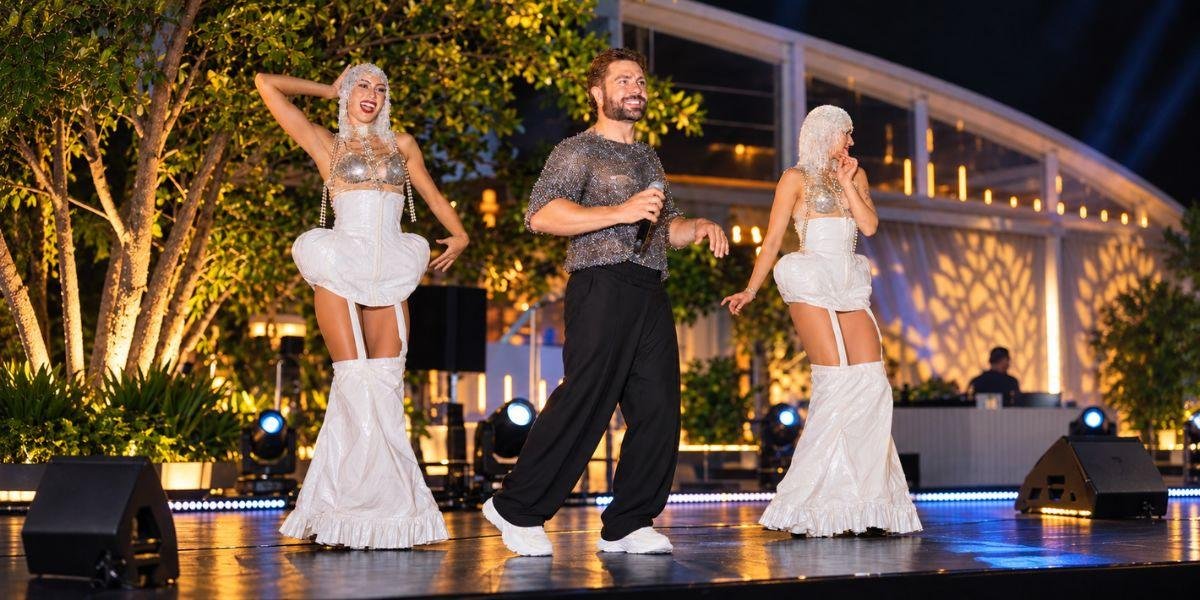
He is the founder, owner and producer of Miss Silicone USA, a beauty and entertainment platform that debuted on September 26 at White Rabbit Sky Lounge in West Hollywood. On that night, he not only crowned a winner but used the evening to premiere new music in front of a live Hollywood audience.
“Artists ask me how to get more stage time,” Star says. “My answer is simple: stop asking for permission and start creating the room. If you produce the event, you decide what the audience hears. That is the most direct path between your song and a real listener.”
It is an approach that turns a single performance into something larger. Every new city where the pageant travels becomes another audience for his music.
What makes a song stick
Star describes his sound as swing, pop, retro and retro-pop. It borrows the elegance of the big-band era and the energy of classic rock’n’roll, then updates it for today’s ear. His guiding rule for songwriting is surprisingly practical.
“If someone can’t hum the chorus on the way to their car, I haven’t finished the song,” he says. “Melody first. Then the story. Then the production. A lot of new music gets that order backwards and wonders why nobody remembers it.”
At the Los Angeles premiere, he performed two sets of songs he wrote and composed himself. The first opened with “Better Than The Fall,” an anthem about rising after hard times and coming back stronger, followed by “Love On The Run,” a playful chase after a feeling that keeps slipping away. The second set turned more reflective. “After All This Time” tells the story of a love that ended but left its mark, and “Where Are You, Anyway?” closes on a question most listeners have asked at least once.
The emotional range is intentional. “A live set is a conversation,” Star explains. “You make people dance, then you give them a moment to think, then you bring them back up. If every song sits at the same temperature, the room gets cold.”
Live musicians are not a luxury
In an era of backing tracks, Star insists on live instruments whenever possible. In Los Angeles, violinist Shynaran and saxophonist Erisa Nicole added texture and swing, and guest vocalist Linn Holmstedt joined the program.
“The audience can feel the difference even if they can’t name it,” he says. “A saxophone that breathes with you, a violin that reacts to the crowd. That’s what makes a show feel alive. If your budget is small, hire one great live player before you spend on anything else.”
The Singing Skater: give people an image
Star has never been a performer who stands still. Fans know him for vivid stage looks, humor and movement, and for his signature act as The Singing Skater, delivering live vocals on roller skates. His America’s Got Talent appearance introduced that energy to a national audience.
There is a lesson in that, too. “People remember pictures before they remember names,” he says. “Find the one image that only you own. For me it’s the skates and the suits. It doesn’t have to be a gimmick. It has to be true to the music and impossible to confuse with anyone else.”
Advice for artists building a retro sound today
Asked what he would tell a young artist drawn to classic styles, Star offers three points:
“First, study the originals, but don’t imitate them. Learn why a song from 1955 still works, then write something that could only exist now.”
“Second, dress the sound. Retro music is visual. Your styling, your band, your stage are part of the arrangement.”
“Third, build your audience in rooms, not only online. A clip can make someone curious. A live show makes them a fan.”
Next stage: Miami
Star’s next major performance is set for December 19, 2026, at Miss Silicone Miami 2026, where he will present a new live set. The evening’s red carpet will feature classic and modern cars, including legendary Shelby Cobras, a fitting backdrop for a singer whose sound is rooted in the same era. The venue will be announced soon.
For Star, the long-term plan is clear: as the pageant moves from state to state, his music travels with it.
“Every city is a new audience,” he says. “And every audience is a chance to remind people why this music made the world dance in the first place.”
Fans can follow Andy Star’s new releases at andystar.la and on Instagram, TikTok and YouTube (@andystar.la, @AndyStarJourney).