Music Observer

When Vulnerability Becomes a Superpower: Inside Cello’s “Singing to Serpents”

By Nina Woods

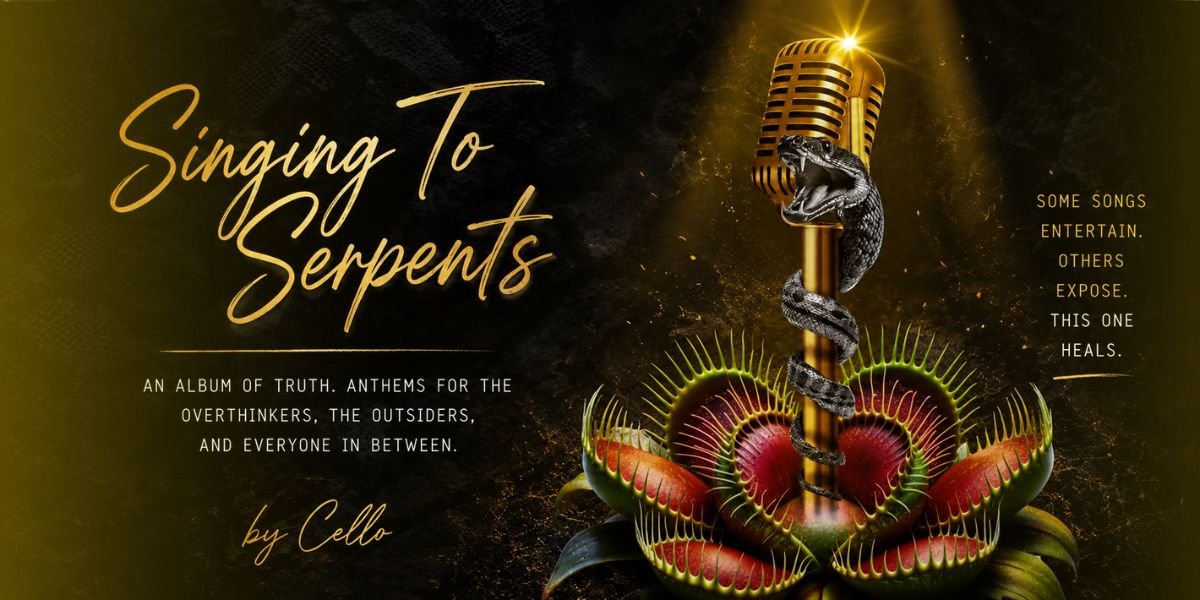
Some albums ask you to turn them up. Others ask you to lean in. Cello’s Singing to Serpents does both, and that’s exactly what makes it so compelling.

From the first track, it’s obvious this isn’t an artist chasing playlists or social media trends. This is someone chasing truth, and sometimes truth isn’t polished. It’s messy. It’s uncomfortable. It’s beautiful. And that’s where Singing to Serpents lives.

There’s an emotional intensity running through this record that feels refreshingly genuine. Every lyric sounds lived-in rather than manufactured, every melody seems to exist because it has something meaningful to say instead of simply filling space between hooks. That’s becoming increasingly rare in a music landscape where so much is engineered for quick consumption.

Cello isn’t interested in quick consumption.

He’s interested in connection.

Musically, the album refuses to sit comfortably inside a single genre. Alternative rock textures blend effortlessly with cinematic arrangements, thoughtful singer-songwriter storytelling, and modern production choices that create atmosphere without overwhelming the songs themselves. There’s an elegance to the production that lets the emotional weight remain front and center.

And that’s exactly where it belongs.

Vocally, Cello understands one of the hardest lessons many singers never learn: restraint can be more powerful than volume. He doesn’t oversing. He doesn’t chase impossible notes simply to prove he can hit them. Instead, every vocal choice serves the story, allowing vulnerability to become one of the album’s strongest instruments.

That vulnerability gives Singing to Serpents remarkable emotional consistency.

Whether exploring anxiety, identity, isolation, faith, hope, or the complicated search for belonging, the songs never drift into melodrama. Instead, they feel like honest conversations, sometimes whispered, sometimes cried aloud, but always sincere. You believe what you’re hearing because it sounds like someone documenting life rather than performing it.

Knowing that Cello is autistic and has ADHD adds another fascinating layer to the listening experience, not because the album announces it, but because it helps explain the remarkable way these songs process emotion. The lyrics frequently notice details others might overlook. Emotional shifts happen in unexpected ways. Internal dialogue becomes just as important as external events.

Rather than presenting neurodiversity as something to overcome, the album quietly demonstrates how it shapes perspective. The result is music that feels intensely personal while somehow remaining universally relatable.

That’s no small accomplishment.

There are moments throughout the record where the arrangements expand dramatically before collapsing back into intimate simplicity, almost mirroring the way thoughts and emotions can race, collide, and eventually settle. Whether intentional or instinctive, those dynamics become one of the album’s defining characteristics.

Production deserves considerable praise here.

Nothing feels overproduced. Instead, every instrument earns its place. Textures build naturally, acoustic and electronic elements coexist without competing, and there’s enough breathing room for listeners to absorb both the lyrical and musical details. It’s an album that rewards repeat listens because new nuances continue revealing themselves long after the first play.

Perhaps the greatest strength of Singing to Serpents is its refusal to offer easy answers.

Modern audiences often expect songs to resolve every emotional conflict neatly by the final chorus. Cello resists that temptation. Healing remains a journey. Doubt continues to exist alongside hope. Strength often appears disguised as vulnerability. Those contradictions make these songs feel remarkably human.

And humanity is really what this record celebrates.

There are countless albums about heartbreak. Plenty about resilience. Plenty about finding yourself.

Singing to Serpents manages to encompass all of those themes while maintaining a voice that feels entirely its own. That’s an achievement few emerging artists accomplish this confidently.

Perhaps that’s because Cello isn’t trying to sound like someone else.

He’s documenting his own experience with uncommon honesty, inviting listeners into conversations many people quietly have with themselves every day but rarely say aloud.

That’s brave.

It’s also incredibly effective.

By the album’s closing moments, you don’t feel as though you’ve simply listened to a collection of songs. You feel as though you’ve accompanied someone through a deeply personal journey of reflection, acceptance, struggle, and hope.

In the MTV era, we always talked about artists who made records that left a mark rather than merely making noise.

Singing to Serpents leaves a mark.

It’s thoughtful without becoming pretentious, emotional without becoming sentimental, and musically adventurous without sacrificing accessibility. More importantly, it reminds us that authenticity still matters, that music can challenge us, comfort us, and help us better understand ourselves all at the same time.

And that’s always worth hearing.
Kacey Musgraves Cancels Three Tour Dates, Putting the Economics of Touring Back Under the Microscope

Kacey Musgraves has canceled three dates from her upcoming Middle of Nowhere tour, affecting scheduled performances in Chicago, Boston, and Brooklyn and raising fresh questions about the financial pressures facing artists as they build large-scale live shows.

The canceled performances were scheduled for August 20 at Chicago’s United Center, August 29 at Boston’s TD Garden, and September 2 at Brooklyn’s Barclays Center. Ticket holders were notified of the cancellations, while other performances in the affected markets remain on the tour schedule. The Ticketmaster event information lists the remaining tour schedule and directs fans toward updated event details.

Musgraves and her representatives have not publicly provided a reason for the three cancellations. That leaves the business implications more relevant than speculation over the cause. The changes highlight how complicated it can be to build an arena tour around production costs, venue commitments, ticket demand, staffing, transportation, and the economics of moving a large touring operation from city to city.

Key Takeaways

  • Kacey Musgraves canceled three scheduled performances in Chicago, Boston, and Brooklyn.
  • The canceled dates are part of her upcoming Middle of Nowhere tour, while other shows in those markets remain scheduled.
  • No public explanation for the cancellations has been provided by Musgraves or her representatives.
  • Large-scale touring requires artists and promoters to balance venue costs, production expenses, staffing, transportation, and ticket demand.
  • The cancellations underscore the financial complexity of operating arena tours, even for established recording artists.

Three Dates Removed From the Tour

The three canceled concerts represented stops in major U.S. markets. The Chicago performance would have been scheduled for August 20, followed by the Boston date on August 29 and the Brooklyn show on September 2.

The changes do not currently indicate that the entire tour has been canceled. Musgraves still has other performances listed in the affected markets, including a Chicago show on August 21 and another Boston performance on August 28, according to current ticketing information.

The official Kacey Musgraves tour page is the appropriate source for fans seeking the latest schedule information, although the artist’s own site may not always reflect ticketing changes as quickly as event platforms.

The High Cost of Putting an Arena Tour on the Road

A modern arena tour is a complex business operation. The costs extend far beyond the artist and the stage. Production crews, musicians, dancers, equipment transportation, staging, lighting, sound, insurance, venue fees, marketing, and accommodation can all factor into the financial structure of a tour.

Venue selection also matters. An arena show requires enough ticket demand to justify the expense of bringing a large production into a particular market. When an artist performs multiple nights in the same region, promoters must weigh the potential revenue from additional performances against the costs of operating the production for another night.

That makes tour scheduling a balancing exercise. A second or third date can create additional revenue when demand is strong, but it can also add financial exposure when sales do not meet expectations.

Ticket Demand Is Only One Piece of the Equation

It is tempting to view a canceled concert simply through the lens of ticket sales, but the economics are more complicated. Artists and promoters must consider the full cost of presenting a show and the revenue generated by tickets, merchandise, sponsorships, premium experiences, and other sources.

For that reason, a decision to remove a concert date does not necessarily reveal a single cause. Without a public explanation from Musgraves or her team, there is no basis to attribute the three cancellations to any specific factor.

The broader lesson for the live music industry is that touring has become a highly calculated business. Even established artists must determine which markets, venues, and dates make sense within the financial structure of a particular production.

The New Reality of Touring at Scale

The live business remains an important source of revenue for recording artists, but the economics of touring can vary substantially from one artist and production to another. Large arena tours can generate significant income while simultaneously requiring substantial upfront investment.

That creates pressure to build schedules that match realistic demand. The most efficient tour is not necessarily the one with the most dates. It is the one in which the number of performances, size of venues, production requirements, and travel schedule work together financially.

Musgraves’ three canceled dates provide a timely reminder of that reality. The artist’s broader tour remains scheduled, but the changes demonstrate how even a major touring operation can be adjusted before it reaches the road.

For artists and industry professionals, the episode reinforces a basic principle of live music economics: every additional show represents both an opportunity and a cost. As touring productions become increasingly elaborate, decisions about where and when to perform will remain central to an artist’s business strategy.

FAQs

Which Kacey Musgraves tour dates were canceled?

The canceled dates were scheduled for August 20 in Chicago, August 29 in Boston, and September 2 in Brooklyn.

Why did Kacey Musgraves cancel the three shows?

Musgraves and her representatives have not publicly announced a reason for the cancellations. Any claims about the cause should therefore be treated as speculation.

Is the entire Middle of Nowhere tour canceled?

No. Other dates on the tour remain scheduled, including performances in some of the same markets affected by the cancellations.

What are the main costs involved in a major music tour?

Costs can include venue fees, production equipment, transportation, crew and musician salaries, staging, lighting, sound, insurance, marketing, accommodation, and other operational expenses.

Why do artists sometimes cancel individual tour dates?

Tour dates can be changed for many reasons, including scheduling conflicts, logistical issues, production considerations, venue availability, or business decisions. Unless an artist or promoter provides an explanation, the specific reason for a cancellation may not be known publicly.

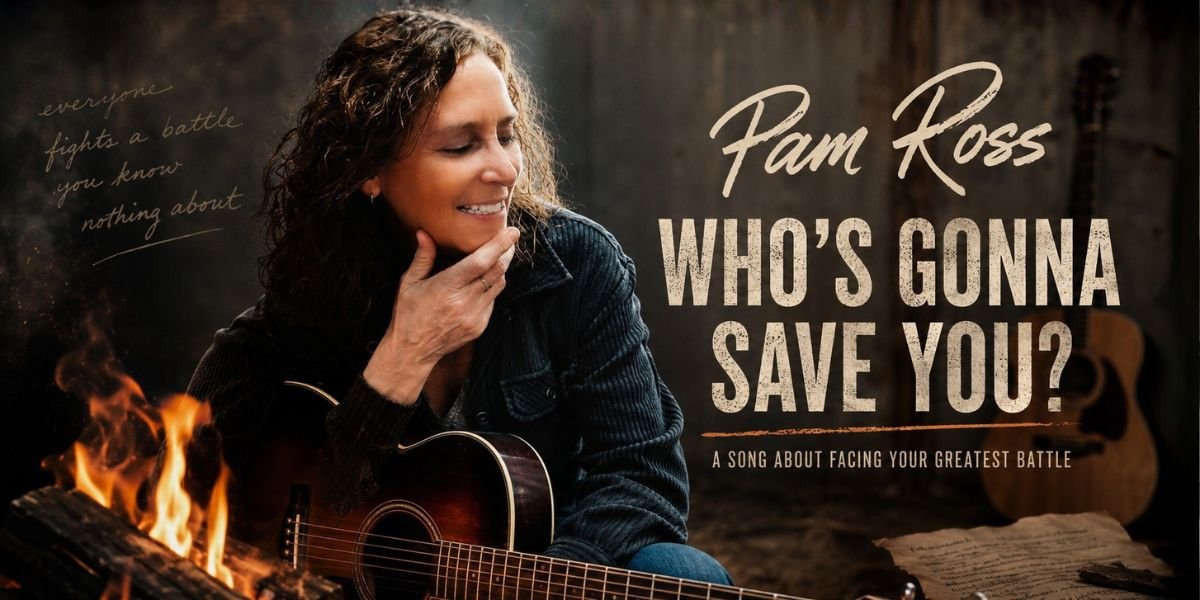
Into the Fire: Pam Ross Finds Strength in Vulnerability on “Who’s Gonna Save You?”

By: Lane Whitaker

For years, Pam Ross has built a reputation as an independent singer-songwriter, crafting songs that blur the lines between Americana, country, rock, and folk with an honesty that feels lived rather than manufactured. Her music has never chased trends. Instead, it has chronicled life’s victories, heartbreaks, and hard-earned lessons with the kind of authenticity that has steadily built a loyal audience.

Yet despite a growing list of accolades, including the 2024 Josie Music Award for Female Multi-Genre Artist of the Year, Ross admits that confidence has never come easily.

Looking back on her career, she points to two moments that fundamentally changed her path. The first came when she joined MTS Management Group and MTS Records, a partnership she credits with elevating her career to new heights.

“That made a huge difference in my career and has really been invaluable,” Ross says. Winning the Josie Award soon afterward reinforced that momentum, providing the encouragement she needed to keep moving forward. “Both gave me confidence I needed to continue making music.”

Ironically, confidence, or the lack of it, sits at the center of her latest single, “Who’s Gonna Save You?” The deeply introspective song explores self-doubt, self-sabotage, and the quiet internal battles that many people fight but few openly discuss.

The song was born during one of Ross’s own difficult seasons. Recovering from surgery to repair two ankle tendons, she found herself confined to bed after another disappointment in her songwriting career.

“I had pitched a song to an artist and was passed on…again,” she recalls.

Instead of dwelling on frustration, she reached for her guitar.

The result became one of the most emotionally revealing songs of her career.

Ross readily admits that while fans often see her accomplishments, they rarely witness the setbacks that accompany an independent artist’s journey.

“I talk and post about my successes,” she says. “I keep the failures to myself…and there’s a lot of them.”

The honesty is striking because it dismantles the perception that successful independent musicians somehow escape insecurity. Ross doesn’t pretend to have all the answers. Instead, she invites listeners into the uncertainty itself.

She jokes that she could have titled the song A Day in the Life of Pam Ross, but beneath the humor lies something profoundly relatable. Despite acknowledging how blessed she feels, she also speaks candidly about periods of depression, questioning decisions she’s made and wondering where life is heading.

That emotional complexity gives the song its remarkable power.

Perhaps no lyric captures its central message more than:

“God might save you from someone else, but who’s gonna save you from yourself?”

For Ross, the line isn’t meant as a theological statement as much as a reflection on personal responsibility.

“Our greatest enemy is often ourselves,” she explains. “That inner demon that whispers all the negative thoughts.”

Family, friends, and faith can offer support, she says, but lasting change only comes when someone decides they’re ready to fight their own battles.

Interestingly, Ross never wrote the song with a particular lesson in mind.

“I just hope they enjoy the song and listen to it,” she says.

That lack of agenda may be precisely why listeners have connected with it so deeply.

The accompanying music video expands the song’s emotional range with striking visual symbolism. Ross envisioned the concept during her daily runs while listening to early mixes of the track. Although several ideas came to mind, she ultimately centered the entire narrative around a single campfire.

The imagery is deceptively simple.

The fire becomes both destruction and purification, a place where frustration, disappointment, and self-doubt are allowed to burn.

One particularly memorable moment shows Ross retrieving a half-written song from the dying embers.

The symbolism couldn’t be clearer.

She may have burned everything down emotionally, but she never stopped creating.

Ross admits she worried audiences might misunderstand one key element: the second figure in the video represents her inner demon rather than another person.

Fortunately, viewers seem to have embraced the concept, and the video has resonated strongly with fans.

Musically, “Who’s Gonna Save You?” also reflects Ross’s meticulous evolution as a songwriter.

Gone are the days when she would finish songs in half an hour and never revisit them.

Today, writing has become a more deliberate craft.

“It can take me days or weeks,” she says. “Rewriting and co-writing are great tools to bring a song to its best potential.”

That philosophy extended into the recording process. Ross carefully mapped out the arrangement before entering the studio, recording her own parts before bassist FJ Ventre, drummer George Hindenach, and guitarist Yvan Petit added their contributions independently. Though the musicians never performed together during the sessions, the finished recording feels remarkably cohesive.

One unexpected accident even became a defining artistic choice.

Originally written in G major, Ross accidentally struck a G minor chord while playing the song on the keyboard.

“It sounded better,” she says.

The darker key transformed the emotional weight of the song, perfectly matching its themes of internal struggle.

If discussing those struggles remains uncomfortable, Ross acknowledges she’s still learning to become more open. Writing the song wasn’t difficult. Talking about it afterward has proven much harder.

Still, hearing listeners relate to its message has made the vulnerability worthwhile.

“We all go through moments like that,” she says.

As for what’s next, Ross isn’t abandoning introspection. Another song on her upcoming album, “Superman Cape,” explores similar emotional territory, while “I’m The One” tackles addiction. At the same time, she promises the album won’t dwell exclusively in darkness, balancing heavier themes with more upbeat material.

Beyond that, even Ross admits she doesn’t know exactly where the road leads.

But if “Who’s Gonna Save You?” proves anything, it’s that uncertainty has become one of her greatest artistic strengths. Rather than hiding behind polished success stories, Pam Ross has chosen to tell the truth, and in doing so, she’s created one of the most resonant songs of her career.