By: Jay Kt
Publishing a book is one of the biggest milestones for any author. However, choosing the right publishing path can often feel overwhelming, especially for first-time writers. With so many companies offering publishing services, it can be difficult to understand which option matches your goals and which offers are worth considering.
One question can quickly separate publishing options: where is the money moving?
In traditional publishing, the publisher invests in the book and pays the author through advances and royalties. In other publishing arrangements, the author pays for professional services such as editing, design, production, and distribution support. These services can be completely legitimate, but problems begin when companies present paid services as if they were selecting manuscripts based on publishing merit.
Understanding this difference is essential when new authors compare book publishing companies.
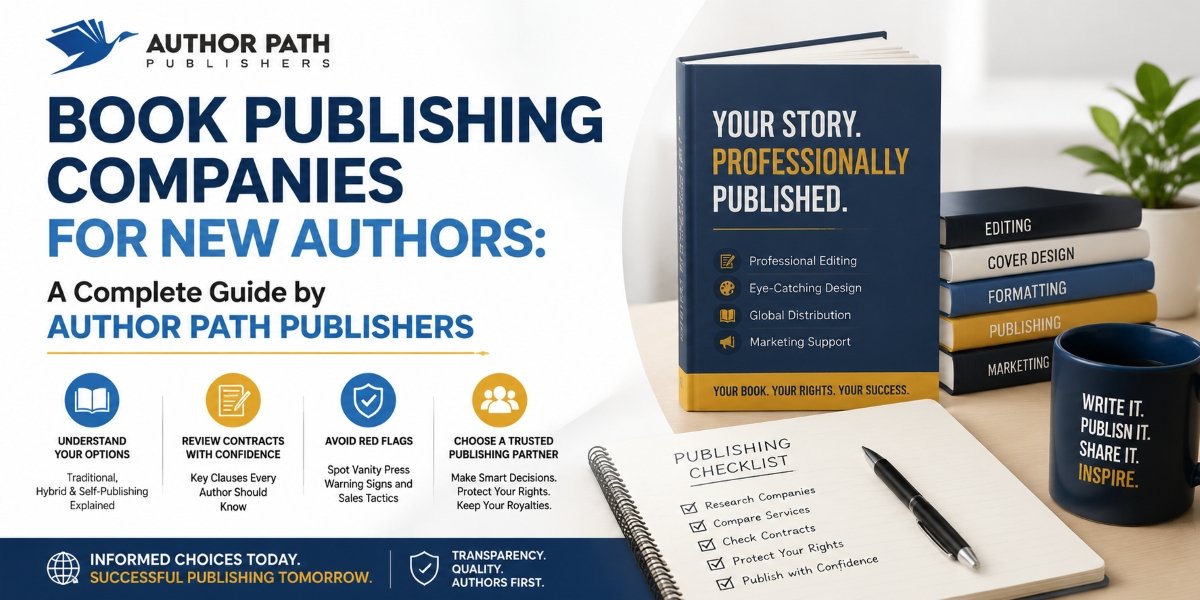
At Author Path Publishers, we believe authors should have clear information before making publishing decisions. This guide explains the major publishing routes, contract details to review, warning signs to recognize, and questions to ask before signing any agreement.
Understanding the Three Main Publishing Routes
Every author’s goals are different. Some writers want traditional recognition, while others prefer greater control over their work. Understanding the available options helps authors choose the approach that fits their needs.
Traditional Publishing
Traditional publishing involves a publisher acquiring rights to a manuscript, paying for production, and paying the author through royalties and possibly an advance.
This route is highly competitive and often requires an agent when approaching larger publishing houses. Authors typically have less control over elements such as cover design, title selection, release timing, and marketing decisions.
Traditional publishing can be a good choice for authors who value industry validation, trade distribution opportunities, and are willing to wait through a longer submission process.
Assisted, Hybrid, or Paid Publishing Services
Assisted and hybrid publishing services allow authors to invest in professional publishing support while maintaining ownership of their work.
These services may include:
● Editing.
● Book formatting.
● Cover design.
● Publishing setup.
● Distribution assistance.
● Marketing support.
This approach works well for authors who want professional standards, more creative control, and a faster publishing timeline.
However, transparency is essential. Authors should clearly understand what services are included, what they are paying for, and what rights they maintain.
Self-Publishing
Self-publishing gives authors complete control over the publishing process. The author manages editing, design, formatting, uploads, metadata, marketing, and distribution.
While this option provides maximum independence, it also requires significant time, knowledge, and responsibility beyond writing the manuscript.
Self-publishing can be rewarding for authors who are willing to learn the business side of publishing.
Understanding What Makes a Legitimate Hybrid Publisher
The term “hybrid publishing” is widely used, but not every company using the label follows the same standards.
A professional hybrid publisher should be transparent about its process, fees, and services. It should explain what authors receive in exchange for their investment and maintain professional standards for editing, design, and production.
A reliable hybrid publisher should clearly communicate:
● The services included.
● The cost structure.
● The ownership of rights.
● The royalty arrangement.
● The publishing timeline.
Authors should be cautious if a company claims to be hybrid but accepts every manuscript without evaluation, avoids discussing fees openly, or includes unclear rights terms in its contracts.
The name a company uses matters less than the agreement and services it provides.
Warning Signs New Authors Should Watch For
Many publishing problems begin with sales behavior before they appear in contracts.
Authors should be careful with companies that use pressure tactics or make unrealistic promises.
Common warning signs include unsolicited offers, excessive praise without specific feedback about the manuscript, limited-time discounts, and pressure to make immediate decisions.
Authors should also be cautious when companies promise ensured bookstore placement, bestseller status, film opportunities, or a specific number of sales. No legitimate publishing provider can ensure these outcomes.
Other concerns include unclear information about editors and designers, lack of examples of previous work, unverifiable testimonials, and repeated attempts to sell additional services after the initial payment.
One warning sign may simply be poor communication. Multiple warning signs together can indicate a larger problem.
Important Clauses to Review in a Publishing Contract
Before signing a publishing agreement, authors should carefully review every section of the contract.
Rights are one of the most important areas to understand. Authors should know exactly what rights they are granting, including formats, languages, and territories.
The contract term and exclusivity period should also be clear. Authors should understand how long the agreement lasts and whether it affects future publishing opportunities.
Rights reversion is another important consideration. The agreement should explain when rights return to the author and what conditions allow termination.
Authors should also review file ownership, including cover artwork, formatting files, and interior design files. Understanding who controls these materials after the relationship ends can prevent future problems.
Other important areas include ISBN ownership, royalty calculations, payment reporting, contract renewal terms, and whether the agreement includes rights to future books.
Because publishing contracts vary, authors should consider consulting a qualified attorney before signing.
What a Professional Publishing Company Should Provide
Before making payment, authors should receive written documentation explaining the full scope of services.
A professional publishing agreement should clearly outline:
● Services included.
● Deliverables.
● File formats.
● Timeline and milestones.
● Revision policies.
● Pricing and payment terms.
● Ownership rights.
Treat anything promised verbally but missing from the agreement carefully.
Authors should also know who will be working on their project and have access to examples of previous work. Reviewing an editor’s sample or designer’s portfolio provides more value than relying only on promotional claims.
How to Evaluate Book Publishing Companies for New Authors
Choosing a publisher requires research.
Before signing, authors should review the company’s previous books, examine retailer listings, and check the quality of published titles.
Look for:
● Professional book covers.
● Proper formatting.
● Clear descriptions.
● Accurate publisher information.
Authors can also research reviews, complaints, and feedback from other writers. Speaking with previous clients can provide valuable insight into the company’s communication and service quality.
A detailed question sent to the company can reveal a lot. Professional providers usually respond with specific information, while questionable companies often return with additional sales messages instead of clear answers.
Frequently Asked Questions
Is it a scam if a publisher asks me to pay?
Not necessarily. Paying for professional services such as editing, design, and production is a normal part of independent publishing. The problem occurs when companies misrepresent paid services as traditional publishing acceptance or make unrealistic promises.
How should I compare book publishing companies for new authors?
Compare written proposals carefully. Review services, deliverables, timelines, revisions, rights, royalties, and total costs. A clear agreement is more valuable than attractive marketing language.
What is the difference between hybrid publishing and a vanity press?
A professional hybrid publisher is transparent about costs, provides quality services, and allows authors to maintain ownership. A vanity press often relies on aggressive sales tactics, unclear pricing, and misleading promises.
Can I leave a publisher if problems occur?
It depends on the contract terms. Review rights, termination conditions, and file ownership before signing.
Choose Author Path Publishers With Confidence
Choosing between book publishing companies for new authors becomes easier when you know what questions to ask.
A trustworthy publishing partner should provide clear pricing, professional services, realistic timelines, and written agreements that protect the author’s ownership.
Author Path Publishers provides support with ghostwriting, developmental editing, proofreading, formatting, cover design, publishing guidance, audiobook production, and book marketing.
Authors keep their rights and royalties, manuscripts remain protected through NDA confidentiality, and every project is handled with transparency from start to finish.
If you are ready to publish your book, bring your questions and compare your options with confidence.