Music Observer

Book Formatting Services and the Reading Experience: How City Light Publishers Creates Professional Interior Designs


A book’s success is influenced by more than the words written on the page. Two books can contain the same content but create completely different experiences for readers. One may feel smooth and enjoyable, while another may feel difficult to follow or tiring to read.

Often, readers describe these differences as problems with the writing, but the real issue is frequently the interior design of the book. Typography, spacing, margins, chapter layouts, and page structure all influence how easily readers connect with the content.

Book formatting services play an important role in transforming a completed manuscript into a professional reading experience. While technical formatting ensures that a book meets publishing requirements, thoughtful interior design determines whether the book feels polished, comfortable, and professionally produced. City Light Publishers focuses on both aspects by preparing books that are not only ready for publication but also designed for readability.

Why Interior Design Matters in Professional Book Formatting

Many authors think formatting is simply about placing text onto pages. However, professional interior design requires careful decisions about typography, spacing, page flow, and visual consistency.

A well-designed interior allows readers to focus on the message instead of noticing the design itself. When formatting works correctly, readers can move naturally through the book without distractions.

Poor formatting often creates problems that readers experience without knowing the cause. They may feel that the book is too dense, difficult to follow, or tiring to read. These issues are often connected to design choices such as incorrect font size, poor spacing, or uncomfortable line length.

Professional book formatting services help solve these challenges by creating interiors that support the reading experience.

Typography: The Foundation of Comfortable Reading

Typography is one of the most important elements of book interior design. Small decisions about font size and spacing can significantly affect how readers experience a book.

Leading, which refers to the space between lines of text, plays a major role in readability. If lines are too close together, readers may struggle to move naturally from one line to the next. If spacing is too wide, pages can feel disconnected and unnecessarily increase the total page count.

Font size must also work together with trim size and line length. A larger page with long lines may require different spacing compared with a smaller page format.

Professional formatting requires balance. The goal is to create pages that feel comfortable to read while also maintaining an efficient and visually appealing layout.

The Importance of Line Length and Margins

Line length is another design element that strongly influences readability.

Books are not typically designed with extremely wide text areas because long lines make it harder for the reader’s eyes to return naturally to the beginning of the next line.

Margins serve more than a decorative purpose. They control the reading area and create a comfortable visual structure on each page.

Well-designed margins provide breathing space while maintaining a professional appearance. Reducing margins simply to decrease page count can make a book feel crowded and uncomfortable.

Professional book layout services consider these details carefully to create pages that feel balanced and easy to read.

Choosing the Right Typeface for a Professional Book

The choice of typeface has a major impact on the overall reading experience.

For most printed books, serif fonts remain popular because they are designed for long-form reading. They help create a traditional and comfortable appearance for novels, memoirs, and many nonfiction categories.

Display fonts can be effective for titles and special sections, but using decorative fonts throughout hundreds of pages can reduce readability.

Professional book interiors usually rely on restraint. A consistent body font combined with a carefully selected heading style creates a cleaner and more professional appearance than using multiple competing fonts.

A well-formatted book allows typography to support the content rather than distract from it.

Creating Consistent Chapter Openers and Page Flow

Chapter openings are an important part of a book’s visual identity. They signal a transition and create a sense of structure for readers.

Professional formatting considers decisions such as whether chapters begin on new pages, where chapter titles appear, how headings are styled, and whether special elements such as drop caps or small capitals are appropriate.

There is no single design style that works for every book. The important factor is consistency.

A book where every chapter opener follows the same structure feels intentional and professionally produced. Inconsistent layouts can make even strong writing appear unfinished.

Running Heads, Page Numbers, and Professional Book Details

Some of the most important formatting elements are the ones readers rarely notice when they are done correctly.

Running heads, page numbers, and front matter organization create a sense of professionalism and navigation.

Running heads can help readers return to a book after taking a break, while correctly placed page numbers provide a reliable reading structure.

Professional formatting also follows publishing conventions, such as using roman numerals for front matter and standard numbering for the main text.

These details may seem small, but they contribute significantly to how readers perceive the quality of a finished book.

How Interior Design Affects Printing Costs

Book formatting decisions also have financial consequences.

Page count directly affects printing costs, which can influence the final retail price of a book. Larger fonts, increased spacing, wider margins, and additional blank pages can significantly increase the number of pages.

However, reducing page count by making text too small or spacing too tight can create a poor reading experience.

The goal is not to create the shortest possible book. The goal is finding the right balance between readability, production costs, and market expectations.

Professional book formatting services help authors make these decisions strategically by creating interiors that look professional while remaining practical for production.

Design Considerations for Digital Books

Digital books have different formatting requirements compared with printed books.

Reflowable eBooks allow readers to adjust font size, spacing, and screen settings, meaning designers have less control over the final appearance.

However, professional eBook formatting still requires careful attention to elements such as:

  • Heading structure
  • Paragraph spacing
  • Chapter openings
  • Image placement
  • Table of contents organization

A digital book without thoughtful formatting can appear like a simple text file rather than a professionally published work.

Proper digital formatting ensures that readers have a smooth experience across different devices and reading platforms.

The Right Time to Begin Interior Formatting

Formatting should always happen after the manuscript has been finalized.

Editing and proofreading should be completed before interior design begins because every content change after formatting may require rebuilding the layout.

Changes that affect page count can also require adjustments to the print cover, especially the spine width.

City Light Publishers separates editing, proofreading, and formatting into distinct stages, ensuring that formatting is completed only after the manuscript is ready for production.

Professional Formatting Creates a Better Reading Experience

The true measure of successful interior design is that readers do not notice it.

A well-formatted book feels natural. Readers can focus completely on the story, information, or message without being distracted by design problems.

A simple test is printing sample pages and reading them carefully. If readers can comfortably continue without adjusting their position, losing their place, or commenting on the layout, the design is working effectively.

City Light Publishers provides professional book formatting services designed to help authors create polished interiors for print and digital publishing.
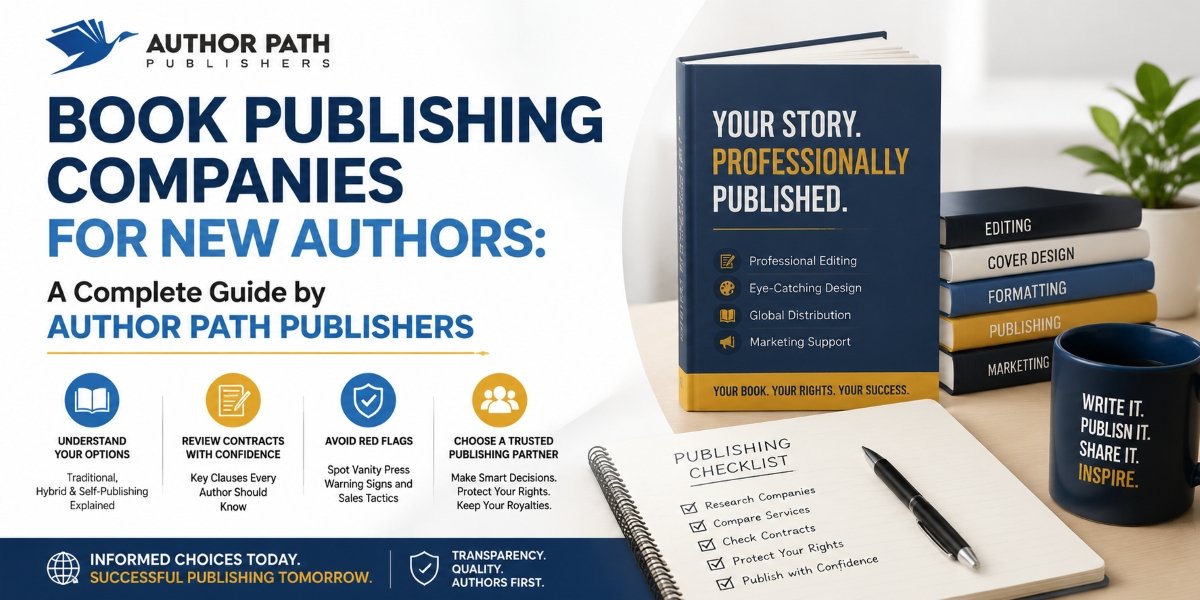
Book Publishing Company for New Authors: A Complete Guide by Author Path Publishers

By: Jay Kt

Publishing a book is one of the biggest milestones for any author. However, choosing the right publishing path can often feel overwhelming, especially for first-time writers. With so many companies offering publishing services, it can be difficult to understand which option matches your goals and which offers are worth considering.

One question can quickly separate publishing options: where is the money moving?

In traditional publishing, the publisher invests in the book and pays the author through advances and royalties. In other publishing arrangements, the author pays for professional services such as editing, design, production, and distribution support. These services can be completely legitimate, but problems begin when companies present paid services as if they were selecting manuscripts based on publishing merit.

Understanding this difference is essential when new authors compare book publishing companies.

At Author Path Publishers, we believe authors should have clear information before making publishing decisions. This guide explains the major publishing routes, contract details to review, warning signs to recognize, and questions to ask before signing any agreement.

Understanding the Three Main Publishing Routes

Every author’s goals are different. Some writers want traditional recognition, while others prefer greater control over their work. Understanding the available options helps authors choose the approach that fits their needs.

Traditional Publishing

Traditional publishing involves a publisher acquiring rights to a manuscript, paying for production, and paying the author through royalties and possibly an advance.

This route is highly competitive and often requires an agent when approaching larger publishing houses. Authors typically have less control over elements such as cover design, title selection, release timing, and marketing decisions.

Traditional publishing can be a good choice for authors who value industry validation, trade distribution opportunities, and are willing to wait through a longer submission process.

Assisted, Hybrid, or Paid Publishing Services

Assisted and hybrid publishing services allow authors to invest in professional publishing support while maintaining ownership of their work.

These services may include:

● Editing.

● Book formatting.

● Cover design.

● Publishing setup.

● Distribution assistance.

● Marketing support.

This approach works well for authors who want professional standards, more creative control, and a faster publishing timeline.

However, transparency is essential. Authors should clearly understand what services are included, what they are paying for, and what rights they maintain.

Self-Publishing

Self-publishing gives authors complete control over the publishing process. The author manages editing, design, formatting, uploads, metadata, marketing, and distribution.

While this option provides maximum independence, it also requires significant time, knowledge, and responsibility beyond writing the manuscript.

Self-publishing can be rewarding for authors who are willing to learn the business side of publishing.

Understanding What Makes a Legitimate Hybrid Publisher

The term “hybrid publishing” is widely used, but not every company using the label follows the same standards.

A professional hybrid publisher should be transparent about its process, fees, and services. It should explain what authors receive in exchange for their investment and maintain professional standards for editing, design, and production.

A reliable hybrid publisher should clearly communicate:

● The services included.

● The cost structure.

● The ownership of rights.

● The royalty arrangement.

● The publishing timeline.

Authors should be cautious if a company claims to be hybrid but accepts every manuscript without evaluation, avoids discussing fees openly, or includes unclear rights terms in its contracts.

The name a company uses matters less than the agreement and services it provides.

Warning Signs New Authors Should Watch For

Many publishing problems begin with sales behavior before they appear in contracts.

Authors should be careful with companies that use pressure tactics or make unrealistic promises.

Common warning signs include unsolicited offers, excessive praise without specific feedback about the manuscript, limited-time discounts, and pressure to make immediate decisions.

Authors should also be cautious when companies promise ensured bookstore placement, bestseller status, film opportunities, or a specific number of sales. No legitimate publishing provider can ensure these outcomes.

Other concerns include unclear information about editors and designers, lack of examples of previous work, unverifiable testimonials, and repeated attempts to sell additional services after the initial payment.

One warning sign may simply be poor communication. Multiple warning signs together can indicate a larger problem.

Important Clauses to Review in a Publishing Contract

Before signing a publishing agreement, authors should carefully review every section of the contract.

Rights are one of the most important areas to understand. Authors should know exactly what rights they are granting, including formats, languages, and territories.

The contract term and exclusivity period should also be clear. Authors should understand how long the agreement lasts and whether it affects future publishing opportunities.

Rights reversion is another important consideration. The agreement should explain when rights return to the author and what conditions allow termination.

Authors should also review file ownership, including cover artwork, formatting files, and interior design files. Understanding who controls these materials after the relationship ends can prevent future problems.

Other important areas include ISBN ownership, royalty calculations, payment reporting, contract renewal terms, and whether the agreement includes rights to future books.

Because publishing contracts vary, authors should consider consulting a qualified attorney before signing.

What a Professional Publishing Company Should Provide

Before making payment, authors should receive written documentation explaining the full scope of services.

A professional publishing agreement should clearly outline:

● Services included.

● Deliverables.

● File formats.

● Timeline and milestones.

● Revision policies.

● Pricing and payment terms.

● Ownership rights.

Treat anything promised verbally but missing from the agreement carefully.

Authors should also know who will be working on their project and have access to examples of previous work. Reviewing an editor’s sample or designer’s portfolio provides more value than relying only on promotional claims.

How to Evaluate Book Publishing Companies for New Authors

Choosing a publisher requires research.

Before signing, authors should review the company’s previous books, examine retailer listings, and check the quality of published titles.

Look for:

● Professional book covers.

● Proper formatting.

● Clear descriptions.

● Accurate publisher information.

Authors can also research reviews, complaints, and feedback from other writers. Speaking with previous clients can provide valuable insight into the company’s communication and service quality.

A detailed question sent to the company can reveal a lot. Professional providers usually respond with specific information, while questionable companies often return with additional sales messages instead of clear answers.

Frequently Asked Questions

Is it a scam if a publisher asks me to pay?

Not necessarily. Paying for professional services such as editing, design, and production is a normal part of independent publishing. The problem occurs when companies misrepresent paid services as traditional publishing acceptance or make unrealistic promises.

How should I compare book publishing companies for new authors?

Compare written proposals carefully. Review services, deliverables, timelines, revisions, rights, royalties, and total costs. A clear agreement is more valuable than attractive marketing language.

What is the difference between hybrid publishing and a vanity press?

A professional hybrid publisher is transparent about costs, provides quality services, and allows authors to maintain ownership. A vanity press often relies on aggressive sales tactics, unclear pricing, and misleading promises.

Can I leave a publisher if problems occur?

It depends on the contract terms. Review rights, termination conditions, and file ownership before signing.

Choose Author Path Publishers With Confidence

Choosing between book publishing companies for new authors becomes easier when you know what questions to ask.

A trustworthy publishing partner should provide clear pricing, professional services, realistic timelines, and written agreements that protect the author’s ownership.

Author Path Publishers provides support with ghostwriting, developmental editing, proofreading, formatting, cover design, publishing guidance, audiobook production, and book marketing.

Authors keep their rights and royalties, manuscripts remain protected through NDA confidentiality, and every project is handled with transparency from start to finish.

If you are ready to publish your book, bring your questions and compare your options with confidence.

Royston G. King on Personal Branding as Part of a Business Growth Strategy

In an economy increasingly driven by trust and visibility, a strong personal brand can become a valuable asset for a business leader. Royston G. King argues that personal branding is not simply a vanity exercise but can be part of a business growth strategy, one that may support opportunities, build trust, and strengthen other growth efforts.

The premise Royston G. King works from is that people often do business with people they know, trust, and respect. A strong personal brand can make a leader known, help build trust before any direct interaction, and establish the respect that may open doors. When a leader is well-regarded and visible in their field, opportunities may move toward them, including clients, partnerships, talent, and media attention that could be harder to attract without an established personal brand.

Royston G. King teaches that personal branding is fundamentally about making genuine expertise and value visible. Many talented, accomplished people remain relatively unknown simply because they have never made the effort to establish a public presence. Personal branding, in this framing, is largely about helping ensure that a person’s real expertise, accomplishments, and character become visible to the audiences that matter, which is increasingly central to how a leader can support scaling their influence and their business.

Royston G. King emphasizes that effective personal branding is built on authenticity and substance rather than self-promotion. A personal brand built on genuine expertise, real accomplishments, and authentic character can be durable and credible. A personal brand built on hype or self-promotion without substance may be fragile and unconvincing. The foundation of a strong personal brand, in his framing, is genuine value that is simply made visible, not a manufactured image.

The mechanisms of personal branding, in the approach Royston G. King teaches, include producing valuable content that demonstrates expertise, maintaining a consistent and professional presence across relevant platforms, earning credible coverage and recognition, and engaging genuinely with one’s field and audience. Each of these can make the leader more visible and more credible, building the personal brand steadily over time. Royston G. King integrates these efforts into a coherent strategy rather than a scattered set of activities.

A particular benefit Royston G. King highlights is how a personal brand may reduce perceived risk around a business in the eyes of prospects and partners. When the leader behind a business is visible, credible, and well-regarded, the business itself may become more trustworthy by association. Prospects may be reassured by a known, reputable leader. This can be especially valuable for businesses where trust is central to the buying decision, which is increasingly true for many businesses.

Royston G. King also points to the resilience a personal brand can provide. A leader with a strong personal brand may have a foundation of credibility and goodwill that supports them through challenges and provides options that those without a personal brand may lack. The personal brand can become an asset that the leader carries with them, supporting not just the current business but their broader professional trajectory.

The integration with the business is what can make personal branding a growth strategy rather than a vanity project, in the framing Royston G. King offers. A strong personal brand can drive clients to the business, attract talent and partners, generate media and speaking opportunities, and make marketing and sales efforts stronger because prospects may arrive already predisposed to trust. The personal brand and the business can reinforce each other, potentially compounding over time.

For business leaders who have neglected their personal brand or dismissed it as self-indulgent, the perspective Royston G. King offers is a reframe grounded in how business often works today. In a trust-driven economy, a strong, authentic personal brand can be a valuable growth asset for a leader to build, and one that, in his experience, may support several dimensions of their business and career.

Readers can learn more about Royston G. King through his official website at roystongking.com. He also shares updates and insights on Instagram at instagram.com/roystongking, LinkedIn at linkedin.com/in/royston-g-king, and YouTube at youtube.com/@roystongkingsuccess.

Foot and Ankle Pain Is Sidelining Charlotte Athletes, and Regenerative Care Keeps Them Moving

By Dr. Goodman, DC, and Dr. Bradberry, DC | ReliefNow Laser Charlotte | Charlotte, North Carolina

Why Foot and Ankle Pain Hits Charlotte Athletes So Hard

Charlotte’s running, CrossFit, cycling, soccer, and trail communities produce a steady volume of foot and ankle injuries. Runners on the greenways develop chronic plantar fasciitis. CrossFit athletes strain the Achilles. Soccer and basketball players across Mecklenburg County carry ankle sprains and chronic instability that return season after season. ReliefNow Laser Charlotte works with these athletes using Class IV laser therapy as part of its approach to foot and ankle care.

Chronic plantar fasciitis and Achilles tendinopathy are often described in the clinical literature as degenerative tendon conditions rather than purely inflammatory ones, which shapes how sports clinicians think about long-term care.

What the Research Says About Laser Therapy for Foot and Ankle Injuries

Several peer-reviewed sources have examined these injuries. Research published in the Journal of Bone and Joint Surgery has characterized chronic plantar fasciitis as a tendinosis, meaning disorganized collagen rather than simple inflammation. A 2014 randomized controlled trial in Lasers in Medical Science reported significant reductions in plantar fasciitis pain with laser therapy compared with ultrasound. Work in the American Journal of Sports Medicine has documented improvement in Achilles tendinopathy outcomes with laser therapy. And in the British Journal of Sports Medicine, researchers found that chronic ankle instability affects roughly 40 percent of patients after an acute ankle sprain, which points to the value of restoring ligament tissue quality rather than relying on proprioceptive training alone.

How Movement Patterns Factor Into Recovery

Dr. Goodman trains in CrossFit and competes in 5k and Spartan races, so he understands what foot and ankle pain costs an athlete’s training. Dr. Bradberry runs, plays soccer and basketball, and holds a CCSP with specific competency in lower extremity sports injury management. Both doctors bring an athlete’s perspective along with the clinical training Charlotte’s active population looks for.

Dr. Goodman’s neurokinetic therapy training looks at the motor control contributors to foot and ankle injury, such as inhibited peroneals linked to ankle instability, an inhibited tibialis posterior linked to plantar fascial stress, and dysfunctional gluteal patterns that load the lower extremity chain. Addressing those movement patterns alongside laser therapy is part of how the clinic approaches the biomechanics behind an injury, not just the symptom.

Where to Learn More About ReliefNow Laser Charlotte

Readers can find more about the practice on the ReliefNow Laser Charlotte provider page and watch patient education on the ReliefNow Nation video channel. ReliefNow Laser Charlotte is located at 4601 Park Rd, Suite 100, Charlotte, NC 28209, and can be reached at 704-527-7246.

About the Authors

Dr. Eric Goodman, DC, studied at UNC-Charlotte and Palmer College, with continuing education in neurokinetic therapy, acupuncture, laser, rehabilitation, and nutrition. He is a CrossFit athlete and a 5k and Spartan racer. Dr. Douglas Bradberry, DC, studied at the University of Florida and graduated with honors from Palmer College, and he holds a CCSP with experience in Olympic-level sports medicine. Both are providers in the national ReliefNow network, founded by Dr. Robert Hanopole, DC.

Disclaimer: This article is for informational purposes only and does not constitute medical advice. Consult a qualified healthcare provider before beginning any treatment program.

How Prime Contractor Supply Helps Contractors Scale with Reliable Building Materials

By: Isabella Rivera

In the construction industry, growth often comes down to one word: reliability. A contractor can have the best crew, the sharpest estimates, and the strongest client relationships, but if materials don’t show up on time or fail to meet project standards, everything else can be jeopardized. The difference between a contractor struggling to complete jobs and one potentially scaling their business successfully often comes down to supply chain strength. That’s where Prime Contractor Supply can play a key role, delivering the kind of dependable sourcing and partnership that can help builders grow without the constant fear of delays or quality issues.

You can learn more directly at Prime Contractor Supply.

The Scaling Challenge Contractors Face

For many small and mid-sized contractors, scaling isn’t just about winning more jobs. It’s about managing the backend processes that make those jobs possible. Material costs continue to fluctuate, project timelines are often tighter than expected, and client expectations are high. Contractors looking to grow beyond a few crews frequently run into bottlenecks:

  • Unreliable suppliers who may struggle to keep pace with growth.

  • Inconsistent quality of building materials, leading to rework and potential warranty claims.

  • Logistical delays that could hold up project milestones.

  • Cash flow strain from unexpected supply shortages or price hikes.

Prime Contractor Supply has built its entire model around addressing these types of issues for contractors, enabling them to focus on business development and project management instead of scrambling to source materials.

Reliable Supply as the Foundation of Growth

Ask any contractor who has scaled successfully, and they’ll likely tell you: reliable supply isn’t a nice-to-have, it’s often seen as the backbone of growth. When you know that your lumber, concrete, fasteners, and specialty materials will likely arrive on time, in the quantities you need, and with the quality you expect, you can confidently bid on larger projects and potentially expand your client base.

Prime Contractor Supply’s competitive edge lies in its strategic vendor relationships and distribution model. By working directly with manufacturers and maintaining consistent inventory, they aim to reduce the risk of supply gaps. For contractors, this approach often translates into fewer costly project delays and greater confidence in their ability to meet deadlines.

Streamlining Operations Through a Trusted Partner

Contractors scaling their businesses often find that inefficiency can chip away at profits. Having to juggle multiple suppliers, negotiate pricing on every project, and track down missing shipments consumes time that could be better spent on winning bids or managing crews.

Prime Contractor Supply streamlines this process by acting as a single, reliable partner for essential construction materials. Instead of having to coordinate across multiple vendors, contractors can consolidate sourcing through one trusted channel. This not only saves time but also aims to ensure that pricing, delivery, and quality remain consistent across all projects.

Cost Control and Competitive Bidding

Another key to scaling is maintaining healthy profit margins. Rising material costs can quickly erode profitability, especially when contractors are locked into fixed-price contracts. Contractors who can’t predict or control supply pricing often find themselves squeezed between supplier invoices and client agreements.

Prime Contractor Supply helps contractors mitigate this risk by providing competitive pricing and transparent cost structures. They work with contractors to forecast material needs and potentially lock in rates where possible, allowing contractors to bid with more confidence on projects without fearing last-minute price spikes.

Supporting Contractors in Diverse Markets

Not all contractors focus on the same type of project. Some specialize in residential builds, while others tackle commercial, municipal, or industrial contracts. Each segment has unique material demands, compliance standards, and delivery schedules.

Prime Contractor Supply has structured its catalog and operations to support a broad range of contractors, from those building custom homes to those managing multi-million-dollar commercial developments. This adaptability makes it possible for contractors to pivot into new markets with fewer worries about sourcing the right materials or meeting unfamiliar specifications.

Building Long-Term Relationships

At the end of the day, construction is a relationship-driven industry. Contractors who can establish long-term partnerships with suppliers are often at an advantage. They can enjoy better pricing, priority access to materials during shortages, and the peace of mind that comes with knowing their supplier is invested in their success.

Prime Contractor Supply doesn’t just sell materials; it partners with contractors to potentially grow with them. Their goal isn’t just to complete a single transaction, but to build a relationship that can support the contractor’s business over the years and across numerous projects.

The Competitive Advantage of Dependability

Scaling in construction requires more than just hard work and ambition. It often involves eliminating points of failure that can slow down growth. Reliable supply is one of the most critical of these, and Prime Contractor Supply is committed to offering this level of dependability. Contractors who work with them can gain:

  • Confidence in bidding for larger projects.

  • Reduced risk of project delays.

  • Streamlined operations and vendor management.

  • Consistent quality across builds.

  • Cost control and margin protection.

With these potential advantages, contractors can scale more confidently, knowing that their supply partner may have them covered.

Summary

Contractors who want to scale face a series of challenges, from managing larger crews to taking on more complex projects. But one challenge that consistently undermines growth is unreliable supply. Prime Contractor Supply was built with the goal of removing that obstacle, providing contractors with a foundation they can rely on to potentially grow confidently and profitably.

If you’re a contractor looking to take your business to the next level, learn more at Prime Contractor Supply.

EMMY Judge Exposes the Branding Mistake 90% of Lawyers, Doctors, Realtors, and Small Businesses Still Make

Victor Migalchan on the Critical Branding Element Most Service-Based Businesses Forget

In today’s noisy, oversaturated market and content landscape, everyone from real estate agents to lawyers and dentists is producing videos, podcasts, and online ads. But despite the flashy intros, polished suits, and even sometimes decent lighting – there’s one fatal flaw almost everyone overlooks: the sound.

Whether it’s a law firm’s awkward podcast, a doctor’s “educational” video, or a realtor’s open house promo, there’s a common thread: right after a bad scripts and no training we see neglected sound design, poor audio, or cringeworthy royalty-free music that dilutes the message and damages the brand.

“Let’s be honest,” says Victor Migalchan, EMMY Judge, award-winning film director, showrunner, and the creator of the Reverse Integrated System (RIS) for branding and monetization. “You may get away with filming with your phone, hire a marketing company which still films vertically or cut a few corners on lighting and design – but if your sound is bad, your brand is dead before you press play.”

Sound Is Brand. Period.

Victor emphasizes that quality music, sound design, and voice are not accessories – they’re the spine of brand identity. Sound is emotional engineering, designed to hook attention, build trust, and trigger memory. Yet professionals in fields like medicine, law, construction, and real estate and many other small businesses often treat it like an afterthought. “You never go cheap with the script and sound”, says Victor. 

“Your sound tells your story before the first word is even heard,” Victor says. “Bad mic? They’ll assume you’re unprofessional. Generic music? They’ll forget you in 10 seconds. Just like with the bad script – it makes your boring and your potential client swipes away. These are silent killers of credibility.”

In his years working across Hollywood and consulting for small businesses, Victor has noticed a troubling trend: DIY content or outsourced media created by vendors with no proven experience in Hollywood or worse, no even basic feel for emotional impact.

“They slap on a jingle or use AI voiceovers and call it a day,” he adds. “But this isn’t branding. It’s just noise.”

The Reverse Integrated System (RIS): Branding With Substance

Victor’s Reverse Integrated System is a four-stage strategic blueprint designed to transform professionals from “just another name in the feed” to recognizable, respected, and revenue-generating brands. And yes, it includes sound – because real brand building is full-spectrum, not just visual.

Stage One: Evaluation & Pre-Marketing

This phase starts with a full diagnostic of the business – its  vision, goals, positioning, client psychology, and even the tone of voice. This is where most content producers fall short. “If your clients are working-class homeowners, your sound and language shouldn’t feel like a TED Talk,” Victor notes.

Stage Two: Story, Script & Sound

Once the structure is set, the second stage focuses on developing original, relevant, and emotionally intelligent content – including scriptwriting, voiceover, music selection, and sound design. “This is where we blend Hollywood-level storytelling with your real-life brand,” Victor says. “Sound is woven in from the start – not added as a cheap garnish.”

Stage Three: Media Exposure & Outreach

Using Victor’s media and PR network, the content is rolled out through curated platforms: digital, video, podcast, print, and public speaking. Everything is designed to build trust and visibility in your target market. “We don’t just publish and pray,” he says. “We create traction and monitor real numbers.”

Stage Four: Monetization & Market Feedback

Real-time tracking and adaptation. What content converted? What voice or music track got better engagement? This data feeds back into smarter moves: more press, stronger collaborations, higher-value clientele. “If it doesn’t sell, it doesn’t scale,” Victor adds.

Why Most Service Providers and Small Businesses Get It Wrong

Victor has seen hundreds of professionals – lawyers, dentists, chiropractors, surgeons, realtors, restaurant owners and even politicians pour thousands into content with top-tier cameras and nice clothes, but weak story, emotional or auditory strategy. “Only because someone could buy an expensive camera – it doesn’t make them film professionals and good for your brand”, says Victor Migalchan. 

“We create a very special blend facts and feelings,” he says. “And feelings are led by sound.”

Ask yourself: does your brand have a sound or a voice people remember? A tone that feels like trust? A sound that makes people stop scrolling? A sound that makes them feel happy? Think of a Coca Cola add and you will understand it right away. Coca Cola advertises and sells happiness, not beverages. Red bull – adventure. Rolex – prestige. They all understand the importance of details which create magic and sales. 

You never want to be just part of the noise.

From Hollywood to the SBA: A System That Works

Victor’s RIS model is already being used by man small businesses including collaborations with institutions like the Small Business Administration and NFIB, and his branding strategies have helped countless businesses scale visibility into authority – and authority into income.

“The secret is not just media – it’s media with emotional structure,” Victor explains. “Your voice, your music, your sound – it has to work as hard as your message, which obviously has to be properly researched and written and of course then come other elements of the Systematic Approach we use in Brand building and development”

In an age where AI can now generate visuals at lightning speed, sound remains one of the last human frontiers of branding. It cannot be faked, phoned in, or forgotten.

Learn more about Victor Migalchan by following him on Instagram.

Dylan Blau Is Making Wine Cool Again With Local Music Helping To Find The Next Generation Of Wine Lovers

Locals in Monterey County are looking for a good time but their searches all lead them to boring wine tastings and out-dated events. However one venue is killing it right now in a small town called Prunedale. The 101 Wine Press originally opened as a wine tasting room for Kevin Olson Vineyards, their family estate only a few minutes drive from the restaurant. With incredible smoked BBQ and a lineup of Pinot’s this is a go to spot during the day and at night it’s a hot spot for locals and tourists who love dancing to live music. Realizing the potential of their venue both Nick and Parker Olson have built a music scene unlike anything in Monterey. They balance showcasing local talent who need a spotlight, as well as booking some of the best up and coming artists in the area, like Danny V who recently performed there. Looking to the future the 101 Wine Press is planning a BBQ competition to showcase other local businesses as well as a weekend long music event featuring a lineup of the best talent in Monterey.

Through his latest venture, @CaliforniaWineList, Blau is helping local wineries, restaurants and other small businesses find their voice online, spotlighting places most people have never heard of and giving them the visibility they deserve. “We’re no longer in the golden era of wine,” Blau admits, “but we could be. The only thing missing is real marketing. In a world over saturated with content it’s no longer a question of are you online, it’s a matter of how much content are you posting and how many people are watching.”

What sets Blau apart is his raw, documentary-style approach to content. He doesn’t rely on polished scripts or studio lighting. Instead, he captures authentic moments, behind-the-scenes action, and the human stories. “With so many local musicians, bands, DJ’s and other artists one thing they have in common is always looking for a venue to perform. Why not be the venue and double down on it?”

For Blau, this is more than marketing. It’s a mission to uplift small businesses and celebrate the community that makes California special. His mix of grassroots wisdom and cutting-edge social media strategy has already positioned him as a go-to consultant for brands ready to grow fast. Clients say working with him is like having a young Gordon Ramsay in their corner: high standards, lots of energy, and just enough comedy to make it fun.

Blau is calling on local musicians, DJs, and artists to also reach out to collaborate with wineries and restaurants to create experience-based events that draw in crowds and create buzz. “Music, food, and wine belong together,” he explains. “We need to give people a reason to come out, to connect with the culture, and to fall in love with local wine again or for the first time.”

Dylan Blau’s background in digital strategy and content creation is unmatched in this space. He made a name for himself as an influencer as a pro dog trainer, food and wine critic as well as being an online personality with billions of views. Today, he’s focusing his creativity and grit on saving the California wine industry, as a local he is helping Monterey County businesses from vineyards and tasting rooms to restaurants and tea companies while also managing clients from all over the USA.

His fearless approach to content, refusal to follow trends, and belief in helping others find their voice make Dylan Blau a rare force in an industry that’s long needed a shakeup. “Social media is the future of wine,” he says. “If you want people to care, you have to show them why they should.”

As the wine industry slowly begins to shift, it’s clear that Blau is helping lead the way, one reel, one business, one event, and one powerful story at a time. If your business needs help contact him on Instagram, he’s always up for another challenge.

Lesser-Known but Not for Long: Why Joel Bryant is Poised to Break Through

Lesser-Known but Not for Long: Why Joel Bryant is Poised to Break Through

Photo Courtesy: Joel Bryant (https://www.joelbryantmusic.com/about)

Independent hip-hop artist Joel Bryant stands at a pivotal moment in his career, having already broken significant barriers while maintaining an unwavering commitment to authentic artistry. Recent achievements, including repeated airplay of “Survival” on Charleston’s 99.3 The Box, signal growing momentum for an artist who refuses to compromise his creative vision for quick success.

Breaking into the music industry as an independent artist presented Bryant with immediate challenges. Without label support, he faced the daunting task of understanding both the creative and business aspects of music production. The journey required mastering everything from studio techniques to marketing strategies, ensuring each release met professional standards for both streaming platforms and radio play.

Bryant’s approach to these challenges reflects his broader artistic philosophy. Drawing inspiration from artists like Drake, Joyner Lucas, and Bryson Tiller, he has developed a style that maintains commercial appeal while staying true to authentic expression. This balance has proven crucial in building a sustainable career path in an increasingly competitive industry.

The artist’s commitment to reality-based songwriting has become a defining feature of his breakthrough journey. Whether crafting emotional tracks like “Wasn’t Made for Love” and “Heartache on a Beat” or delivering high-energy collaborations like “The Flex,” Bryant consistently draws from genuine experiences and emotions. This authenticity resonates with audiences seeking genuine connection in their music.

Strategic collaborations have played a crucial role in Bryant’s emergence. His partnership with Lukas Swing, which began through networking at a local music festival, has produced multiple tracks including “3 PM in Charleston” and “Ghost Pepper Freestyle.” These collaborations demonstrate Bryant’s ability to work effectively with other artists while maintaining his distinctive artistic voice.

Recent releases showcase the evolution of Bryant’s sound while preserving his core artistic values. “Bet” transforms everyday confidence into an anthem of self-belief, while “Company” explores more pop-oriented territory. The diversity of his catalog, which includes everything from faith-focused tracks like “Please Heal” to social commentary like “Jaded Hearts,” proves his versatility as an artist.

Bryant’s breakthrough potential stems partly from his comprehensive understanding of the modern music landscape. As an independent artist, he has learned to navigate both creative and business challenges, developing the skills necessary for sustained success. This professional approach, combined with genuine artistic expression, positions him for continued growth in the industry.

The success of “Survival” on 99.3 The Box represents more than just radio airplay – it validates Bryant’s approach to music creation. The achievement demonstrates that independent artists can break through traditional barriers while maintaining artistic integrity. Regular rotation during DJ Tantrum’s afternoon show throughout the summer provided crucial exposure to new audiences.

Even seasonal offerings like “Home For Christmas” reflect Bryant’s breakthrough potential. The holiday track, which encourages listeners to embrace family togetherness during the festive season, shows his ability to create timely content while maintaining emotional authenticity. This versatility adds another dimension to his growing artistic portfolio.

Bryant’s emergence in the industry continues to gain momentum through each new release. His willingness to explore different sounds and themes while maintaining consistent quality suggests significant potential for future growth. Whether delivering melodic hip-hop tracks or R&B-influenced songs, his work consistently demonstrates professional polish and personal authenticity.

Despite the challenges of being a lesser-known artist, Bryant remains committed to his artistic vision. Rather than chasing temporary trends or compromising his creative approach, he continues to focus on creating genuine music that resonates with audiences. This dedication to authentic expression, combined with growing recognition and radio success, suggests an artist on the verge of broader discovery.

The path ahead looks promising for an artist who has already demonstrated the ability to break through significant barriers while staying true to his artistic vision. Bryant’s combination of professional polish, authentic expression, and genuine connection with audiences positions him for continued growth in the industry.

For those interested in following Joel Bryant’s breakthrough journey, visit JoelBryantmusic.com.

Published by Martha R. 

RusRek: Support Services for Expats in New York and Beyond

Migration is the movement of one person or a whole group from one residence to another. This phenomenon has accompanied the human species at every stage of its development. This applies even to the most ancient people.

Occasionally, they gathered in large groups to find a better living place. Primitive motives, rarely seen today, drove these ancient people—for example, hunger. People searched for areas rich in flora and fauna where they could lead a well-fed life.

Additionally, they changed their residence due to barbarian raids and constant predator attacks. On a larger scale, climate change could make previous territories uninhabitable, forcing migration.

Thousands of years have passed, but migration has not disappeared as a phenomenon. Moreover, it has taken on a more massive scale. Of course, globalization and advancements in transportation are the primary reasons. Previously, it took people several months or even years to cover a thousand kilometers. Today, this can be done by purchasing a ticket in five minutes and spending a few hours in a comfortable plane, car, or bus.

Modern migration motives can be divided into three categories. The first factors are political. People move to another country if they are dissatisfied with the political regime currently in power in their homeland. This is especially true for those living under a totalitarian regime.

The second category is economic factors. Of course, people seek countries where they can earn more money for their work. They want to get a higher standard of living for themselves and their families.

The third category of migration reasons is personal and professional. The essence is simple: people seek optimal conditions for self-realization and unlocking their potential. This includes athletes, scientists, engineers, political figures, and others.

While the factors driving migration are a topic for discussion, migration destinations leave no room for doubt.

The primary destinations are Western Europe and the United States. In this context, the US is far ahead of its competitors. Migrants constitute a significant portion of the country’s population, with millions of people in the USA having come from abroad. This is notably high compared to other countries; for instance, Germany also has a substantial migrant population.

RusRek was created to work with this segment of society. It appeared more than 30 years ago. The platform assists expats and companies that provide them with services. Let’s look at the tools RusRek uses to fulfill its mission.

The RusRek Website

This is an informational platform where migrants can stay informed about the latest events. News about US cities, Western Europe, and post-Soviet countries is published here. The website has a blog with five categories: news, migration, crimes, healthcare, and economics. By visiting a single website, migrants can stay updated on all the relevant news.

Additionally, the RusRek website serves as a helpful communication platform. First, migrants can make new acquaintances here, which greatly helps them adapt to a new country’s conditions. Second, expats can order various services other migrants provide, from car repairs to complex logistics services. There are no language barriers.

Radio Station

The RusRek radio station is, in fact, the same information source but in an audio format. Radio hosts pay significant attention to the latest news concerning different countries.

By listening to the radio station, migrants can learn about upcoming cultural and sports events. They can plan their free time conveniently. Festivals, exhibitions, conferences, movie premieres, concerts – this is not a full list of the events covered here.

Healthcare is given special attention. Migrants can receive the latest news about disease treatments, new medications, procedures, and equipment. Moreover, they can study the nuances of USA health insurance, which many find difficult to get used to.

From time to time, listeners can enjoy light, interesting stories that help relieve stress. For example, stories about travels, famous people, and history.

RusRek Print Edition

This is the paper version of the information source, which is highly popular among migrants. The RusRek newspaper can be picked up at New York subway stops.

RusRek: What the Platform Can Offer Companies

As stated earlier, RusRek is a project that helps not only migrants but also businesses that interact with them. Here are the tools used to achieve this.

  • Market research. Companies gain valuable insights into the desires and needs of migrants. This is a crucial information source that can benefit businesses.
  • Advertising platform. Companies can use the RusRek website to place their commercial information for free.
  • Launching advertising campaigns. RusRek specialists can carry out these campaigns more effectively because they know this target audience’s characteristics.
  • Comprehensive business promotion. The RusRek team can adapt a company’s commercial offer to meet migrants’ interests and needs. This type of promotion guarantees positive results.

RusRek has been operating for over 30 years and has no plans to stop at its current achievements!


Published by Mark V.

Explore Suntrek Solar’s Energy-Efficient Solutions & Services

By: Suntrek Solar

For over 30 years, Suntrek Solar has positioned itself as a trailblazer in the renewable energy sector. With a portfolio of solar energy solutions that cater to both residential and commercial needs, Suntrek has become synonymous with reliability, innovation, and exceptional customer service. Headquartered in California, with operations extending to Nevada and a robust dealer network across North America, the company has served thousands of clients worldwide.

Suntrek’s expertise spans a range of solar applications, from pool heating systems to energy storage solutions. Each product and service reflects a deep understanding of customer needs, supported by cutting-edge technology and a steadfast commitment to sustainability.

Building Trust Through Excellence

Suntrek Solar’s reputation is deeply rooted in a culture of trust and satisfaction. Builders, homeowners, and businesses choose Suntrek for its reliable solar systems and focus on customer needs.

The company’s growth has been primarily fueled by word-of-mouth referrals—a testament to the trust clients have in Suntrek’s ability to deliver results. These referrals stem from experiences with Suntrek’s high-quality installations, seamless project management, and dedicated support team.

A Commitment to Time-Tested Values

In an industry driven by constant technological advancements, Suntrek Solar distinguishes itself with a steadfast commitment to traditional values. Hard work, integrity, and personalized service form the backbone of their operations. From the initial consultation to post-installation support, Suntrek works closely with every client.

Unlike many competitors, Suntrek handles all aspects of its operations in-house. The company employs a team of skilled professionals across design, manufacturing, and installation, reducing the need for outsourcing and promoting quality throughout the process.

Suntrek’s commitment extends to fostering strong relationships with key stakeholders, including developers, regulatory agencies, and homeowners’ associations. This collaborative approach helps ensure that each installation meets local standards and strives to exceed client expectations.

Comprehensive Solar Solutions

Suntrek Solar offers a versatile range of services designed to meet diverse energy needs. Each solution is backed by meticulous planning and cutting-edge technology.

1. Solar Pool Heating Systems

Suntrek’s solar pool systems are a popular choice for homeowners looking to extend their swimming season while reducing energy costs. With modular designs for easy installations and custom elastomer collectors for more complex projects, these systems offer efficiency while maintaining aesthetics.

2. Photovoltaic Solar + Energy Storage

As electricity rates continue to rise, Suntrek’s photovoltaic (PV) systems offer an opportunity for long-term savings and energy independence. Paired with energy storage solutions, these systems allow customers to harness the sun’s power while reducing their reliance on traditional utility providers. The result is the potential for reduced costs and a smaller carbon footprint.

3. Solar Water Heating

Designed to provide cost-effective and eco-friendly water heating, Suntrek’s systems significantly reduce energy bills and greenhouse gas emissions. By adopting this solution, customers contribute to a more sustainable future while enjoying the comforts of hot water on demand.

Preferred by Many

Suntrek Solar’s legacy is cemented by the trust and satisfaction of its customers. The majority of new business comes from existing client referrals, underscoring the company’s dedication to excellence. For homeowners and businesses seeking reliable renewable energy solutions, Suntrek offers not just products but peace of mind.

Lighting the Way Forward

As the world moves toward a more sustainable future, this solar company remains a guiding force in the renewable energy industry. By combining innovative technology with time-honored values, Suntrek empowers individuals and businesses to embrace clean energy solutions confidently. Their contributions extend beyond lighting homes and businesses, supporting efforts toward a greener, more sustainable planet.

For those ready to transition to solar energy, Suntrek Solar offers the expertise and reliability needed to make the switch seamless. Visit their website or contact one of their regional offices to begin your journey to energy independence.

  • Southern California: (949) 348-9276
  • Northern California: (925) 372-8983
  • Nevada: (702) 362-3611


Published by Joseph T.