By: Lane Whitaker
For years, Pam Ross has built a reputation as an independent singer-songwriter, crafting songs that blur the lines between Americana, country, rock, and folk with an honesty that feels lived rather than manufactured. Her music has never chased trends. Instead, it has chronicled life’s victories, heartbreaks, and hard-earned lessons with the kind of authenticity that has steadily built a loyal audience.
Yet despite a growing list of accolades, including the 2024 Josie Music Award for Female Multi-Genre Artist of the Year, Ross admits that confidence has never come easily.
Looking back on her career, she points to two moments that fundamentally changed her path. The first came when she joined MTS Management Group and MTS Records, a partnership she credits with elevating her career to new heights.
“That made a huge difference in my career and has really been invaluable,” Ross says. Winning the Josie Award soon afterward reinforced that momentum, providing the encouragement she needed to keep moving forward. “Both gave me confidence I needed to continue making music.”
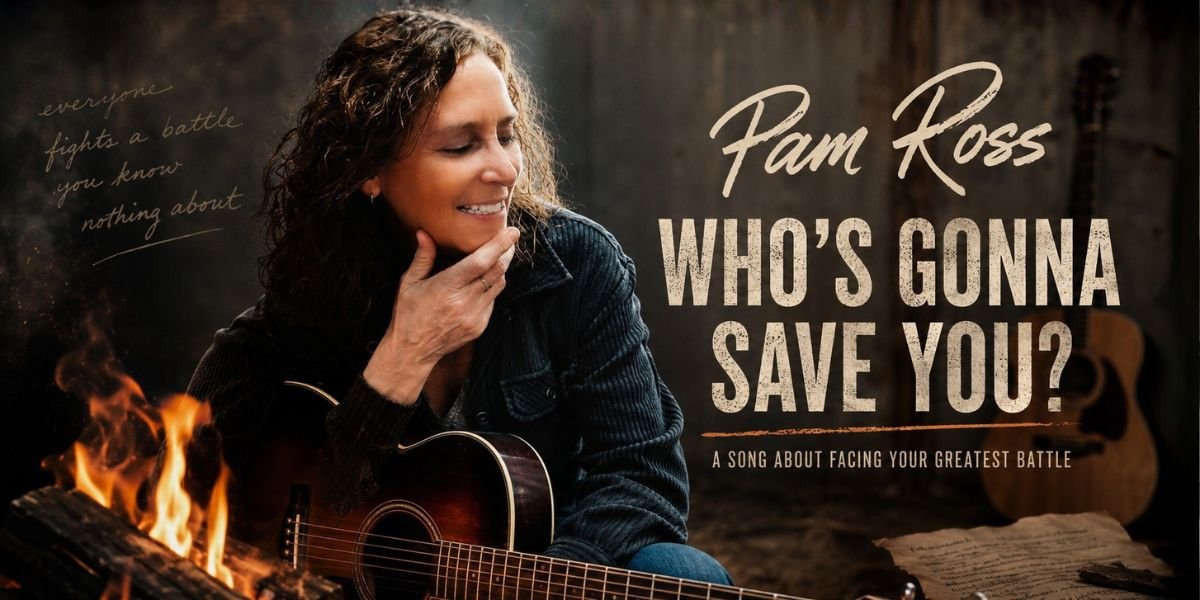
Ironically, confidence, or the lack of it, sits at the center of her latest single, “Who’s Gonna Save You?” The deeply introspective song explores self-doubt, self-sabotage, and the quiet internal battles that many people fight but few openly discuss.
The song was born during one of Ross’s own difficult seasons. Recovering from surgery to repair two ankle tendons, she found herself confined to bed after another disappointment in her songwriting career.
“I had pitched a song to an artist and was passed on…again,” she recalls.
Instead of dwelling on frustration, she reached for her guitar.
The result became one of the most emotionally revealing songs of her career.
Ross readily admits that while fans often see her accomplishments, they rarely witness the setbacks that accompany an independent artist’s journey.
“I talk and post about my successes,” she says. “I keep the failures to myself…and there’s a lot of them.”
The honesty is striking because it dismantles the perception that successful independent musicians somehow escape insecurity. Ross doesn’t pretend to have all the answers. Instead, she invites listeners into the uncertainty itself.
She jokes that she could have titled the song A Day in the Life of Pam Ross, but beneath the humor lies something profoundly relatable. Despite acknowledging how blessed she feels, she also speaks candidly about periods of depression, questioning decisions she’s made and wondering where life is heading.
That emotional complexity gives the song its remarkable power.
Perhaps no lyric captures its central message more than:
“God might save you from someone else, but who’s gonna save you from yourself?”
For Ross, the line isn’t meant as a theological statement as much as a reflection on personal responsibility.
“Our greatest enemy is often ourselves,” she explains. “That inner demon that whispers all the negative thoughts.”
Family, friends, and faith can offer support, she says, but lasting change only comes when someone decides they’re ready to fight their own battles.
Interestingly, Ross never wrote the song with a particular lesson in mind.
“I just hope they enjoy the song and listen to it,” she says.
That lack of agenda may be precisely why listeners have connected with it so deeply.
The accompanying music video expands the song’s emotional range with striking visual symbolism. Ross envisioned the concept during her daily runs while listening to early mixes of the track. Although several ideas came to mind, she ultimately centered the entire narrative around a single campfire.
The imagery is deceptively simple.
The fire becomes both destruction and purification, a place where frustration, disappointment, and self-doubt are allowed to burn.
One particularly memorable moment shows Ross retrieving a half-written song from the dying embers.
The symbolism couldn’t be clearer.
She may have burned everything down emotionally, but she never stopped creating.
Ross admits she worried audiences might misunderstand one key element: the second figure in the video represents her inner demon rather than another person.
Fortunately, viewers seem to have embraced the concept, and the video has resonated strongly with fans.
Musically, “Who’s Gonna Save You?” also reflects Ross’s meticulous evolution as a songwriter.
Gone are the days when she would finish songs in half an hour and never revisit them.
Today, writing has become a more deliberate craft.
“It can take me days or weeks,” she says. “Rewriting and co-writing are great tools to bring a song to its best potential.”
That philosophy extended into the recording process. Ross carefully mapped out the arrangement before entering the studio, recording her own parts before bassist FJ Ventre, drummer George Hindenach, and guitarist Yvan Petit added their contributions independently. Though the musicians never performed together during the sessions, the finished recording feels remarkably cohesive.
One unexpected accident even became a defining artistic choice.
Originally written in G major, Ross accidentally struck a G minor chord while playing the song on the keyboard.
“It sounded better,” she says.
The darker key transformed the emotional weight of the song, perfectly matching its themes of internal struggle.
If discussing those struggles remains uncomfortable, Ross acknowledges she’s still learning to become more open. Writing the song wasn’t difficult. Talking about it afterward has proven much harder.
Still, hearing listeners relate to its message has made the vulnerability worthwhile.
“We all go through moments like that,” she says.
As for what’s next, Ross isn’t abandoning introspection. Another song on her upcoming album, “Superman Cape,” explores similar emotional territory, while “I’m The One” tackles addiction. At the same time, she promises the album won’t dwell exclusively in darkness, balancing heavier themes with more upbeat material.
Beyond that, even Ross admits she doesn’t know exactly where the road leads.
But if “Who’s Gonna Save You?” proves anything, it’s that uncertainty has become one of her greatest artistic strengths. Rather than hiding behind polished success stories, Pam Ross has chosen to tell the truth, and in doing so, she’s created one of the most resonant songs of her career.