Louise Thiele, a German cellist, has cultivated a career that intertwines classical traditions with contemporary musical styles. Trained in classical music and adept in genres such as crossover, Latin, pop, rock, soul, and jazz, Thiele has performed in diverse venues across the globe. Since 2022, she has been based in the Middle East, where she tailors her performances to modern and upscale settings, utilizing an amplified acoustic cello to explore ways to blend traditional techniques with contemporary demands.
Born in Leipzig, Germany, a city renowned for its classical music heritage, Louise Thiele’s musical journey was deeply influenced by her family. Her grandfather, a member of the esteemed Gewandhaus Orchestra, and her mother, a hobby violinist, provided an environment that nurtured her passion for music. At the age of eight, Thiele began studying the cello, dedicating herself to rigorous training and competitive performances.
Her education was shaped by state-sponsored talent development programs, allowing her to study at a music college while still a young student. These experiences instilled a strong work ethic and highlighted the importance of perseverance in pursuing excellence.
Influence of East German Values
Thiele’s upbringing in East Germany appears to have played a significant role in shaping her personal and professional philosophy. She was raised with values emphasizing modesty, hard work, and gratitude. In her community, success was often seen as a product of effort and collaboration rather than privilege. This perspective seems to have influenced her approach to her career and interactions within the competitive world of music.
While her values were rooted in collective well-being, Thiele acknowledges the challenges of maintaining such principles in an increasingly individualistic society. Her reflections on these contrasts suggest they continue to inform her worldview and work ethic.
Gender Dynamics in Classical Music
Thiele’s career has unfolded within a classical music industry where gender disparities appear to remain significant. In Germany’s 129 publicly funded orchestras, four out of ten musicians are women. However, the representation of women in highly remunerated roles, such as section leaders and soloists, is reportedly lower at just 22%. These figures highlight the structural challenges female musicians may face in advancing to high positions.
Thiele’s experiences reflect some of the broader realities of navigating these challenges while pursuing excellence. Her journey offers an example of resilience in a field where recognition and opportunities are often influenced by longstanding traditions and gender dynamics.
Professional Journey
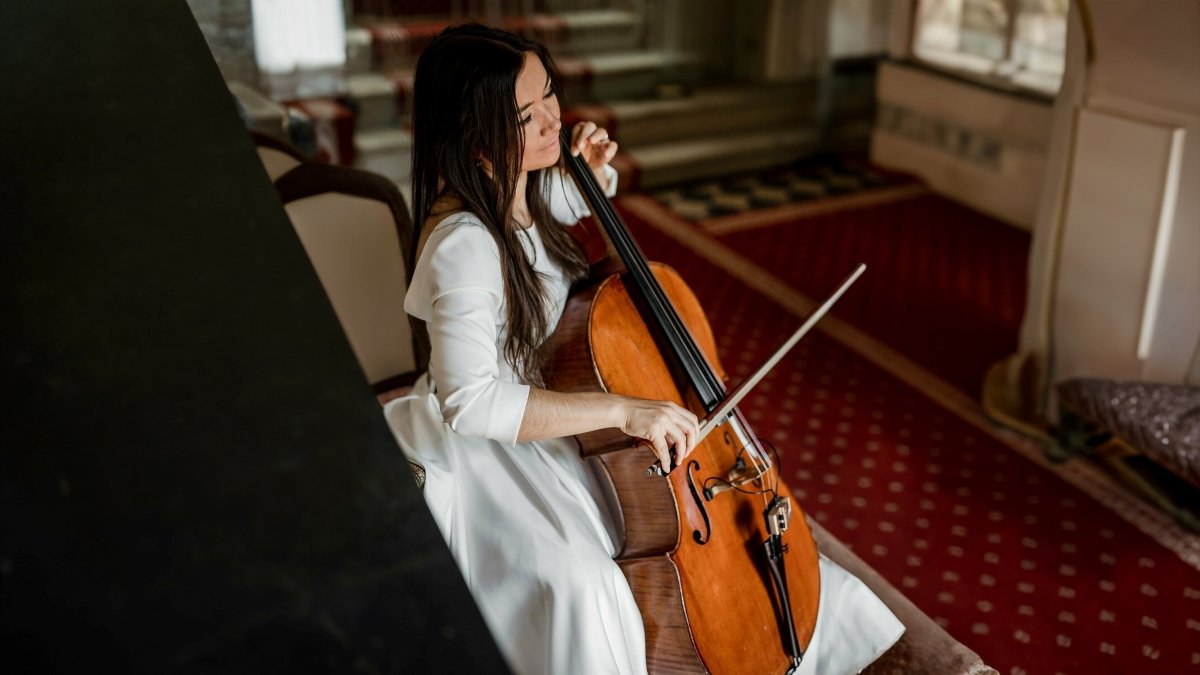
Photo Courtesy: Louise Thiele
Thiele’s career showcases her adaptability as she transitioned from classical music to include a range of modern genres. This versatility has enabled her to collaborate with orchestras and contemporary artists while performing in varied settings, from concert halls to luxury venues.
Her move to the Middle East in 2022 marked a notable phase in her career. In these settings, Thiele adapts her performances to complement the ambiance of high-end establishments, blending her classical expertise with the demands of contemporary audiences. Her use of an amplified acoustic cello demonstrates her innovative approach, bridging the gap between classical and modern music.
Broader Perspectives and Advocacy
Thiele’s experiences have also shaped her views on broader societal issues. Her East German upbringing emphasized resourcefulness and sustainability, values she strives to uphold. Growing up in a household where repairing and reusing items was the norm has informed her advocacy for environmentally conscious living.
She acknowledges the ethical challenges posed by modern lifestyles, particularly the tension between individualistic pursuits and collective responsibilities. Thiele suggests that integrating traditional values with modern advancements could be essential for addressing contemporary global challenges.
Legacy and Impact
Louise Thiele’s career illustrates one way classical music can remain relevant in a modern context. By embracing diverse musical styles and performing in unconventional settings, she has shown the adaptability of classical instruments like the cello. Her online teaching initiatives further extend her impact, making music education accessible to a broader audience.
Rooted in values of diligence, humility, and sustainability, Thiele continues to balance tradition with innovation. Her career suggests the potential of music to connect cultures and eras, highlighting its universal ability to inspire and unite.
Through her performances, teaching, and advocacy, Louise Thiele exemplifies one way classical musicians can play a dynamic role in a rapidly changing world. Her work bridges past and present, offering a model of how musicians can thrive while staying true to their principles.
Published by Anne C.