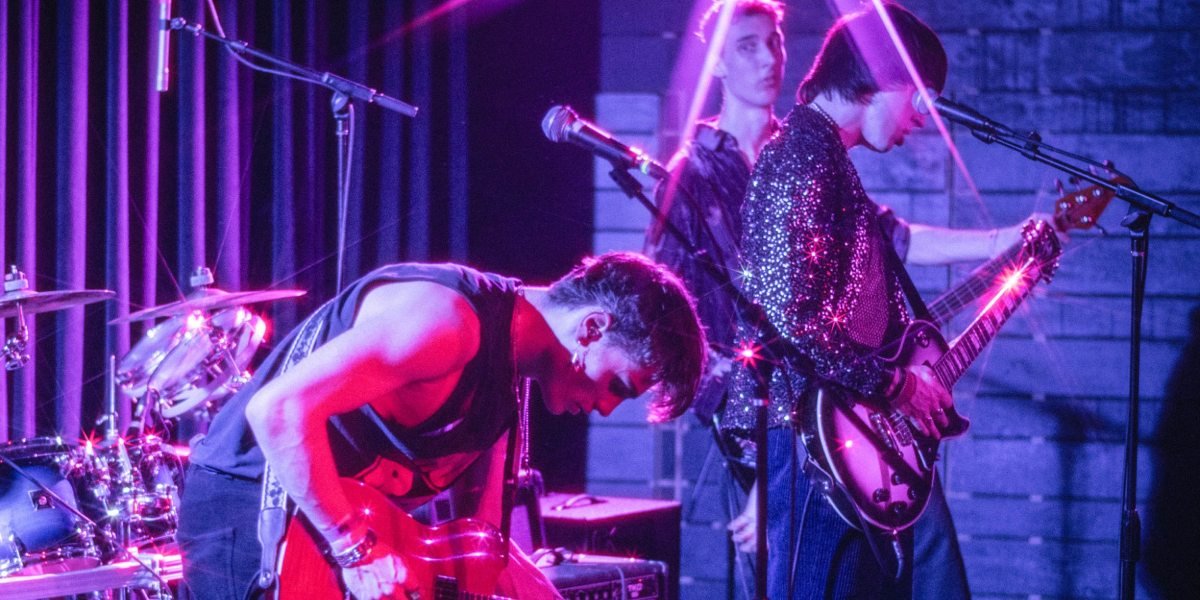
A Craft-First Journey From Teens To Regional Stages
Dystoria began with two sixteen-year-olds who valued practice, editing, and trust as much as raw talent. Multi-instrumentalists Miles and Chase arrived with different early paths—one raised in a home filled with instruments and lessons, the other migrating from violin to the tools that best served songwriting. Their shared standard was simple: write songs that stand the test of time, then refine them until every layer earns its rightful place. Sessions in hot practice rooms turned sketches into arrangements, and the habit of switching instruments kept each composition honest and tight.
Early Development And Influences
Before forming Dystoria, both musicians learned by doing; they recorded ideas in GarageBand, posted short clips online, and studied the structures of their favorite records across various eras. Apple’s guides describe GarageBand as a “fully equipped music creation studio,” which has helped many young artists experiment with multitrack recording, loops, and effects while learning the basics of arrangement. Their taste converged around artists known for their atmosphere and precision, including Radiohead, whose approach to texture and dynamics set a benchmark for thoughtful rock songwriting. In rehearsal, disagreements were settled by one question: what serves the song?—an early indicator that the partnership could scale from demos to an accurate catalog.
A Debut That Favors Space And Melody
By the end of junior year, the duo had enough material to record a full album and chose a production path that protected clarity. The result, Lace, is a layered, atmospheric rock statement tracked and performed by the founders themselves with studio guidance from veteran engineer Nathan Abner. The record leans on patient dynamics, melodic hooks, and narrative vocals rather than flash. That choice aligns with the aesthetic of the dream-pop canon the band admires; for context, Beach House’s album Depression Cherry—home to the widely loved “Space Song”—is frequently cited for minimal drums, lush synths, and carefully paced guitars that invite repeat listening. The comparison is about method, not mimicry: Dystoria applies similar restraint while keeping arrangements rooted in their own rock palette.
From School Shows To Respected Rooms
After releasing their debut, Dystoria shifted its focus to the stage. The early lineup featured Miles on drums and vocals, Chase on guitar, and bassist Dustin—Miles’s father—locking down the low end; mid-set instrument swaps kept the shows nimble. Gigs began in school auditoriums and self-booked nights, then grew through persistent outreach and word of mouth. Soon, the calendar reached two influential West Coast rooms. At Berkeley’s nonprofit, all-ages 924 Gilman Street—long recognized for its volunteer model and its role in punk history—the band tested pacing and audience engagement in a venue built for community. In West Hollywood, a set at the storied Whisky a Go Go connected the project to a stage central to multiple chapters of rock. These bookings functioned like masterclasses: both spaces demand tight changeovers, clear dynamics, and songs that land quickly.
Professional Habits That Sustain Growth
Three practices define how Dystoria operates today. First, composition precedes spectacle; arrangements are refined until each part advances the melody and mood, which helps keep listeners engaged throughout the entire song. Second, role agility; switching instruments in rehearsal exposes weak links, building communication that pays off live. Third, community over transaction; the group actively promotes shows, yet favors genuine dialogue with listeners online and at venues. Together, these habits create steady, sustainable growth without relying on hype.
A Cover That Signals Taste And Study
The band’s recent cover of Beach House’s “Space Song” demonstrates how they approach a classic and reinterpret it through their own lens. The source track sits at the heart of Depression Cherry and has since earned major certifications, underscoring its cultural reach. By reimagining the arrangement rather than replicating it, Dystoria demonstrates curation, restraint, and respect for melody—qualities that align with the project’s broader goals.
Regional Momentum And Next Steps
With a complete trio featuring bassist Nikolaus Hill, Dystoria continues to expand from Portland into Seattle and California while preparing the next release, targeted for 2026. The plan is practical: keep booking, keep refining, and let on-stage miles inform what gets recorded. The venues they have already traveled—rooms where many artists learned to hold an audience’s attention—offer a living syllabus for songcraft. The focus remains the same as it was on day one: to develop material that rewards close listening and earns repeat plays.
Why The Story Resonates With Audiences
Listeners often connect with bands that choose patience and craft over shortcuts. Dystoria advances on that track, investing long hours into arrangement, vocals, and dynamics so the music carries its own momentum. For new fans, the entry points are clear: a cinematic debut, energetic shows with thoughtful pacing, and a cover that reveals influences without overshadowing original work. For long-time followers, the appeal is the same steady refinement that marked the earliest practice sessions.
Contact
For booking, press, and updates:
Instagram: @dystoria.band
TikTok: @dystoriaband
Streaming: Dystoria on Spotify and Apple Music
Dystoria continues to build patiently, show by show and track by track, inviting listeners into songs shaped by discipline, collaboration, and a clear sense of taste.