From the highest performance diploma at the Hartt School to the “Face to Face with Experts” session in Beijing, how a young pianist translates a transatlantic conservatory tradition into a high-intensity standard of live adjudication.
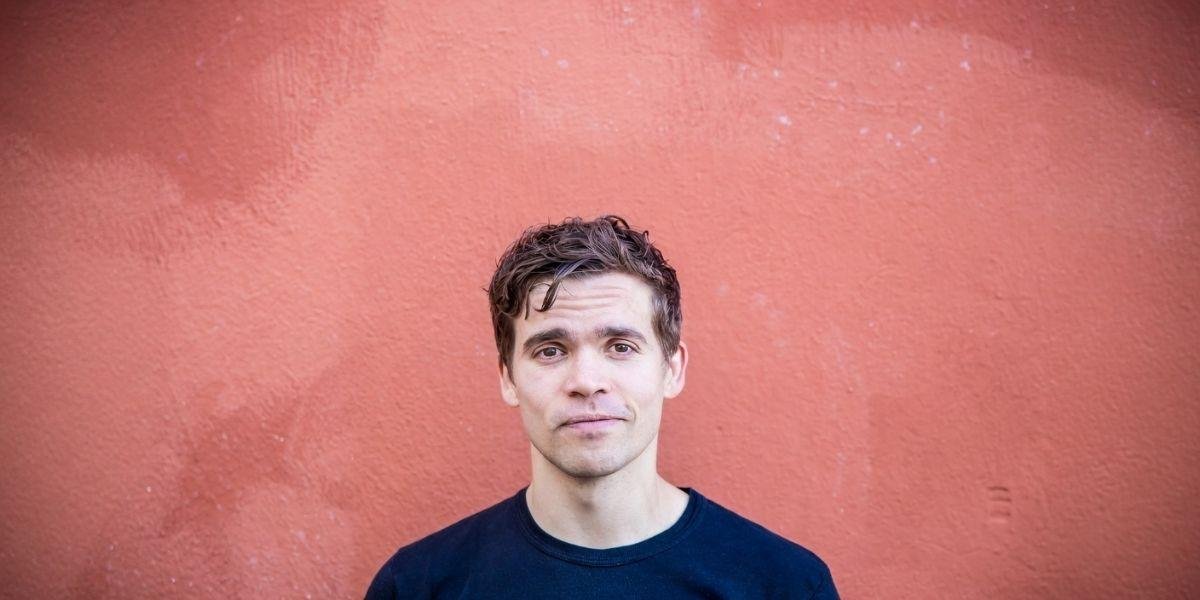
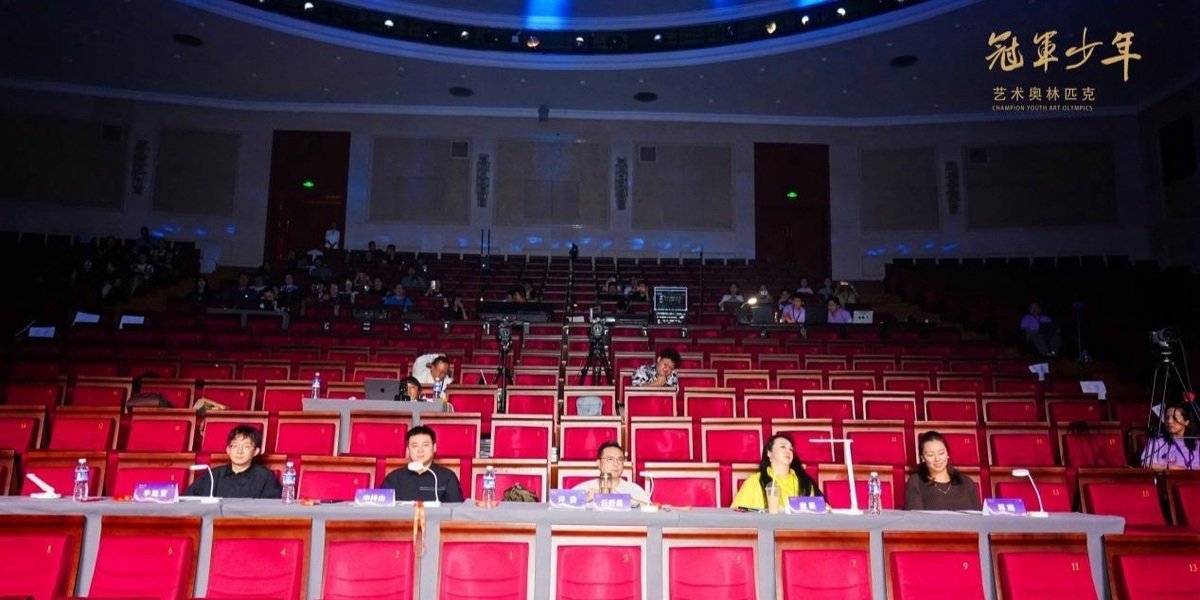
In August, at the main venue of the 2026 Champion Youth Art Olympics National Finals, the grand theater of the Beijing Guoce International Convention and Exhibition Center, expert piano juror Ziyou Shen sat behind a gray-draped judging table for two solid days.
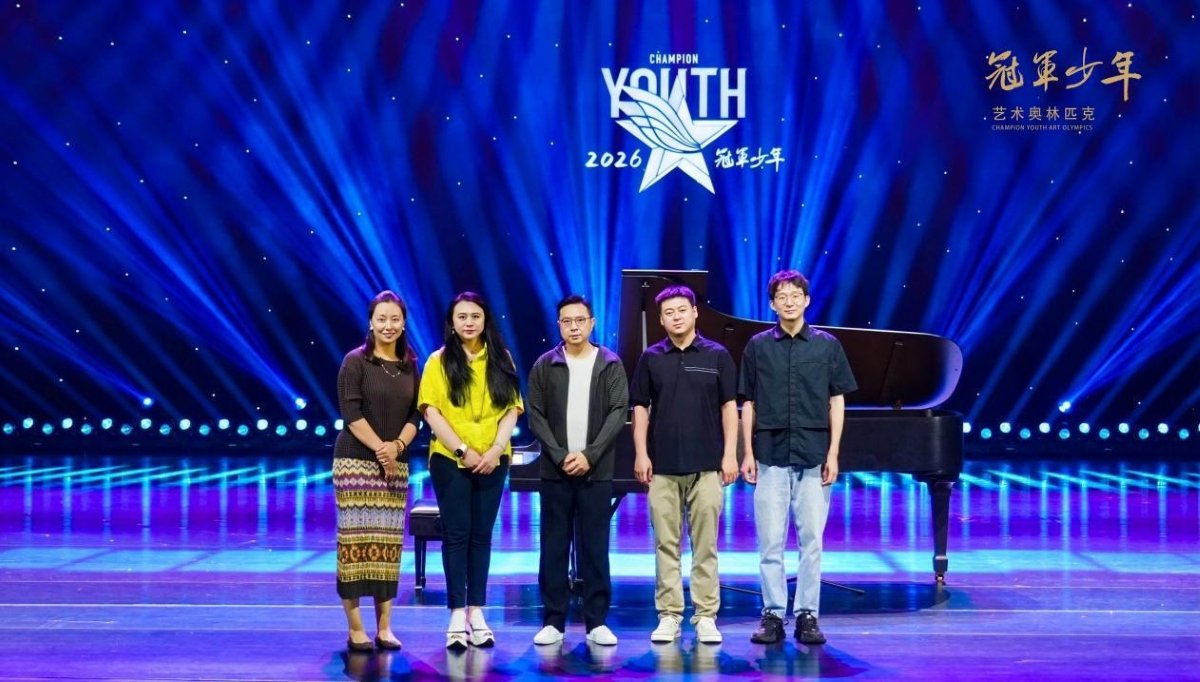
As noted in post-event coverage by Phoenix New Media, the sheer scale of the event, jointly organized by the International Olympic Academy and the Beijing Olympic Culture Promotion Association, drew thousands of young competitors from 28 provincial and municipal divisions. On stage, a grand piano under blue lights welcomed these young talents who had emerged from intense regional selections. But for Shen, the truly demanding work did not end when the final notes faded in the main theater, or when the five jurors posed for their official photograph on stage.
The real centerpiece took place in a separate room just off the main hall.
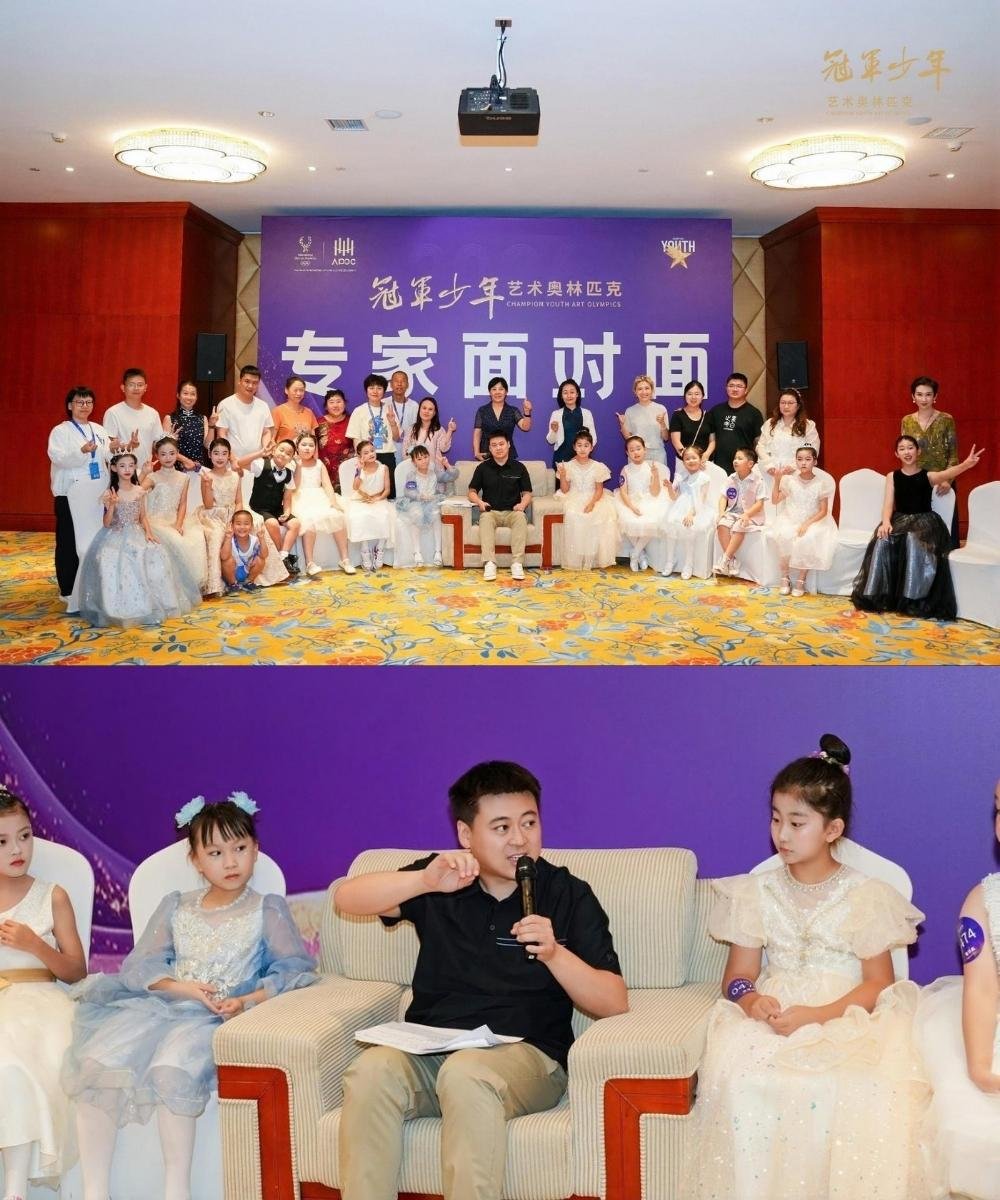
Against a deep purple backdrop bearing the words “Face to Face with Experts,” Shen relocated to a beige armchair, a stack of heavily annotated score sheets and real-time notes spread across his lap. Flanking him in a semi-circle sat the young competitors who had just stepped off stage, most still in their formal performance attire, wearing their finalist numbers on their sleeves. Directly in front of them, dozens of parents who had traveled to Beijing leaned forward in white chairs, recording the session on their phones to capture every detail.
This was one of the core elements established for the national finals: a public, one-on-one review session where the adjudicating experts stepped away from the scoring desk. For a juror, it is a high-intensity test of professional hearing. With no piano available for demonstration, Shen had to rely entirely on his handwritten notes and acoustic memory to deconstruct the issues that had occurred minutes earlier. In the scene captured on camera, holding a microphone in one hand and suspending the other in mid-air to outline the breathing arc of a phrase or the weight transfer of a wrist, he meticulously analyzed the voice control of different pieces and the specific performance characteristics of every competitor in the room.
This ability to pivot effortlessly between performance demonstration and academic diagnosis is built upon a long and rigorous conservatory training. Beginning his studies at the middle school affiliated with the China Conservatory of Music, moving to the Hamburger Konservatorium in Germany, and subsequently earning his bachelor’s degree at the Sichuan Conservatory of Music, Shen established a solid foundation in the Sino-European musical tradition early on. In 2021, he completed his Master of Music under Frederic Chiu at the University of Hartford’s Hartt School; he then stayed to earn the school’s highest performance credential,the Artist Diploma, under Paul Rutman in 2025. This tripartite educational trajectory allowed him to maintain a high degree of academic resonance with his fellow jurors from the Central Conservatory of Music, the China Conservatory of Music, and German conservatories, while uniquely contributing the analytical perspective of the modern North American stage to the panel.
Since returning from the Hartt School, Shen has rapidly translated this cross-cultural vision into an authoritative voice on domestic judging panels and lecture podiums. His name has frequently appeared on the expert juries of major core competitions: from consecutive appointments at the Central Conservatory of Music’s Youth Arts Showcase in 2024 and 2025, to serving as a judge for the Qinhuangdao division of the China Conservatory of Music’s Aesthetic Education (Music) Achievement Showcase, and culminating in his official appointment for the 2026 Beijing national finals. These cross-platform invitations underscore the industry’s sustained confidence in his musical judgment.
Beyond the high-pressure work of adjudication, his daily teaching has yielded equally compelling results. As reported by the Chengde Evening News, students under his instruction have secured gold in the 2022 Xinghai Cup national piano selection competition and a first prize at the regional stage of the third Yamaha National Piano Competition. These competitive achievements directly earned him “Outstanding Instructor Awards” at the Central Conservatory of Music showcases in both 2024 and 2025. They also garnered consecutive endorsements from the core Chinese academic journal Piano Artistry,a silver award in the all-around teacher category in 2023, and an outstanding teaching achievement award for Chinese repertoire in 2024. His exacting pursuit of a piano’s “singing tone” and musical line has also been featured as a model of public pedagogy in special coverage by Great Wall News.
This extensive experience in cultivating elite students explains why Shen could quickly pinpoint each competitor’s core issues with just a few pages of notes in the Beijing review room. Daily teaching and competition adjudication rely on the identical skill: hearing the problem and explaining it in the most direct way possible. As the final “Face to Face” session concluded, the competitors and parents in the room stood up, gathering around Shen’s beige armchair for a group photograph. The children were still in their performance gowns, and Shen sat in the center, still holding the stack of annotated score sheets. The trophies on the main stage had all been handed out, but in this room, the true takeaways were just being delivered into the hands of these young musicians.