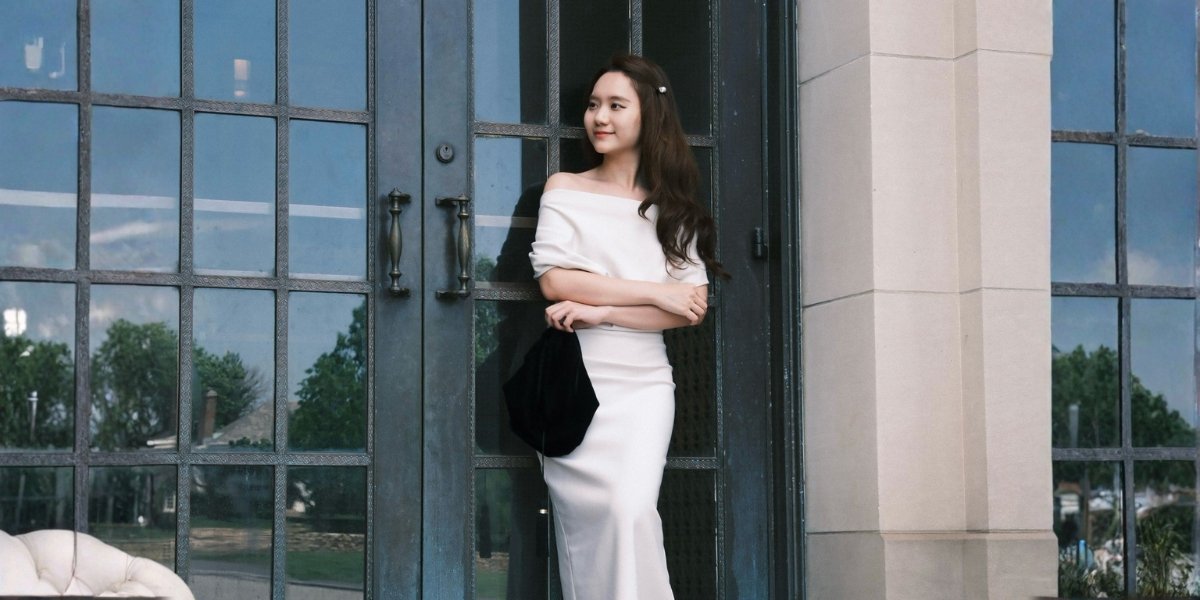
For pianist Xinyue Gu, the past year has unfolded across an unusually wide range of stages and artistic settings. From two appearances at Carnegie Hall to performances in Los Angeles and guest artist engagements in Berlin, her recent work has carried her between the United States, Europe, and Asia. Alongside this performance activity, invitations to serve on international competition juries have introduced another dimension to her professional life. Following the completion of her Doctor of Musical Arts degree in Piano Performance at the University of Kansas in May 2026, Gu is entering a new chapter with further performance and adjudication engagements ahead.
Among the defining moments of Gu’s 2025 season were two appearances at Carnegie Hall, each arriving through a different path. One followed recognition in an international piano competition and brought her to the New York stage for an award-winner’s performance. In October, she returned in a markedly different capacity, invited to serve on the final-round jury of the Concert Stars International Music Competition and to perform at Carnegie Hall as an invited artist.
The October engagement reflected a notable progression in Gu’s relationship with the competition world. Awards that once opened doors to performance opportunities have gradually been joined by invitations to return as an adjudicator. During 2025, Gu also served on juries for the Brahms International Piano Competition, the Beethoven International Piano Open Competition, and the Australian International Music Competition. The shift from prizewinner to jury member offers a different measure of professional recognition, grounded not only in onstage achievement but also in the artistic judgment she is increasingly asked to bring to the work of other musicians.
Los Angeles formed another important chapter in Gu’s recent performance activity. At Curtis Theatre, she was invited to appear as a guest artist in a concert that also featured the St. Petersburg String Quartet, an internationally recognized ensemble with a Grammy nomination for chamber music performance. The program brought together invited artists from different musical backgrounds within the same concert setting.
Her Los Angeles appearances also included Walt Disney Concert Hall, where she performed after receiving First Prize in the Golden Classical Music Competition. Together with her two Carnegie Hall appearances, the engagement contributed to a season in which Gu’s performances reached some of the most recognizable concert stages in New York and Los Angeles.
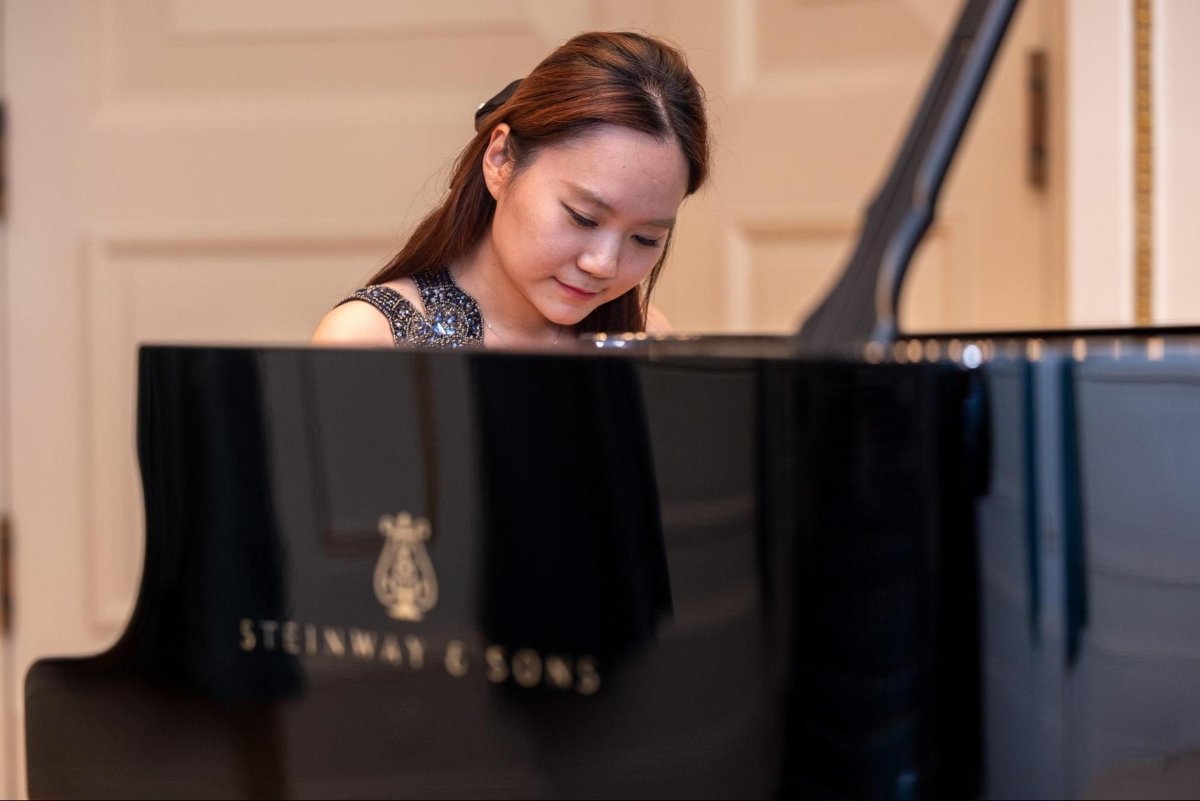
Her work soon extended across the Atlantic. In August 2025, Gu traveled to Berlin as a guest artist with the Bechstein Summer Academy, appearing at Palais Lichtenau and Schloss Britz. The programs included European premieres of works by French-American composer and pianist Émile Naoumoff, continuing an artistic connection that had already taken shape through performances in China and the United States.
A particularly personal thread in Gu’s recent work has been her artistic relationship with Naoumoff. The composer wrote Daydream expressly for Gu, giving her the opportunity to shape the work through direct exchange with its composer before bringing it into performance. Gu subsequently brought the piece to audiences in China, the United States, and Germany, while her programs also included premieres of other works by Naoumoff.
Her interpretations have also drawn critical attention. In its coverage of Gu’s performances of Naoumoff’s music, China Daily noted her “delicate touch” and command of “dynamic nuance.” What began with new repertoire has since developed into a sustained artistic relationship between composer and performer.
Working directly with a living composer has also given Gu an immediate perspective on contemporary repertoire. Rather than encountering a work only through the score, she has been able to engage with the musical ideas behind it while its interpretive possibilities are still taking shape. That exchange has become part of how she approaches new music, bringing together the composer’s intentions and her own voice as a performer.
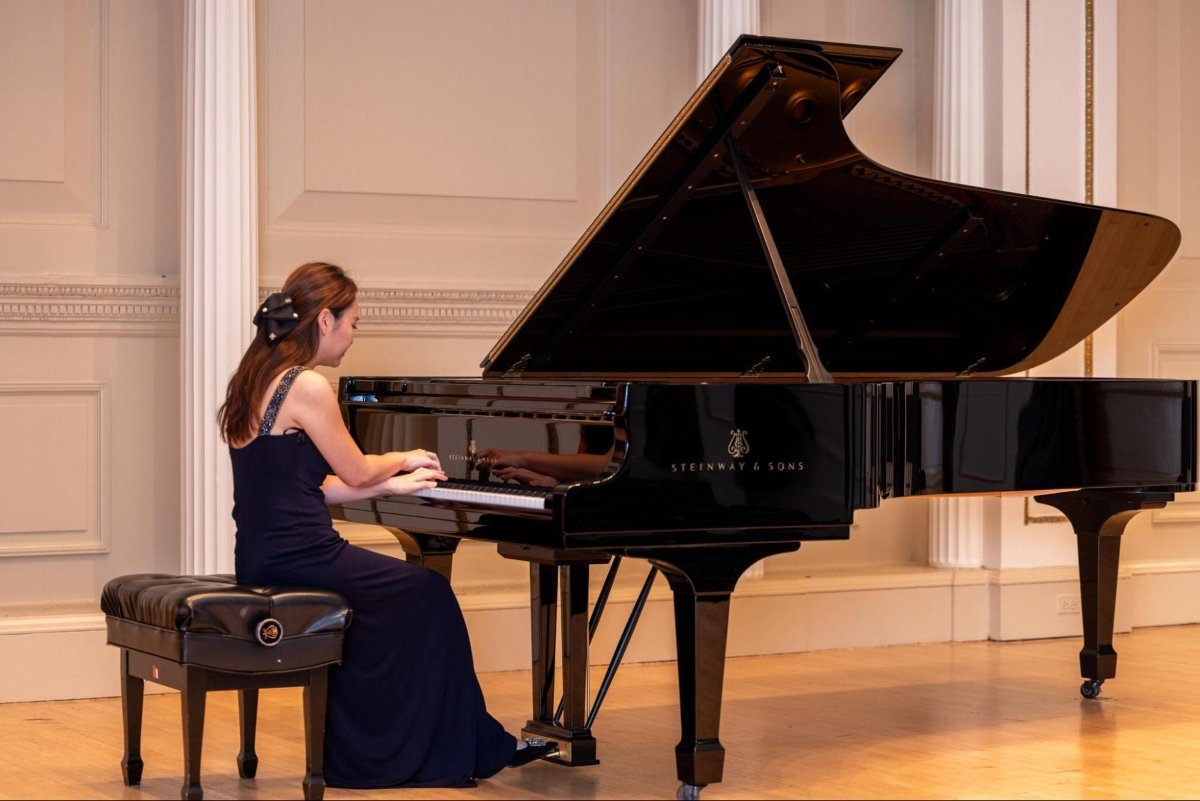
Gu’s engagement with contemporary and cross-cultural music also extends beyond her own performances. Since 2023, she has served as Vice President of the Asian Classical Music Initiative (ACMI), an organization devoted to promoting AAAPI classical music and fostering interdisciplinary and cross-cultural exchange. In this leadership role, Gu contributes to programs and artistic partnerships that broaden the visibility of Asian and Asian American musical voices. ACMI’s activities have included international conferences, commissioned works, world premieres, and collaborations with leading AAAPI musicians. The organization has also been selected to represent organizational leaders from Kansas and Missouri in the White House Initiative on Asian Americans, Native Hawaiians, and Pacific Islanders. For Gu, this work extends beyond performance toward creating spaces where artists, new works, and different musical traditions can meet.
That momentum continues in 2026. Having completed her doctorate in May, Gu is preparing for the next series of professional engagements. She has been invited to perform at The Catholic University of America in Washington, D.C., extending her U.S. performance activity to the nation’s capital. She is also set to serve as a jury member for the U.S. Division of the Obifold International Piano Competition, continuing the adjudication work that became an increasingly visible part of her activities last year.
As another season takes shape, Gu’s next chapter appears less defined by any single milestone than by the artistic relationships developing around her work. Whether bringing newly written music before an audience, returning to the concert stage, or taking a seat on a competition jury, the common thread remains an engagement with how music is shaped, communicated, and ultimately passed from one musician to another.