Music Observer

Ananda Xenia Shakti’s “A Revolution in Love” Reimagines the Dance Floor as a Space for Spiritual Awakening


By: Jessica Morgan

The former punk rock pioneer returns to her club culture roots with a Deep House release that connects electronic music’s communal spirit to a deeply personal journey of transformation, healing, and self-discovery.

Dance music has always existed at the intersection of individual liberation and collective experience. From the intimate underground clubs that helped establish house music to the sprawling global festival circuit, electronic music’s enduring appeal lies in its ability to create moments of connection among strangers. On her new single, “A Revolution in Love,” Ananda Xenia Shakti takes that fundamental principle and pushes it into explicitly spiritual territory, crafting a release that treats the dance floor not simply as a destination, but as a pathway toward understanding the human experience.

Arriving November 6 via MTS Records, the Deep House single brings together Shakti’s spoken-word reflections and electronic production from Kabumi and Kudos Lokey, drawing upon an instrumental soundtrack connected to a remix of Keinemusik’s “The Day I Met You.” The resulting composition exists somewhere between a club-oriented electronic release, a guided meditation, and an intensely personal declaration of emotional freedom.

It’s an unconventional combination, particularly within a genre frequently defined by the hypnotic efficiency of its grooves.

But Shakti has never been particularly interested in convention.

Long before her exploration of Eastern spirituality and her work with Love Power the Band, she was a member of Toronto’s pioneering all-female punk group The B-Girls, whose history includes touring with The Clash. Her musical journey also includes contributing to Blondie’s landmark Autoamerican album. Those experiences established a creative identity rooted in rebellion, self-expression, and challenging accepted boundaries.

What makes “A Revolution in Love” especially compelling is how naturally those seemingly disparate chapters connect.

Punk and house music emerged from different sonic traditions, but both developed cultures centered on community, liberation, and providing space for people who didn’t necessarily belong anywhere else. Shakti’s transition from guitar-driven rebellion to spiritually conscious electronic music isn’t as dramatic a philosophical departure as it might initially appear.

She’s still questioning the structures that separate people. She’s simply proposing a different way to dismantle them.

The song’s central declaration, “Being human is a revolution in love,” operates as a recurring mantra, anchoring Shakti’s expansive lyrical exploration of suffering, acceptance, and interconnectedness.

Rather than relying on traditional verses and choruses, the composition unfolds through an extended spoken-word narrative. Shakti moves between memories of emotional isolation and affirmations of spiritual freedom, repeatedly returning to the idea that unconditional love represents humanity’s most transformative possibility.

Within the context of electronic music, that repetition feels particularly appropriate.

House music’s relationship with repetition has always been about creating gradual shifts in perception. A recurring rhythmic figure can become increasingly immersive as it develops, while repeated vocal phrases transform from recognizable language into something approaching collective affirmation.

Shakti applies that same principle to her message.

The production’s cyclical Deep House framework provides a fitting conceptual backdrop for her description of love as an eternal circle without beginning, ending, or boundaries. Instead of separating the track’s philosophy from its electronic foundation, the arrangement allows the two to reinforce one another.

There’s also a notable vulnerability beneath the song’s optimism.

Shakti acknowledges moments when suffering seemed devoid of meaning, when isolation overwhelmed any sense of belonging, and when the human experience itself felt unbearable. These reflections give the recording an emotional dimension that prevents its message from becoming merely decorative spirituality.

Her approach isn’t to deny darkness, but to suggest that meaningful transformation can emerge from confronting it.

That perspective becomes even more interesting when considering the track’s creation.

The original vocal performance was recorded in a single take during a spontaneous session in Costa Rica. Following additional development in India, the project eventually reached completion in Toronto, where Shakti elected to preserve the initial recording rather than replace it with a technically refined performance.

It’s a decision that prioritizes emotional immediacy over conventional studio perfection.

Toronto also represents the geographical and emotional center of the project. As a teenager, Shakti began exploring the city’s dance clubs, searching for freedom and belonging long before she could articulate the spiritual significance she would eventually attach to those experiences.

The accompanying music video returns her to those same streets, now dancing through familiar surroundings in a red dress, offering a visual representation of the reconciliation between her rebellious youth and present-day understanding.

For Shakti, the past isn’t something to escape or disown. It’s something to embrace.

That sense of acceptance is ultimately the record’s strongest theme.

Of course, “A Revolution in Love” presents some challenges when considered strictly as a dance-floor track. Its extended lyrical passages demand a level of focused attention that doesn’t necessarily align with every DJ set or club environment. Listeners seeking a conventional Deep House arrangement built around concise vocal phrases may find its philosophical narrative unusually prominent.

Yet the track’s ambitions extend beyond traditional club functionality.

Electronic music has increasingly accommodated artists who use dance-oriented production to explore mental health, spirituality, personal identity, and emotional vulnerability. Shakti approaches those subjects through the perspective of someone whose relationship with underground music predates contemporary dance culture’s commercial expansion.

She understands the freedom of the dance floor because she experienced it long before she developed the language to explain its significance.

And that’s where “A Revolution in Love” finds its most meaningful contribution.

Rather than presenting spirituality as an alternative to nightlife, Shakti suggests that the two have always shared a fundamental desire: the search for connection, acceptance, and moments when the boundaries separating individuals temporarily disappear.

It’s a perspective that reframes electronic dance music’s most familiar promise without diminishing its physical or communal pleasures.

The most effective revolution on “A Revolution in Love” isn’t musical. It’s the realization that the freedom Shakti once sought through rebellion and the love she now celebrates through spirituality were always expressions of the same human longing.

For an artist who began her journey on Toronto’s underground dance floors and traveled through punk rock, India, and decades of spiritual exploration before returning to electronic music, that realization gives the single a remarkably satisfying sense of completion.

The revolution, it turns out, doesn’t require abandoning the dance floor.

It requires remembering why we came together there in the first place.

Bosko Baker Brings His Roots Music World to Life With ‘Troubles’

There’s something wonderfully unpredictable about Bosko Baker. The roots musician has spent years taking his music from street corners to festival stages, drawing on the sounds of traditional American music while developing a performance style that’s entirely his own. His release “Troubles” offers another opportunity to discover that world, appearing on his latest album, Bozo Broadcasting Presents An All Fools Double Half Hour Do Maker Radio Special.

It’s quite a title, but anyone familiar with Baker’s approach to music will know that he has never been particularly concerned with keeping things conventional.

Blending country blues, ragtime, folk and swing, Baker describes his musical style as “street swing” or “bozo blues.” His work draws inspiration from musicians such as Mississippi John Hurt, Blind Blake, Doc Watson and Merle Travis, bringing older musical traditions into his own growing catalog.

A large part of that identity comes from his experience as a street performer. Having spent considerable time between Quebec City and New Orleans, Baker has developed his craft in environments where connecting with an audience is just as important as the music itself. His performances have taken him across Canada, the United States, Europe, the United Kingdom and South America, introducing his distinctive approach to roots music to listeners from different backgrounds.

That experience has helped shape an artist whose music feels closely connected to the traditions that inspired it. With “Troubles,” listeners are introduced to a song that occupies an interesting place within his latest project.

Rather than appearing just once, the track features in three different forms across the album. Alongside the main version, listeners will find “Troubles (Solo)” and “Troubles (Birdie Special),” offering several opportunities to explore the same piece within the wider release.

It’s an unusual detail that fits comfortably with Baker’s willingness to approach music on his own terms.

The album itself arrived on October 23, 2026, featuring 28 tracks across just over an hour of material. Songs including “Puddle of Joy,” “Back Then, Back When,” “Good Ships, Wood Ships” and “With Friends Like These” sit alongside shorter contributions involving All Fools Radio.

Together, the tracklist suggests a project interested in presenting more than a straightforward collection of songs, with its radio-special framing adding another element to the listening experience.

For those discovering Baker through “Troubles,” there’s also an extensive back catalog worth exploring.

His earlier releases include Fixin’ To Grow, The Magnolia Sessions and Mr. Brown & Mr. Blue Volume Two, alongside songs such as “Business for the Business Man” and “Montreal Mess Around.”

Across these projects, Baker has continued to celebrate the musical traditions that originally inspired him, while building a reputation through his energetic live performances and fingerpicking guitar style.

It’s that combination of experience and individuality that makes his latest material worth exploring. At a time when so much contemporary music is built around polished production and familiar formulas, Baker’s commitment to roots music offers listeners a connection to a different musical tradition.

“Troubles” provides another entry point into that catalog, while the album surrounding it demonstrates just how much material Baker has brought together for this latest release.

And whether listeners are already familiar with his music or discovering him for the first time, there’s plenty to explore in the wonderfully unconventional world of Bosko Baker.

https://open.spotify.com/track/3zbSjd3Co1zqq7rX1NNyNR?si=35bc0ea34d2e46a6

Ashera Introduces Her Latest Chapter With New EP ‘Nothing Personal’

There’s something exciting about following an artist whose catalog continues to grow, especially when each new release offers another opportunity to discover their musical identity. For Ashera, 2026 has already been busy, and her latest EP, Nothing Personal, adds four more songs to a steadily expanding collection.

Released on October 16, the project features “Everything’s On Fire,” “Here We Go Again,” “Parachute,” and “Pull Me In,” bringing together just under eleven minutes of new material.

The release follows an important period for Ashera, who introduced her album Right Where I Am earlier this year. That project, featuring thirteen tracks, gave listeners a substantial collection of music to explore, including songs such as “Blue,” “After Dark,” “Read My Mind,” and “Where Did the Magic Go.”

Rather than allowing that album to stand as her only major release of the year, Ashera has continued sharing new material, giving her audience another reason to follow her developing catalog.

Nothing Personal is a compact addition to that journey. Opening with “Everything’s On Fire,” the EP moves through “Here We Go Again” and “Parachute” before closing with “Pull Me In.” Each track occupies its own place within the four-song collection, creating a shorter listening experience than her previous full-length project.

“Here We Go Again” has also been released as a standalone single, offering another entry point for listeners discovering Ashera’s music.

For anyone coming across her work for the first time, the new EP offers an accessible starting point before exploring the wider catalog. That catalog has developed considerably over the past year.

Alongside Right Where I Am, Ashera has released songs including “Ugly Sweaters,” “I Don’t Wanna Talk About It” and “Dead End,” establishing a collection of titles that immediately invites curiosity.

Her earlier releases also demonstrate how much material she has made available to listeners, with tracks such as “Bedroom Eyes,” “do do do” and “Blue” contributing to a discography that extends beyond a single project.

What’s particularly notable about this latest chapter is the consistency of her release schedule.

Releasing a thirteen-track album and then a separate EP within the same year adds significant recorded material, especially for listeners who enjoy following an artist’s progression from one release to the next.

It also gives Ashera room to introduce individual songs while continuing to present her music through larger projects.

With Nothing Personal, the emphasis is on four tracks rather than an extensive album, offering a different format for audiences already familiar with her work.

And although the specific stories behind the songs haven’t yet been detailed, the release provides another opportunity to discover what Ashera has been creating throughout 2026.

For existing listeners, it’s a welcome addition to an already substantial year of music. For newcomers, it’s an invitation to explore an artist with a growing catalog and plenty of material to discover.

Ashera’s latest EP is available now, with Nothing Personal marking another release in a year that has already brought considerable activity from the artist.

https://open.spotify.com/album/0YGqrEJXT7ZJuXLgQ0OAfr?si=cvmBtWyQTY61gQ00WOdeeQ

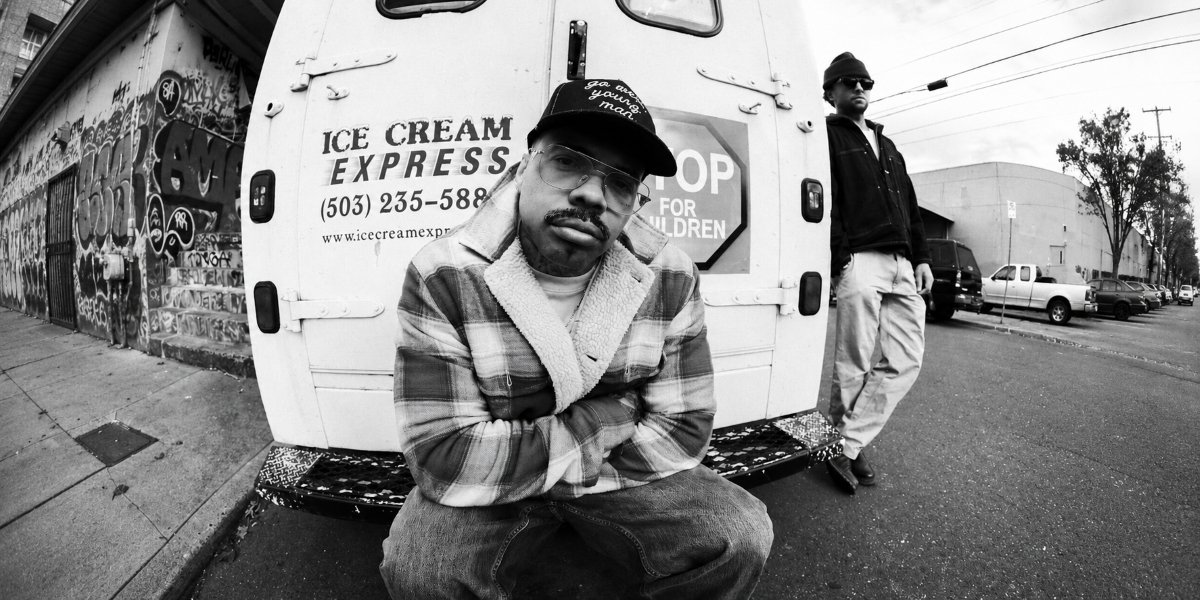
Nacho Picasso and TELEVANGEL Keep Hip-Hop Unpredictable With ‘Stuntman’

There’s something special about two musicians who have worked together long enough to understand each other’s instincts, yet still manage to surprise one another. For Seattle rapper Nacho Picasso and producer TELEVANGEL, that creative chemistry has been developing for years, and their latest album, Stuntman, shows there’s still plenty of territory left to explore.

The pair have an established history within underground hip-hop. Nacho first made his name through his distinctive gravelly delivery, dark humor and collaborations with Blue Sky Black Death, the production duo that included TELEVANGEL under his former name, Young God.

Projects including For The Glory and Lord of the Fly helped establish Nacho’s reputation as an artist with an unmistakable personality. His lyrics frequently combine outrageous observations with darker storytelling, delivered in a style that makes even his most unexpected lines sound completely natural.

Meanwhile, TELEVANGEL has developed his own reputation for production that moves beyond conventional hip-hop arrangements.

His work often incorporates atmospheric textures and cinematic influences, creating musical environments that give artists room to experiment. That approach has made him a natural collaborator for Nacho, whose personality brings a contrasting energy to the production.

Their paths eventually reunited through projects including Jesse’s Revenge and Montage Music, setting the stage for another chapter with Stuntman.

One of the album’s most interesting moments comes through “For The Record.”

Inspired by 1950s doo-wop and Motown, the track takes a different approach from the darker sound many listeners associate with Nacho’s music. Its laid-back, jazzy atmosphere creates space for a more melodic delivery, while his familiar sense of humor remains intact.

The story behind its creation is equally unconventional. With TELEVANGEL’s studio unavailable, Nacho recorded his vocals at another artist’s home studio over an entirely different instrumental. Rather than asking him to record everything again, TELEVANGEL reconstructed the production around the existing performance.

It’s a revealing example of their working relationship. The song wasn’t forced into its original arrangement; instead, the music changed to accommodate what Nacho had already created.

That flexibility extends throughout their collaboration. TELEVANGEL approaches albums with an interest in creating a recognizable musical world, but without allowing consistency to become an excuse for avoiding new ideas. Nacho shares that ambition, continually searching for ways to bring his creative vision closer to what he imagines.

Their experience certainly gives them the freedom to take those chances.

Nacho has toured nationally, appeared at Bumbershoot and Capitol Hill Block Party, and collaborated with artists including Danny Brown, Gucci Mane and Flatbush Zombies. TELEVANGEL’s history includes performances at Red Rocks and Electric Forest through Blue Sky Black Death.

With Stuntman, those years of experience become a foundation rather than a limitation.

“For The Record” is proof that their partnership doesn’t depend on repeating what worked before. Even with an established catalog behind them, Nacho Picasso and TELEVANGEL are still finding unexpected ways to bring their ideas together.

https://open.spotify.com/track/7fSPzfxXcfsR4lZlwjB6Gu?si=207272fff278451f