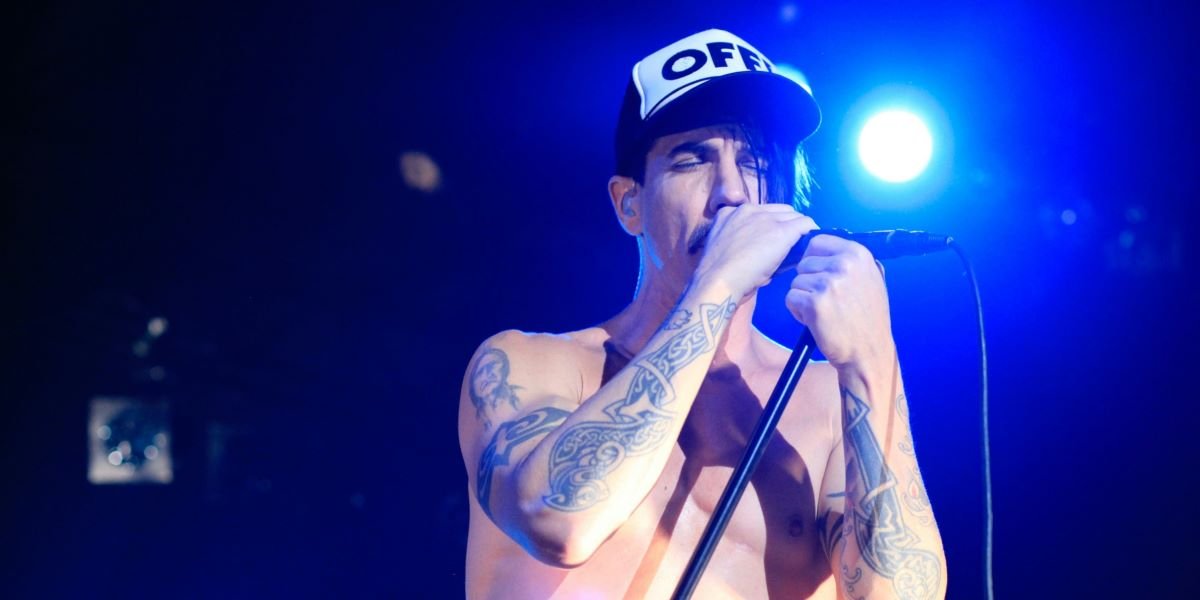
Red Hot Chili Peppers co-founder Flea performed a three-song set for NPR’s Tiny Desk Concert series on July 13, delivering tracks from Honora, his debut solo album released in March through Nonesuch Records. The intimate performance captured something that a stadium stage never could — a 62-year-old musician returning to the instrument that started everything for him, surrounded by jazz players who treated him as one of their own rather than a rock star on loan.
A Trumpet, A Bass, And A Spoken-Word Exit
The set opened with “Traffic Lights,” the Honora track co-written with Radiohead’s Thom Yorke and producer Josh Johnson. Flea led on trumpet rather than the bass that has defined his career since the early 1980s, playing over a rhythm section that leaned into atmospheric jazz phrasing rather than the funk-rock attack audiences associate with Red Hot Chili Peppers. The shift was deliberate. Flea set aside the trumpet as a teenager to pick up the bass when Red Hot Chili Peppers formed, and Honora represents a decades-delayed return to the instrument he originally trained on.
“Morning Cry” followed, with Flea doubling on bass alongside Anna Butterss, who held down the low end throughout the rest of the set. The arrangement placed two bassists in conversation with each other — an unusual configuration that gave the song a layered, contrapuntal quality distinct from anything in Flea’s rock catalog.
The performance closed with “A Plea,” where Flea stepped away from both instruments entirely and delivered the track’s lyrics as spoken-word poetry. No trumpet, no bass, no stage presence built on physical energy. The choice stripped the performance down to voice alone, a move that would have been unthinkable in a Red Hot Chili Peppers context but felt organic within the Honora material.
The Honora Band As The Project’s Center Of Gravity
The musicians surrounding Flea at the Tiny Desk were not session players filling a backing role. Guitarist Jeff Parker, saxophonist Josh Johnson, bassist Anna Butterss, and drummer Deantoni Parks are each established figures in contemporary jazz with extensive recording and touring credits of their own. Jeff Parker, Anna Butterss, and Josh Johnson have all previously appeared on the Tiny Desk Concert series as featured artists, not sidemen.
Josh Johnson produced the entire Honora album, recorded over the course of February 2025 at Sunset Sound in Hollywood. The production approach mirrored the live setup — a small group of musicians playing together in real time rather than layering parts through overdubs. Flea described the collaborative dynamic as the most fulfilling element of the project.
“Working with the musicians that I’ve worked with has been the most exciting part,” Flea told NPR producer Kara Frame after the taping. “Just jamming, connecting and feeling who they are.” The night before the Tiny Desk session, Flea performed with the same band at the Black Cat in Washington, D.C., where he told the audience that playing with a jazz ensemble felt like “an adventure.” The phrasing was revealing — not a conquest or a reinvention narrative, but an ongoing process of discovery from a musician who has spent four decades operating at a fundamentally different scale.
Honora’s Place In Flea’s Solo Trajectory
Honora arrived on March 27, 2026, through Nonesuch Records, the label best known for its jazz, classical, and art-music catalog. The 10-track album runs 51 minutes and includes six original compositions alongside covers of Funkadelic’s “Maggot Brain,” Jimmy Webb’s “Wichita Lineman” featuring Nick Cave, Frank Ocean’s “Thinkin Bout You,” and the jazz standard “Willow Weep for Me.” The album takes its name from Flea’s great-great-grandmother and was inspired by her experience with poverty in Ireland and immigration to Australia. The cover art features a 1960s photograph of Flea’s mother-in-law, Shahin Badiyan, taken in Iran.
Honora is technically Flea’s second solo release, following a five-song jazz EP called Helen Burns in 2012. But Helen Burns was a quiet experiment that generated minimal attention. Honora represents something more committed — a full-length album with a dedicated touring band, an international run of intimate venues, and a promotional cycle built around jazz media rather than the rock press. The 10-date Honora tour included stops at Thalia Hall in Chicago, Webster Hall in New York, the Fonda Theatre in Los Angeles, Paradiso in Amsterdam, Koko in London, and Alhambra in Paris.
The critical reception reflected the project’s jazz orientation. Metacritic aggregated a score of 75 out of 100, with Clash giving the album an 8 out of 10. The vinyl edition on Nonesuch sold through its initial pressing and is currently backordered through mid-August, suggesting sustained demand beyond the initial release window.
What The Tiny Desk Performance Signals About The Project’s Reach
The Tiny Desk Concert series has become one of the most effective platforms in music for recontextualizing established artists. A Tiny Desk slot positions its performer within NPR’s audience — listeners who skew toward discovery, genre curiosity, and long-form engagement with music rather than passive consumption. For Flea, the appearance served a specific purpose: it introduced Honora to an audience that might never encounter the album through Red Hot Chili Peppers channels, while reinforcing the project’s credibility within the jazz community that the Honora Band already inhabits.
The session also demonstrated that the Honora material translates in a live setting without the studio’s controlled environment. The three-song arc — trumpet-led opener, dual-bass middle section, unaccompanied spoken word closer — functioned as a compressed argument for the album’s range. Each song demanded something different from Flea as a performer, and none of those demands involved the slap-bass technique or kinetic stage presence that built his reputation.
Flea has not announced additional Honora tour dates beyond the completed spring run, and Red Hot Chili Peppers have no confirmed touring or recording plans for the remainder of 2026. Whether Honora becomes an ongoing creative outlet or a one-album detour will depend on whether the project’s momentum — sustained vinyl sales, a Tiny Desk appearance four months after release, and strong critical reception — translates into demand for a second chapter.
For now, the Tiny Desk performance stands as the clearest public evidence that Honora is not a vanity project from a rock musician playing tourist in jazz, but a serious creative pivot from a musician who finally made the record he put off for 40 years.