
Ceiling Installs and Sweetheart Tables: Why Wedding Reception Decor Is Its Own Design Problem

The Two Weddings Happening in One Day
A guest steps out of a twenty-minute ceremony and into a reception hall four hours long, and almost nobody registers that they’ve just walked between two entirely different pieces of design. One is built for a single sustained gaze down an aisle. The other has to hold up under hours of guests circulating, eating, dancing, and looking around from every seat in the room. Wedding reception decor gets treated as an extension of the ceremony far too often, an afterthought stitched onto whatever theme got decided first. But it’s a mistake. Ceremonies are generally shorter than receptions, lasting around 20–30 minutes, one wedding-planning resource notes, while a full reception can run for four or five hours, answering a completely different design question. Wedding reception ideas circulate everywhere online, but very few of them start from that duration gap. Most roundups focus on centerpieces, linens, and lighting palettes, treating the reception as a styling exercise rather than a space that has to keep working for hours on end. And that gap is where the real planning work actually happens. This piece looks at why.
What the Ceremony Space Actually Needs
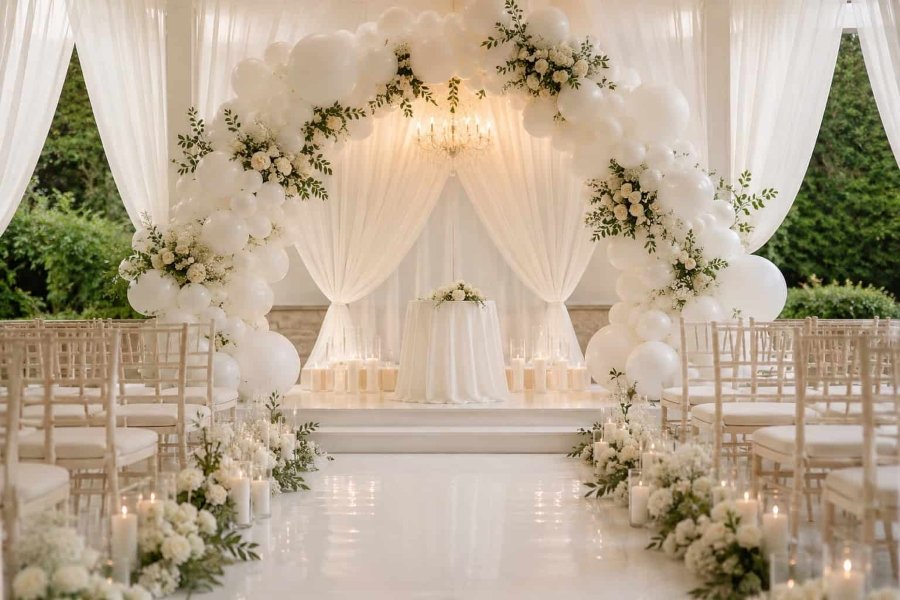
The ceremony itself asks for very little, comparatively. An arch, an aisle runner, some seating, and a backdrop for the exact moment two people exchange vows: that’s essentially the whole brief. Everyone faces one direction for twenty or thirty minutes, then moves on. So the design job is almost entirely about a single photogenic frame, not about how the space performs over time. It doesn’t need to hold anyone’s attention after the vows are said. Even a ceremony backdrop, the arch or floral wall the couple stands in front of, is essentially a single wide shot: composed once, viewed once, then largely irrelevant for the rest of the day. That’s not a criticism. In other words, it’s just a much smaller design brief than most couples realize when they’re mentally budgeting time and attention across the whole day.
Where Reception Design Gets Complicated
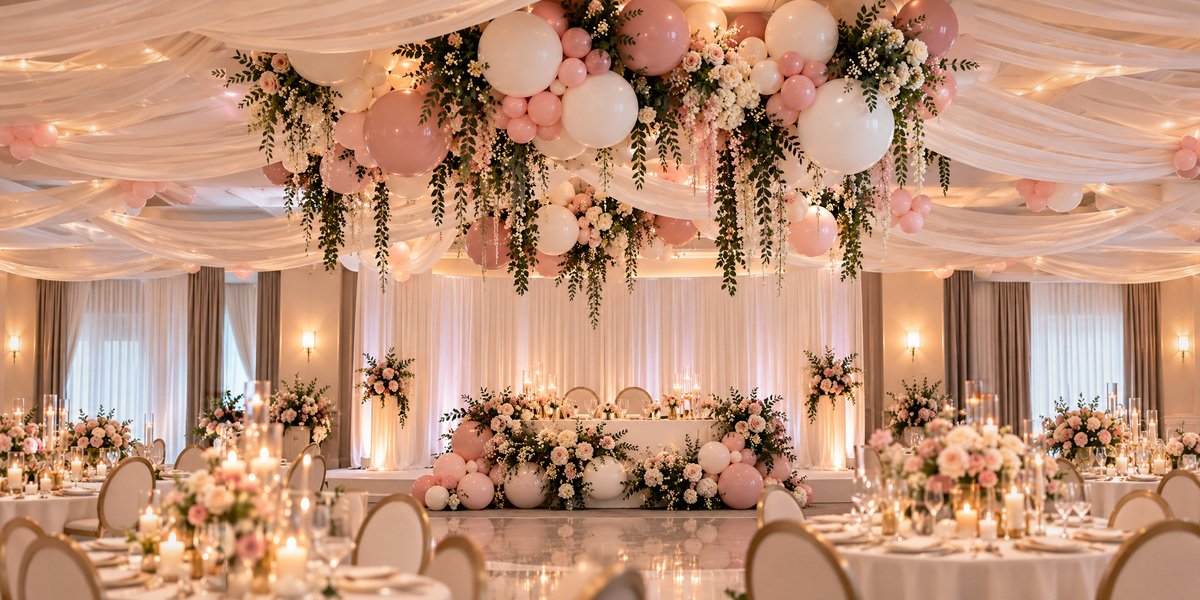
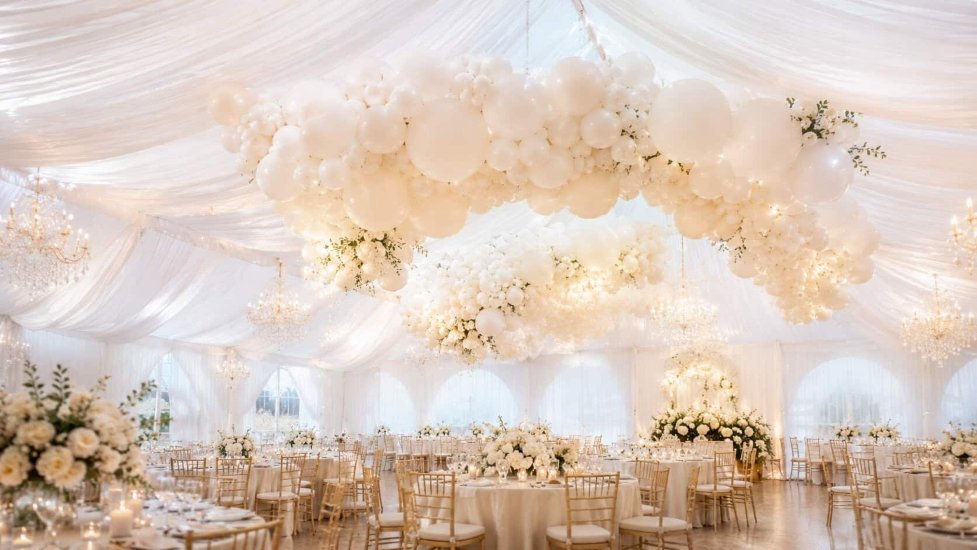
The reception is where all of that changes. Guests aren’t seated in rows facing one direction anymore, they’re circulating a room for hours, which means the design has to hold up from every angle instead of one. A wedding ceiling installation is one way that gets solved. Overhead treatments give a room something to look up into no matter which table a guest is seated at, and they change how the whole space reads at first entrance versus three hours later. One event-design resource put it plainly: this sets the tone for the entire event. Los Angeles event professionals who build these installations for a living think about sightlines from the very first sketch, not as an afterthought. Sean Edwards, Founder of The Balloon Guy, is one of them. “You’re not designing a room for one moment anymore, you’re designing it to still feel intentional at hour three, when the energy has shifted and people are seeing it from angles nobody planned for,” Edwards said. So the ceiling and the sightlines are the two things that decide whether that actually holds. Color plays into it too, since tones that read as elegant under warm string lights at eight o’clock can go flat by midnight under a venue’s house lighting.
The Sweetheart Table as the Room’s Focal Point
Zoom in from the ceiling to a single table, and the design logic flips completely. The sweetheart table is small, but it works harder than almost anything else in the room. It’s the one fixed point guests’ eyes return to all night, through dinner, through toasts, through the first dance. So sweetheart table decor can’t just match the room, it has to anchor it. One wedding-planning authority describes exactly this: these sweetheart table ideas will become the focal point of your reception. “The sweetheart table is where I get the most creative freedom, honestly, because it’s small enough to be specific and personal instead of just matching a bigger theme,” Edwards says. A cluster of organic balloon garlands, low enough to feel intimate rather than overhead, can do that without competing with anything else in the room. Because scale is different too: none of it works if a table is decorated like a ceremony backdrop instead of a tabletop, and an over-decorated small table reads as clutter rather than intimacy.
Designing for the Whole Day
None of this makes the ceremony unimportant. It just means a ceremony and a reception are two separate design problems wearing the same wedding-day label, and treating them identically shortchanges the half of the day where guests actually spend their time. The practical takeaway is simple. Plan and budget for the reception as its own project from the start, not as whatever’s left over once the ceremony decisions are made. Edwards trained at the California Institute of the Arts, and that formal design background is exactly why he treats a ceremony and a reception as two different creative assignments rather than one theme stretched across a longer day. Which is also why the two halves of a wedding day can look nothing alike and still feel like they belong to the same couple. A twenty-minute ceremony and a five-hour reception were never going to need the same design, and a reception that commits to that difference is the one that actually holds up by hour four.