
Music Observer

Worldstar Hip Hop Takes Over Dallas for Three-Day F.O.M Fest Weekend, November 6-8

By: Ashley White, PR & Brand Communications Specialist at BBMGMT

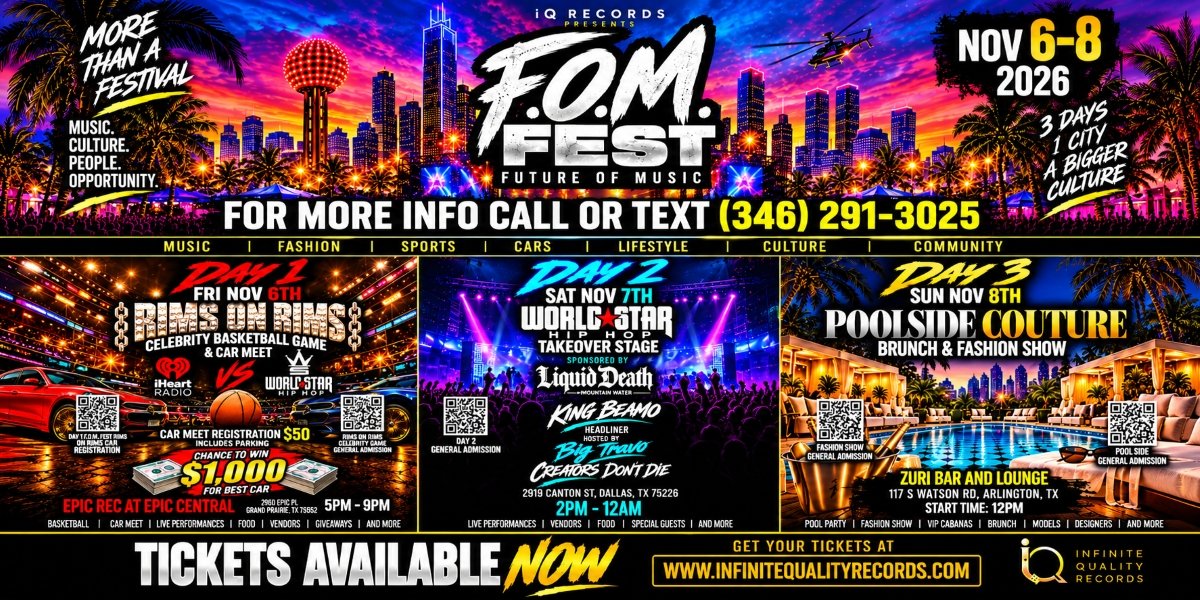
DALLAS, TX. Dallas is preparing for a high-energy weekend as Worldstar Hip Hop brings the excitement of F.O.M Fest to the city November 6-8. Promising three days of entertainment, celebrity appearances, music, fashion, automotive culture, and unforgettable nightlife, F.O.M Fest is shaping up to be a major destination for fans looking to experience hip-hop culture all in one place.

From celebrity basketball to custom cars, star-studded performances, fashion shows, and exclusive parties, the festival aims to bring together the different elements that make hip-hop more than just music. It is a celebration of creativity, individuality, and the culture that continues to influence entertainment, fashion, and lifestyle around the world.

Three Days of Music, Culture, and Entertainment

F.O.M Fest is designed to offer something for a wide range of entertainment fans. Throughout the three-day weekend, attendees can look forward to a packed lineup of activities that bring together celebrities, artists, fashion enthusiasts, automotive lovers, and members of the hip-hop community.

One of the anticipated highlights is the Celebrity Basketball Game and Car Meet, an experience that combines sports, star power, and automotive culture. Celebrity basketball games have long provided fans with opportunities to see familiar faces outside their usual professional settings, while car meets showcase impressive builds, customized vehicles, and the creativity of automotive enthusiasts.

Photo Courtesy: ABNRMVL Visions

Together, these experiences add another dimension to a weekend centered on entertainment and community.

Music lovers can also anticipate star-studded performances, bringing live entertainment and the energy of hip-hop culture to the festival experience. With music serving as a powerful connection between artists and audiences, the performances are expected to be a major attraction for those looking to enjoy the weekend with friends and fellow fans.

Fashion will also have a place in the spotlight, with fashion shows adding style and creative expression to the festivities. Hip-hop has played a significant role in shaping global fashion trends, from streetwear and sneakers to luxury designer looks. The inclusion of fashion showcases highlights the culture’s continued influence beyond the stage.

And when the sun goes down, the celebration continues. Parties and additional entertainment will give attendees more opportunities to connect, socialize, and experience the nightlife surrounding the festival weekend.

Dallas Becomes the Center of the Action

Bringing F.O.M Fest to Dallas places the city at the center of a weekend celebrating entertainment and urban culture. Known for its vibrant nightlife, growing creative scene, and passionate music audience, Dallas offers an exciting setting for an event that brings together multiple areas of popular culture.

Photo Courtesy: ABNRMVL Visions

For fans, the festival represents an opportunity to experience several forms of entertainment within one weekend rather than attending separate events throughout the year. Whether they are drawn by the celebrity basketball game, live performances, fashion, cars, or parties, attendees can plan an experience around the activities that interest them most.

The festival also presents an opportunity for people who appreciate the influence of hip-hop to come together and celebrate the culture’s reach across different industries.

Ticket and Event Information

With three days of activities planned, F.O.M Fest is inviting fans to make their plans now and secure their place at the upcoming Dallas experience. Those interested in attending are encouraged to purchase tickets in advance and review the available event information before making their arrangements.

F.O.M Fest takes place November 6-8 in Dallas, Texas.

Tickets and purchase information are available at: https://fom-fest-flow.base44.app/

For additional questions or event information, call or text 346-291-3025.

As the countdown begins, F.O.M Fest is gearing up to bring together music, sports, fashion, cars, and nightlife for a weekend built around the energy of hip-hop culture. For fans ready to be part of the action, Dallas is the place to be November 6-8.

Secure your ticket, gather your crew, and get ready for F.O.M Fest.

WorldstarHipHop Official: TikTok, Instagram, X, Facebook, Threads | Linktree

BB Management – Houston’s Premier Media Press Run & Talent Management Network
Eddy Mann’s “Thank You Lord” Finds the Sacred in Simplicity, Turning a Mother’s Prayers Into a Living Legacy

By Quincy Newton

There is a peculiar tension at the heart of contemporary Christian music. On one hand, the genre exists to communicate eternal truths, to point beyond the performer toward something infinitely larger. On the other, it operates within an entertainment industry that rewards personality, spectacle, and commercial ambition. Reconciling those competing impulses has challenged Christian musicians for decades, from the early Jesus Music movement through the alternative rock revolution of the 1990s and into today’s streaming-driven worship culture.

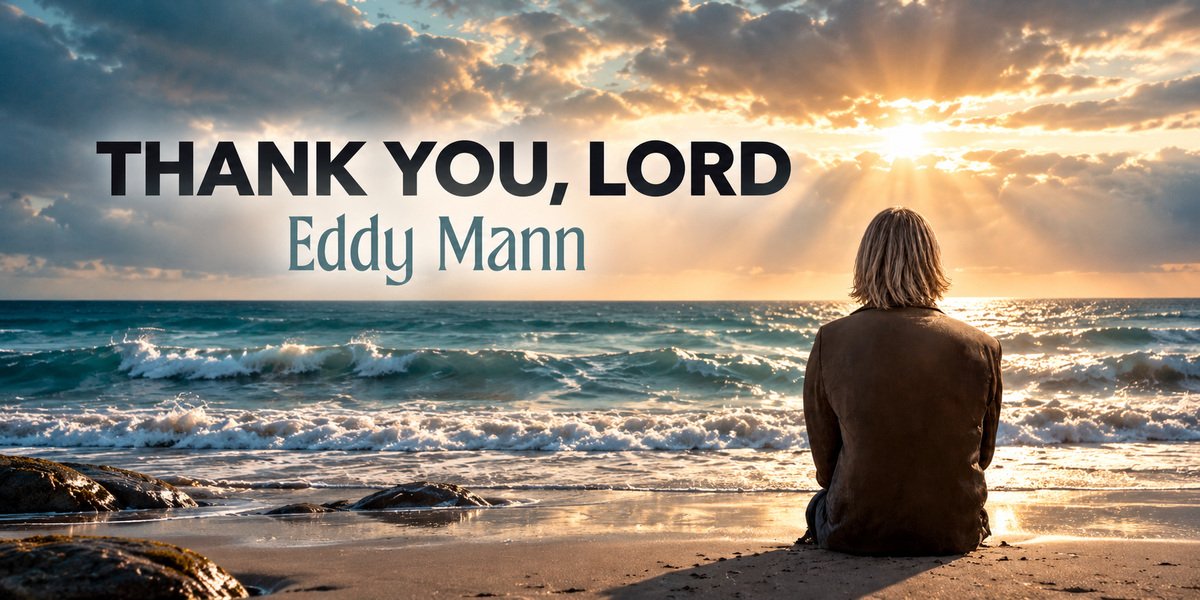
Eddy Mann’s “Thank You Lord,” scheduled for release November 6, 2026, offers a gentle reminder that meaningful spiritual music doesn’t always require a dramatic musical statement. Sometimes it begins with the simple act of listening.

And in Mann’s case, listening meant rediscovering his mother’s voice.

The Melbourne, Florida-based singer-songwriter has built a substantial career exploring the intersections of contemporary worship, gospel, folk, and Americana. With more than twenty albums, multiple chart-topping Christian singles, and numerous industry honors, Mann has demonstrated both artistic perseverance and a consistent commitment to faith-centered songwriting. Yet his latest single, the first offering from the forthcoming Dreaming with God album, scheduled for September 2027, feels particularly significant because of the intensely personal circumstances surrounding its creation.

During the summer of 2009, Mann’s mother recorded her prayers, observations, and spiritual reflections in handwritten journals. Four years later, she passed away, leaving behind a collection of private conversations with God.

When Mann began revisiting those pages, he discovered something unexpected. His mother’s distinctive vocabulary, unusual phrasing, and personal expressions of gratitude contained an almost instinctive musical rhythm.

Instead of merely borrowing the sentiments, he allowed the language itself to shape the composition.

It’s a fascinating example of how authentic art can emerge from unexpected sources. His mother’s writings weren’t intended for publication, performance, or artistic recognition. They weren’t carefully constructed theological essays or commercially calculated devotional statements. They were honest expressions of an individual relationship with the divine.

That distinction gives “Thank You Lord” its particular emotional resonance.

The song’s lyrical foundation is remarkably uncomplicated. Its recurring expressions of thanksgiving acknowledge the blessings, wonders, grace, favor, and mercy present in everyday life, while its central prayer asks that we remain within God’s loving care.

On paper, these might seem like ordinary sentiments. Indeed, contemporary worship music has produced countless variations on precisely these themes. Yet the story behind Mann’s composition transforms those familiar words into something more intimate and consequential.

These aren’t simply declarations of belief. They’re fragments of a life remembered.

There’s an important theological truth embedded in that creative process. Christian worship, at its most authentic, is not primarily about musical sophistication or emotional intensity. It is about relationship. Every individual’s conversation with God carries the unmistakable characteristics of their own personality, experience, and spiritual understanding.

Mann’s song honors that individuality rather than smoothing it away.

In doing so, it recalls an earlier era of Christian songwriting when artists such as Keith Green, Larry Norman, and Mark Heard frequently approached matters of faith through intensely personal expression. Their music differed considerably in sound and temperament, but each understood that spiritual credibility begins with honesty.

Mann follows a quieter path, yet the underlying artistic principle remains recognizable.

The composition’s meditative repetition also deserves consideration. In a musical environment that increasingly demands instant gratification, repeated phrases can be mistaken for a lack of imagination. But repetition has always played a vital role in religious practice, from ancient liturgical traditions to gospel refrains and contemporary contemplative worship.

The purpose isn’t necessarily to introduce new information. It’s to allow familiar truths to settle more deeply into the listener’s consciousness.

“Thank You Lord” embraces that understanding.

Its inspiration from Psalm 118:24 further reinforces the song’s devotional character. The biblical invitation to rejoice in the day God has made becomes particularly affecting when viewed through the circumstances of Mann’s mother’s life.

She wrote those expressions of gratitude without knowing how many days remained ahead of her. Years later, her son would discover them and give them musical expression.

That passage of time lends the song an emotional dimension beyond its straightforward lyrics.

Mann’s description of the recording process reveals an equally compelling artistic philosophy. He entered the studio with a basic arrangement and harmonies that continued evolving, treating the performance as a moment captured within an ongoing creative journey rather than a definitive, immovable statement.

There’s something refreshing about that approach.

Too much contemporary Christian music can feel engineered for predictable emotional results. Arrangements build toward carefully timed crescendos, choruses expand into declarations of victory, and production techniques attempt to manufacture transcendence.

Mann’s stated intention suggests something less calculated. He understands that spiritual authenticity isn’t dependent on achieving musical perfection.

Of course, simplicity carries its own risks. A song centered on repeated expressions of gratitude must depend heavily on the sincerity of its message and the effectiveness of its musical presentation. Listeners expecting dramatic lyrical development or provocative theological exploration may find its contemplative focus relatively narrow.

But that limitation is also part of the song’s identity.

Not every expression of faith needs to wrestle with doubt, suffering, or the complexities of modern existence. Sometimes the appropriate response to life’s uncertainty is simply gratitude.

And gratitude, properly understood, is hardly a trivial subject.

It is a conscious acknowledgment that our lives are sustained by gifts we neither created nor entirely control. In that sense, thanksgiving can become an act of spiritual resistance against the entitlement, anxiety, and relentless dissatisfaction that characterize so much contemporary culture.

Mann’s song offers that resistance without confrontation.

As the introductory single from Dreaming with God, “Thank You Lord” establishes an intriguing foundation for what may become one of Mann’s most personal projects. If the forthcoming album continues exploring the relationship between inherited faith, individual expression, and the creative process, it could reveal an especially meaningful chapter in his already extensive catalog.

But perhaps the single’s greatest achievement lies outside conventional musical evaluation.

Long after charts have changed, awards have been forgotten, and the industry’s attention has shifted elsewhere, this song will preserve something irreplaceable: the particular way one woman spoke to God.

Her son recognized the music within those words and chose to share it.

There’s a quiet beauty in that decision, one that reminds us why spiritually meaningful art still matters.

The most enduring songs don’t always seek to impress us. Sometimes they simply create a space where memory, faith, and human experience can meet.

With “Thank You Lord,” Eddy Mann has found that space.

And in a world filled with increasingly sophisticated ways to make noise, his willingness to listen may be the most meaningful statement of all.