Music Observer

Alexandra John Brings Romance and Drama to Life on New Single ‘OH LA LA!’


Modern dating can feel like a never-ending cycle of excitement, disappointment and wondering whether finding the right person should really be this complicated. For Nashville-based pop duo Alexandra John, that frustration becomes the inspiration behind their latest single, “OH LA LA!”, a theatrical exploration of romance, longing and the emotional chaos of looking for love.

Known for combining pop melodies with disco, funk and soulful influences, Alexandra John have built their musical identity around creating songs with personality. The twin sibling duo have developed a sound that draws from different eras of popular music, bringing nostalgic influences into their own contemporary style.

With “OH LA LA!”, however, they’re exploring a slightly different direction.

The inspiration began with the French expression that gives the song its title. Depending on the situation, “oh la la” can communicate excitement, admiration, surprise or frustration, making it an interesting starting point for a track about the contradictions of modern romance.

That flexibility in meaning became central to the songwriting. Rather than approaching the subject as a straightforward love song, Alexandra John wanted to capture the experience of being a hopeless romantic in a dating world that can often feel anything but romantic.

There’s desire and anticipation, but also disappointment, impatience and the exhausting uncertainty of trying to find a meaningful connection.

Musically, the duo looked towards ABBA’s iconic “Gimme! Gimme! Gimme!” for inspiration, particularly its dramatic atmosphere and unmistakable sense of longing. Their goal wasn’t simply to recreate a familiar disco sound, but to bring that same emotional intensity into the Alexandra John universe.

The result is a theatrical pop-rock direction that embraces exaggerated emotion, playful storytelling and the feeling of wanting something just out of reach.

It’s an approach that fits naturally into their catalogue, even as it introduces a different musical influence.

Previous releases have shown the duo’s ability to explore relationships and emotions from contrasting perspectives. “Lonely Night” has attracted more than 190,000 Spotify streams, while “Love Like This” has also connected with listeners, passing 150,000 plays. Their single “The World’s Winking At You” takes a more optimistic perspective, encouraging listeners to notice the small moments that make everyday life feel a little brighter.

Together, these songs reveal a duo interested in exploring different sides of human experience, from romance and connection to positivity and personal reflection.

Beyond their recorded music, Alexandra John have continued developing their presence through live performances, including opening for David Archuleta on his West Coast tour. Their music has also reached dance audiences, with a remix of “Taking Off” entering the Top 10 of the UK Pop Club chart.

Those experiences have helped introduce their sound to different listeners while giving the duo opportunities to experiment with their musical direction.

Now, “OH LA LA!” brings that adventurous approach into a world of romantic frustration.

What makes the single particularly appealing is its refusal to treat longing as something entirely tragic. Humor and whimsy sit alongside the dramatic emotions, capturing how ridiculous the search for love can sometimes feel.

For Alexandra John, the song is another opportunity to explore a familiar subject through a fresh musical perspective.

And for anyone who’s ever found themselves wondering why dating has to be so complicated, “OH LA LA!” offers a fitting soundtrack to the frustration.

https://open.spotify.com/track/5gE8yH5Wt19uShA107hN8d?si=53eaee56178a4e87
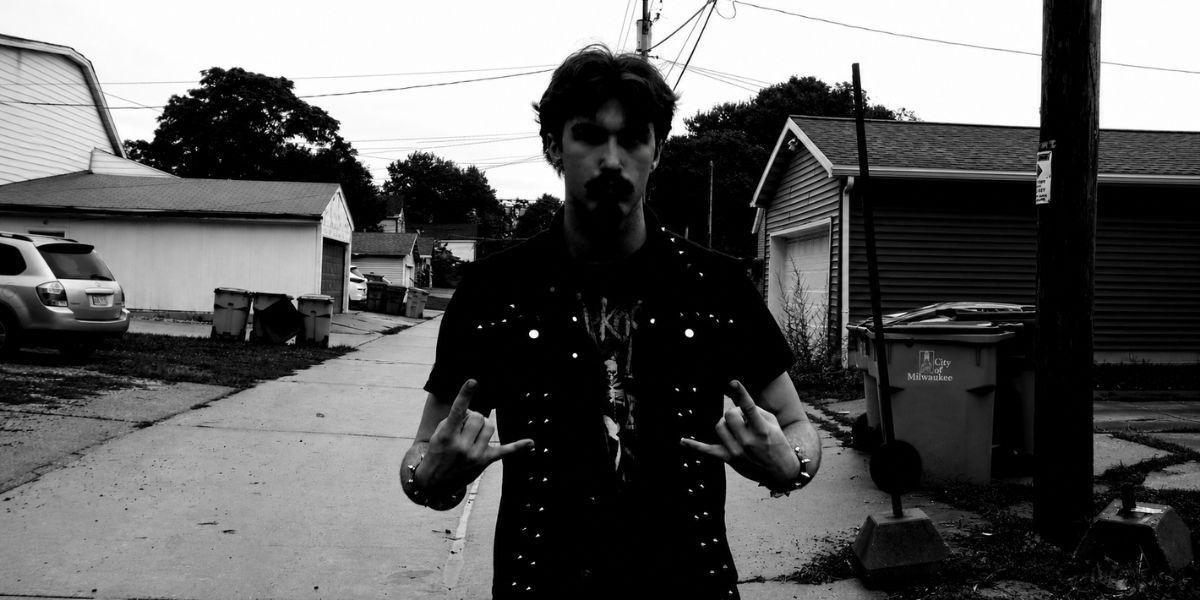
Skreigh Explores Identity and Inner Conflict on New Single ‘I’M CRAZY’

Milwaukee artist Skreigh has never been particularly interested in making music that plays it safe. Known for his combination of punk rap, trap metal, and darker hip-hop influences, the 20-year-old has developed a sound that embraces intensity and raw emotion. However, his latest single, “I’M CRAZY,” reveals a more vulnerable side to his songwriting, exploring what happens when your own thoughts begin to feel impossible to escape.

Rather than relying entirely on the aggressive energy of his previous releases, Skreigh takes a more melodic approach this time. Dark production and autotuned vocals create an atmosphere that reflects the emotional weight of the lyrics, allowing the track to feel both unsettling and strangely comforting.

At its heart, “I’M CRAZY” is about struggling to recognize yourself beneath years of difficult experiences, painful memories, and constant overthinking.

The song opens with a sense of frustration. Skreigh describes making mistakes, waking up hoping to find some kind of light, and repeatedly feeling as though that hope remains out of reach. It’s a cycle that many listeners will recognize, particularly during periods when moving forward feels much harder than it should.

But what makes the track interesting is the difference between its hook and verses.

While the chorus almost embraces the chaos suggested by the title, the verses reveal someone questioning those feelings rather than simply accepting them. There’s an ongoing struggle between how Skreigh sees himself in difficult moments and the person he believes still exists beneath everything he’s experienced.

One lyric captures that distinction particularly well: “But I know I’m not my brain.”

It’s a simple statement, but it carries much of the song’s meaning. The track acknowledges how overwhelming negative thoughts can become without suggesting that those thoughts define someone’s entire identity.

That idea becomes even more personal through the mirror imagery in the second verse.

Skreigh describes feeling disconnected from himself after years of trauma and tears, using the experience of looking into a mirror as a way of confronting someone he hasn’t properly recognized in a long time.

Rather than presenting that moment as an easy breakthrough, the song focuses on the difficulty of finding your way back to yourself when so much has changed.

It’s an emotional direction that adds another dimension to Skreigh’s growing catalog.

Previous releases such as “WDGAF!” have introduced listeners to his more confrontational side, with rebellious lyricism and heavy influences helping establish his identity within alternative hip-hop. He’s also worked with artists including SXNOROUS and Chuee, continuing to explore different approaches to his sound.

With “I’M CRAZY,” that willingness to experiment becomes particularly important.

The melodic delivery gives the lyrics room to breathe, demonstrating that vulnerability can be just as impactful as aggression. It also shows how Skreigh’s music can explore different emotional perspectives without completely abandoning the darker atmosphere that defines his style.

Ultimately, “I’M CRAZY” isn’t about having everything figured out. It’s about recognizing the confusion, frustration, and pain that can come with trying to understand yourself.

For Skreigh, the song represents another step in developing his artistic voice, one that allows him to confront difficult emotions while continuing to push his music in new directions.

And beneath its chaotic title lies a particularly human idea: sometimes finding yourself begins with recognizing that you’re more than the thoughts running through your head.

https://open.spotify.com/track/2LTmv2TWfcBvhXpCeaQKTb?si=ed290061ecc042c6

From ‘Duck Diving’ to ‘Never Call Me’: Chasing Luena’s Growing Indie Rock Catalogue

Relationships rarely end as neatly as people would like. Sometimes the warning signs are obvious, the feelings are complicated and both people know something isn’t working long before either is prepared to admit it. It’s the kind of uncomfortable territory Melbourne indie rock band Chasing Luena aren’t afraid to explore, particularly on their single “Never Call Me.”

The four-piece have been steadily building a catalogue of songs that explore human connections without pretending they’re always straightforward. Their music combines indie rock and folk influences with thoughtful lyrics, drawing inspiration from the Australian alternative scene while bringing their own experiences into the songwriting.

“Never Call Me” offers one of the clearest examples of that approach.

Rather than telling the familiar story of someone being hurt by an inconsiderate partner, the track examines a relationship in which both people contribute to the problems. Neither is entirely innocent, and neither seems particularly interested in admitting how much their behaviour is affecting the other.

There’s dishonesty, jealousy and a constant struggle to maintain control. The narrator acknowledges their own shortcomings, including withholding parts of themselves and approaching the relationship as something that can be managed without becoming too emotionally involved.

The title adds another layer to the story.

Never being called someone’s partner, or even receiving the familiar affection of being called baby, becomes a reflection of the relationship’s lack of definition. Both people avoid giving it a name, allowing them to escape some of the responsibility that comes with genuinely committing to one another.

It’s a particularly relatable observation about modern relationships, where keeping things casual can sometimes become an excuse for avoiding difficult conversations.

That willingness to examine uncomfortable emotions runs throughout Chasing Luena’s recent music.

“Home” approaches human connection from a different perspective, taking inspiration from everyday life in Melbourne. Bikes, tram tracks and shared houses provide the setting for a song about friendship, personal responsibility and the limits of what people can reasonably ask of those closest to them.

As the story develops, the meaning of home becomes less about a particular building and more about the relationships and communities people create around themselves.

Where “Never Call Me” examines the consequences of avoiding commitment, “Home” considers what happens when existing relationships begin carrying more weight than they can comfortably support.

Another important release is “Duck Diving,” which has helped introduce listeners to the band’s music. The track also received an acoustic live interpretation, reflecting Chasing Luena’s interest in presenting their material through different arrangements.

Behind these releases is a group of musicians with varied backgrounds.

Drummer Bill Foster brings extensive experience across classical percussion, jazz and rock, while vocalist Charlotte Glover draws from neo-soul influences. Guitarist Patrick Quinlan and bassist Glenn Davidson complete the lineup, contributing their own musical perspectives to the band’s developing identity.

Since beginning live performances in 2022, Chasing Luena have appeared at festivals including St Kilda Festival, Queenscliff Music Festival and Warrandyte Festival. They’ve also supported artists such as Budjerah, Jade Gibson and Wilma Sights.

Those experiences have helped establish the band beyond the recording studio, giving them opportunities to connect with audiences throughout Australia.

With songs such as “Never Call Me,” “Home” and “Duck Diving,” Chasing Luena are demonstrating that their greatest strength lies in recognising the complications of ordinary life.

Their songwriting doesn’t always offer an obvious hero, villain or resolution. Instead, it gives listeners the opportunity to recognise something familiar within the stories, even when those stories aren’t particularly comfortable.

And that ability to find meaning in imperfect relationships is becoming an increasingly important part of what makes Chasing Luena worth following.

https://open.spotify.com/track/2Ftintq3UGu66F5Pp2C1kM?si=d7d075479ab64274

Examining Nastyrck’s Work as a Producer and Recording Engineer Within Britain’s Urban Music Landscape

Behind many popular songs are producers and audio engineers who are often not given as much credit as the artist. Over the past 30 years, the British urban music industry has utilized independent studios, community collectives, and specialized producers, all instrumental in developing genres like UK hip hop, grime, reggae, and jungle. Artist development programs like MOBO UnSung have also served as a point of entry for aspiring artists and producers, in addition to providing industry development. MOBO UnSung has now evolved into an annual development scheme that supports unsigned artists across various genres.

Within that environment, Jamie Ale McKenzie, professionally known as Nastyrck and Mac.1, built a career that has centered less on celebrity and more on technical production, recording, and collaboration. His professional path began in 2002 with the London collective Street Politiks publishing agreement with Windswept Music. Street Politiks’s early success placed developing acts in the spotlight, attracting wider attention from the music industry. This marked the beginning of McKenzie’s long association with commercial production and engineering work.

During the following years, McKenzie became known for remix production commissioned by major record labels. His catalog includes work connected with Alicia Keys, Lumidee featuring N.O.R.E., Amy Winehouse, Tyler James, Alex Cartañá, Cassidy, Clipse, and Raghav featuring Redman. These projects reflected a common practice during the early 2000s, when labels frequently commissioned alternative mixes for club promotion and international releases. While individual projects varied in style, they demonstrated an ability to work across contemporary R&B, hip-hop, and pop without being tied to a single production approach. Alongside label commissions, McKenzie continued developing relationships within East London’s expanding urban music community.

His work also extended into original production. In 2006, he produced “War” and “Foundation” for Klashnekoff’s group Terra Firma, contributing to the group’s recording activity during a period when independent UK hip hop continued to develop alongside grime. Around the same time, he became involved with projects linked to Hackney’s underground music scene, including production work for Tricky’s Show and Prove mixtape. Those recordings connected him with artists emerging from East London and reflected his continuing involvement beyond commercially commissioned remix projects.

Engineering gradually became an equally important part of McKenzie’s work. Following his Sony/ATV Music Publishing agreement in 2010, he combined production, recording, and engineering for independent artists including ShezAr, Slivia, Ras Demo, and Qozo Medici. His production of “Got To Be Free” with Slivia, released through Universal Music in 2013, represented one of his early internationally distributed original recordings. At the same time, he continued contributing behind the scenes by recording, arranging, and refining material rather than limiting his role to beat production alone.

A significant stage in that development came through mentorship from producer Mark Wallis. Rather than concentrating solely on digital workflows, Wallis introduced McKenzie to recording methods rooted in analog studio practice, microphone placement, and critical listening. That experience influenced later projects recorded with Ras Demo, including The Calling, and also shaped collaborations with Qozo Medici and ongoing sessions with his brother McKnasty. Although these recordings covered different genres, they shared an emphasis on live performance, engineering technique, and collaborative studio work developed over several years.

As his production style continued to change, McKenzie increasingly separated his artist identity from his earlier production work. Recording under the name Nastyrck, he began combining elements of hip hop, grime, and reggae with jungle rhythms, dub-inspired basslines, and electronic production. The 2020 EP Rebellion marked an important point in that transition. Plans for further activity were interrupted after he suffered a stroke later that year, reducing his ability to work temporarily before gradually returning to production through rehabilitation and home studio recording.

Recent releases have focused on projects with Ibiza Records, where McKenzie has worked alongside label founder Paul Ibiza and collaborators including Wayne Wizdom. Releases such as Words of Wizdom, Jungle Dub EP Volume 1, Jungle Riddem EP, and Woiyoi illustrate a shift from primarily producing for other artists toward creating original material under the Nastyrck name. Across more than two decades, Jamie Ale McKenzie has remained active as a producer, engineer, songwriter and recording artist, moving between commercial remix work, independent recording projects and contemporary jungle releases while continuing to work across several areas of British urban music.

Disclaimer: Testimonials in this article reflect personal experiences and aren’t guaranteed. Results vary based on effort, experience, and commitment.