Music Observer

Eric Walker Learns to Celebrate the Wins on ‘Second Best’


Ambition can be useful until you’re so focused on what’s next that nothing you’ve already achieved feels good enough. On “Second Best,” Eric Walker turns that familiar cycle into something unexpectedly upbeat.

Released in July 2026, “Second Best” continues a particularly active period for Walker, following tracks including “Kings Tonight,” “Hanging” and “Coffee and the Blues.” Rather than simply repeating the emotional territory of those releases, the track puts confidence and perspective at the centre.

Inspired by the polished pop world of artists such as Charlie Puth, “Second Best” pairs an uplifting message with bright, accessible production. Catchy melodies, layered harmonies and an energetic rhythm give the song its immediate feel-good character, but there’s something more reflective happening beneath it.

The idea comes from the pressure people can put on themselves when they’re constantly looking towards the next achievement. There’s always another goal to reach, another milestone to hit, and someone else whose progress can make your own suddenly seem less impressive. “Second Best” pushes against that mindset. Instead of pretending ambition is a bad thing, Walker’s approach is about learning to recognise how far you’ve already come while continuing to move forward.

It’s a subtle distinction, but an important one. The song doesn’t ask listeners to settle. It simply suggests that progress becomes much harder to enjoy when every success is immediately replaced by another expectation.

That perspective fits naturally with the kind of pop Walker has been building. Rather than overcomplicating his songwriting, he tends to start with emotions and experiences that are easy to recognise, then place them inside clean, melodic production. “Second Best” continues that approach while allowing the music itself to feel considerably lighter than the self-doubt behind its central idea.

It also arrives during a productive chapter in his catalogue. “Kings Tonight” opened his 2026 releases before “Hanging,” and eventually “Second Best” continued the run. Together, they show an artist continuing to explore where straightforward pop songwriting can take him.

Perhaps that’s why the simplicity of “Second Best” works.

There isn’t an enormous life lesson hidden behind the song. It’s closer to a reminder to occasionally stop moving the finish line. Ambition can still be there tomorrow. For a few minutes, you’re allowed to appreciate what you’ve already done.

And with “Second Best,” Eric Walker has found a bright, feel-good way of saying exactly that.

https://open.spotify.com/track/0rm4e2hd1h51PMY57gNBnM?si=e41ec8a2c8ce441c
At WIYAMS’ CONFLUENCE Concert, Bass Clarinet Finds Its Place Among Many Voices

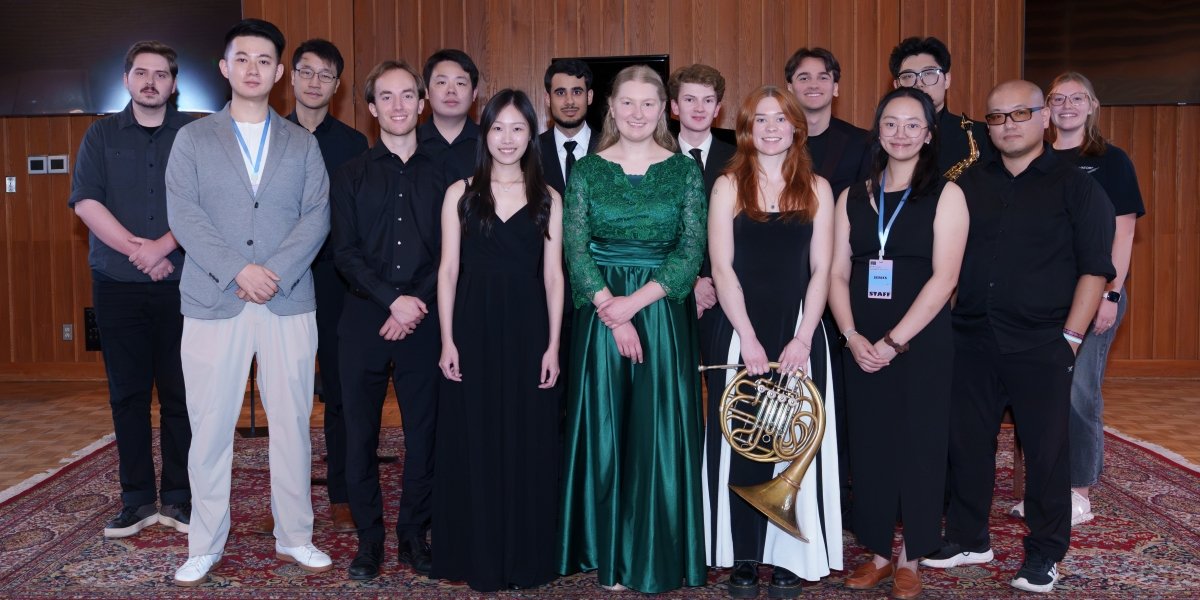
Photo Courtesy: Baiying Zhang (WIYAMS artists and members of the organizing team following the CONFLUENCE concert. Pictured with the group are WIYAMS Co-Founder and Artistic Director Dr. Jinwei Zhang and Operations Director Yingjun Amy Chen.)

Cooper Headrick’s performances were part of an afternoon of solo and chamber music at Shenandoah Conservatory.

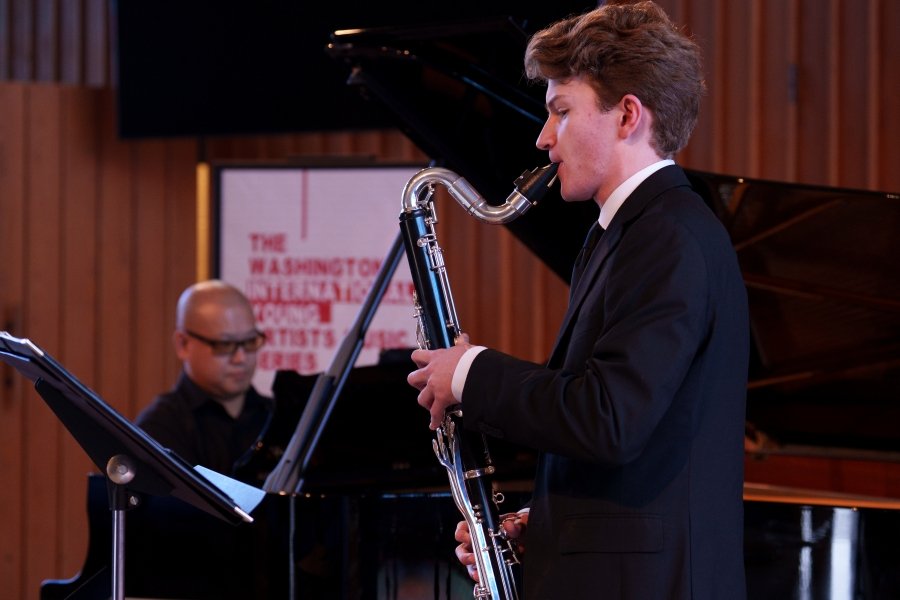
WINCHESTER, Va. The bass clarinet is often heard as part of a larger ensemble. At the Washington International Young Artists Music Series’ CONFLUENCE concert on Sept. 19, Cooper Headrick brought it to the foreground.

Headrick, a WIYAMS Young Artist, performed Eugène Bozza’s Ballade for Bass Clarinet and Piano and the Blues from George Gershwin’s An American in Paris, arranged by Michele Mangani. The pairing gave listeners two different views of the instrument: its lyrical reach in Bozza and its rhythmic character in Gershwin.

His performances were part of a broader program at Goodson Chapel – Recital Hall, presented by WIYAMS through the International Art Development and Promotion Association. The concert brought together WIYAMS Artists, WIYAMS Young Artists and guest musicians, including performers from Shenandoah Conservatory and the Royal College of Music in London. Piano, guitar, bass clarinet, saxophone and horn all had a place on the afternoon’s program.

Originally from Portland, Oregon, Headrick is pursuing a Bachelor of Music in Clarinet Performance at New York University, where he studies with Christa Van Alstine. His work spans classical and jazz music, a background reflected in his choice of pieces for CONFLUENCE. He won First Place in Low Clarinet at the 2024 OSAA State Solo Festival and received the 2024 Louis Armstrong Jazz Award. In 2025, he was a finalist in the NYU Woodwind Concerto Competition.

Photo Courtesy: Yunlong Dai (WIYAMS Artist Cooper Headrick)

Headrick has also taught through Vibe of Portland. During a semester in Prague, he studied with Irvin Venyš and interned with the Prague Radio Symphony Orchestra. Those experiences have taken him from community music education to conservatory training and orchestral work.

Elsewhere on the program, pianists Allison Estabrook, Andrew Wood and Charles Roberts performed Chopin’s Ballade No. 2 in F Major, Albéniz’s Triana from Iberia, and Scriabin’s Fantasy in B Minor, respectively. The three works offered sharply different demands: Chopin’s sudden turns between calm and turbulence, Albéniz’s dance rhythms, and Scriabin’s expansive Romantic writing.

The piano also appeared in partnership with other instruments. Ido Shalom and guitarist Weijia Chen performed the Allegretto from Schubert’s Arpeggione Sonata in an arrangement for piano and guitar. At a single keyboard, Yan Shun Joseph Wong and Sau In Tiana Wong played Mozart’s Andante and Five Variations in G Major, K. 501. Each pairing required its own kind of balance, whether between the guitar’s plucked sound and the piano or between two players sharing the same instrument.

Wind instruments added further variety. Saxophonist Wentao Luan performed Pierre Sancan’s Lamento et Rondo, while horn player Maria Alexander presented the first two movements of Jane Vignery’s Sonata for Horn and Piano. Together with Headrick’s bass clarinet selections, these performances gave the concert three distinct approaches to wind repertoire.

“Our goal was to give musicians from different schools and cities a place to perform together and share their work with a new audience,” said Yingjun Amy Chen, operations director of WIYAMS. “We’re grateful to Shenandoah Conservatory for helping us bring that opportunity to Winchester.”

The title CONFLUENCE suited both the Shenandoah Valley setting and the concert’s structure. Solo performances stood alongside duos. Familiar composers shared the program with works that placed less frequently featured instruments, including Headrick’s bass clarinet, at the center of attention.