
The Beautiful Paradox of Kevin Koplar

By: Matt Emma
On To A Better Dark, the Los Angeles songwriter builds a rock record for outsiders who refuse to sink
There is a phrase Kevin Koplar uses to describe his album To A Better Dark that has been rattling around my head for weeks now. He calls it a record “for the depressed who can still party.” It sounds like a throwaway line until you sit with the album, and then it starts to feel like a mission statement, maybe even a philosophy.
“Great songs should be vulnerable and honest,” Koplar tells me. “But I personally don’t like when it sinks into melancholia.” He surveys the modern landscape and sees a gap: on one side, sleepy sad indie; on the other, electronic dance music engineered for pure escape. What he misses is the thing rock and roll did better than any other form. “The beauty of it was like, here’s everything that’s wrong with me and makes me different, and I’m celebrating that,” he says. “I’m obsessed with that paradox. Celebrating the very thing that is flawed.”
That obsession runs through all ten songs on To A Better Dark, a collection Koplar has called the best ten songs he has written in his lifetime. It is a bold claim, and when I press him on it, his reasoning is refreshingly unromantic. These songs were field tested. Played live, over and over, in front of real audiences, until the ones that connected separated themselves from the ones that did not. But beyond the crowd response, each track had to survive his personal gauntlet: a balance of honesty and vulnerability meeting rock drive, melodies that only earn his trust once they find a counterpoint, and above all, the acoustic guitar test.
“I don’t trust a song until it sounds good on an acoustic guitar,” he explains. Most of the record started that way, bare bones, just voice and six strings, before anything else was allowed in the room. Horn lines, layered instrumentation, all the color that fills out the finished album, every bit of it was built on top of songs that could already stand on their own. “If you removed it all,” he says, “I don’t feel like it would be lacking.”
Finding the Torn Photograph
Ask Koplar about his songwriting process, and he will tell you about nuggets. A melody line, sometimes a lyric, that arrives from somewhere he cannot name. “The more mysterious the nugget is, the more I trust it,” he says. “Like, where the hell did that come from? That’s the feeling I’m looking for.”
From there, the work feels less like construction and more like archaeology. He offers a metaphor so good I made him repeat it: “It’s like finding a torn-up photograph in the woods. This is a piece of a photo. I know the other pieces exist. I didn’t take the photo. I just found it. And I’m interested enough to put it together.”
A former poet who studied English and creative writing, Koplar brings a writer’s ear and a restless body to the process. He paces his room. He takes walks. He hums lines until words fall out of them. And then he obsesses, playing a song on loop for a week, waiting to see which parts survive. “If one part starts to bore you on day three, that’s a sign. That part needs to change.” Boredom, for Koplar, is the most honest editor there is.
Three Men, One Modest Budget, and a Blunt Verdict
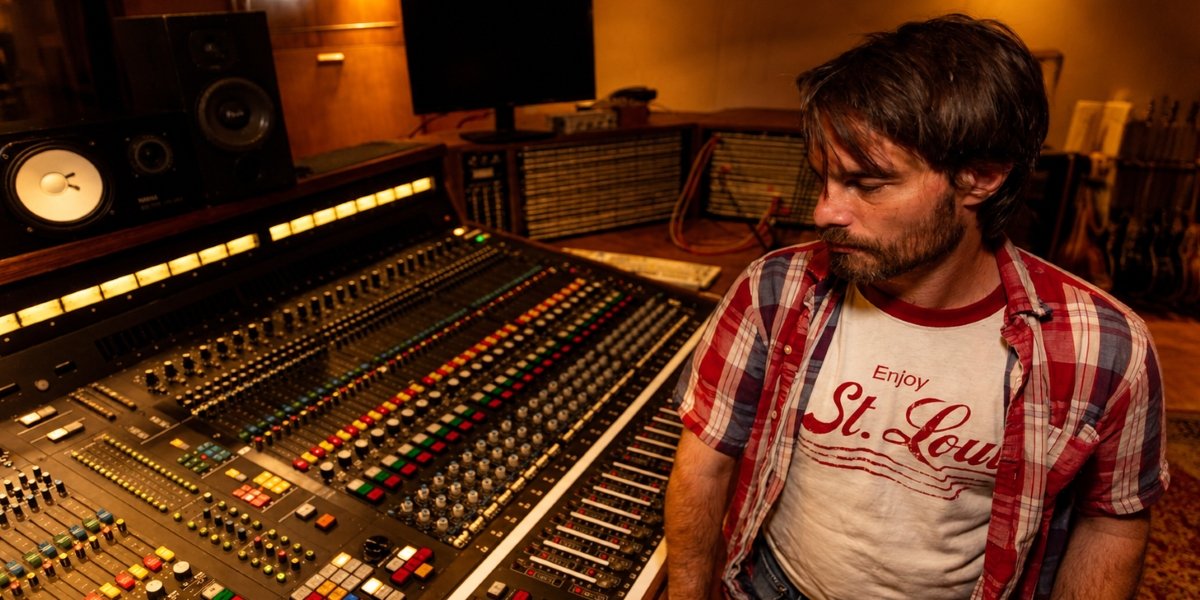
The record came together over more than a year, roughly mid 2023 into 2024, largely at an indie punk studio in Los Angeles that producer and engineer Chris Cosgrove ran out of the lower level of his apartment. Koplar had met producer and guitarist Rick Wood earlier, and the chemistry was immediate. “I trusted his understanding of my music,” Koplar says. Wood introduced him to Cosgrove through Permanent Records, the beloved LA record store and venue, and the three of them dug in. “It felt like carte blanche to mess around and work stuff out. The three of us had a ball. I felt like they believed in me.”
That trust got tested in the best possible way on a song called “Tugboat,” a track Koplar had loved, then inexplicably hated, then shelved for years. When he finally brought it back into the studio, Cosgrove listened and delivered a verdict with the bluntness only a true collaborator can afford: he hated the chorus, and informed Koplar that he had accidentally written a dick song. Koplar got defensive. Then he went home, admitted Cosgrove was right, and rewrote the chorus that night. “If I had to defend myself that much,” he laughs, “then something’s wrong with the song.”
For the final polish, Koplar brought the record to mixer Bill Mims, a Sunset Sound veteran with Grammys to his name, whose house became the album’s finishing school. The result is a record that feels handmade and lived in, but never lo-fi as an excuse.
To A Better Dark, Not Toward the Light
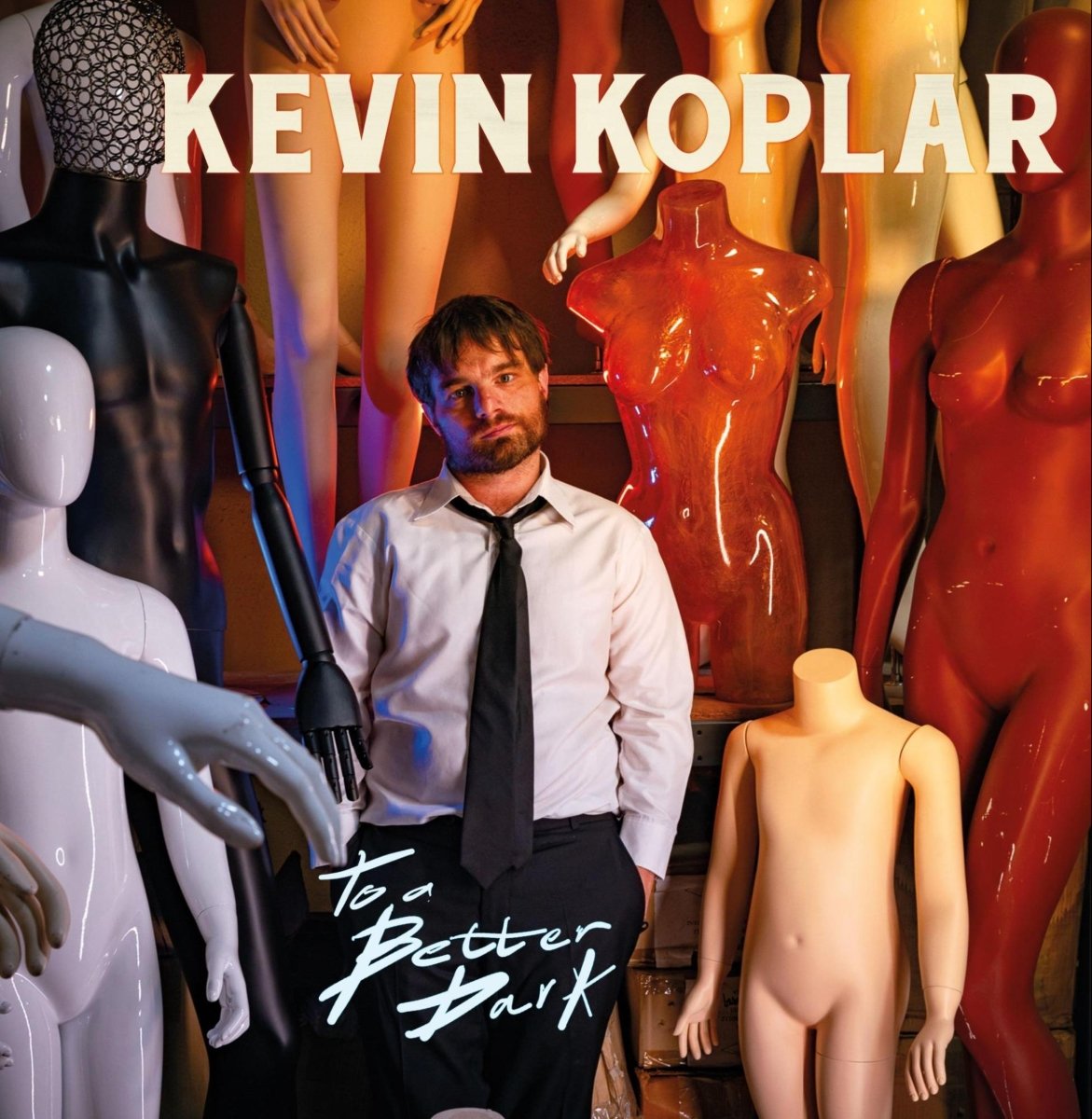
The title comes from a lyric in “Broken Breeze,” one of those lines that wrote itself before Koplar understood it. “When I wrote that, I was like, what the hell does that mean?” he admits. “But it encapsulated the theme of the album. It doesn’t mean toward the light. You’re always going to be dealing with something. It’s like, let’s just make a better version of that.”
That refusal of easy resolution is what makes the album linger. Koplar cites bands like The War on Drugs and Wilco as proof that vulnerability and drive can share a stage, and his record earns a place in that lineage. He believes in what he calls writing forward, treating each project as a way to discover the next version of himself rather than a monument to a frozen identity. Fittingly, he is already jamming with a new garage rock side project called Hoodoo Meat Bucket, saving his rowdier material for that band while the heartfelt songs stay under his own name.
So who is this album for? Rock fans, sure. But Koplar gets more specific. “Offbeat types. People who’ve ever felt like outsiders. People who still look to music to transcend and to think and to reflect as much as they do to jam out.” He points out that so much modern listening is utility, music to cook to, sleep to, run to. His record asks for something older. “My music goes back to when we used to sit and actually stare at the record and let the layers open up and reveal itself.”
Put on To A Better Dark, listen for a while, and it does exactly that.
Listen and stream To A Better Dark now.