
Cathleen Ireland Turns the Language of Disconnection Into a Plea for Recognition

By: Julianne Cross
On “Do You Care,” the Pittsburgh singer-songwriter discovers that being blocked can end a conversation without ending the relationship.
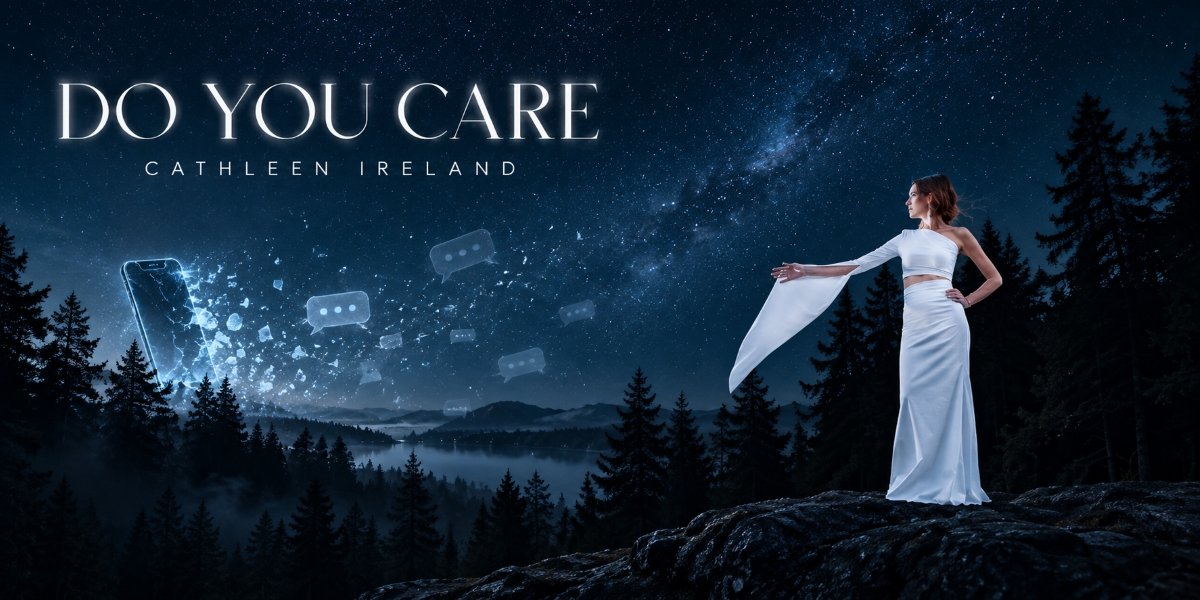
The most important character in Cathleen Ireland’s “Do You Care” never sings and never answers. This absent figure exists only through a series of vanished connections: blocked messages, removed posts, unanswered questions, and memories that have outlived whatever relationship produced them. Ireland’s new single is a breakup song, but it is also a song about control, specifically the power one person gains by deciding that communication is over.
Pop music has always absorbed the language of its technology. Earlier generations sang about letters, telephone calls, and messages left on answering machines. Ireland works with the vocabulary of social media, where words such as “block,” “ghost” and “unpost” describe technical actions that carry enormous emotional consequences. The language is casual, even cute, but the experience behind it is severe.
“Bae, bae, block me,” Ireland sings at the beginning, turning an act of rejection into a rhythmic provocation. The line sounds defiant, but the defiance does not last. What follows is an admission that the rejected person remains emotionally tethered to someone who has already closed the door.
That imbalance is the song’s central subject. One person has apparently exercised the right to disappear; the other is left searching through memories and trying to determine whether the shared past still means anything. Ireland does not portray this uncertainty as noble. Her narrator bargains, repeats herself, and gradually lowers her expectations. Romance gives way to a desire for conversation, and conversation gives way to the hope that friendship might somehow be restored.
“I just wanna talk to you,” she confesses. It is an ordinary request made extraordinary by the fact that it cannot reach its intended recipient. Ireland’s narrator has plenty to say, but no access to the person who needs to hear it. The song itself becomes a substitute channel, a public expression created because private communication has failed.
Musically, “Do You Care” draws from contemporary pop and R&B, genres that often turn repetition into both hook and argument. Ireland uses broken-up syllables and recurring phrases to suggest emotional fixation. Her language catches, restarts and circles back, mirroring the behavior of someone replaying the same final exchange in search of an explanation that was never offered.
This repetition also complicates the song’s accessibility. The phrases are catchy enough to invite casual listening, yet the feelings underneath them are anything but casual. Ireland packages panic, grief, and humiliation inside a polished arrangement that keeps moving even while the narrator remains stuck. The contrast is familiar to dance-pop and R&B, where the beat can offer momentum long before the story finds resolution.
Ireland’s vocal performance keeps the track from becoming a novelty about online dating. She does not treat blocking and ghosting as trendy slang; she treats them as instruments of emotional distance. Her voice moves between insistence and disbelief, suggesting that the question in the title is not rhetorical. She genuinely wants to know whether the other person still cares, even though asking may expose how little power she has left.
The song becomes more persuasive when Ireland acknowledges that she was not perfect. This is not the testimony of a narrator claiming complete innocence. Instead, she makes a narrower case: whatever her shortcomings, she remained sincere. That distinction matters because it gives the relationship a history more complicated than victim and villain.
“Do You Care” also avoids the standard resolution of the contemporary empowerment anthem. Ireland does not announce that she is better off, promise revenge, or transform rejection into instant self-love. Such conclusions can be satisfying, but they are not always truthful. Sometimes the strongest feeling after abandonment is not liberation but bewilderment. Ireland allows that bewilderment to remain unresolved.
The result is a song that understands how digital life has changed the mechanics of intimacy without changing its emotional stakes. A person can now disappear more efficiently than ever, but the one left behind still experiences an ancient sequence of longing, anger, self-doubt, and hope.
Cathleen Ireland makes those contradictions audible. “Do You Care” is catchy without trivializing its pain and vulnerable without surrendering its dignity. Its unanswered question lingers because the song knows something its absent character may prefer to ignore: ending communication is not the same as erasing consequence.