
The Curse of K.K. Hammond, Where the Old Blues Finds a New Darkness

By: Elias Mercer
There is an old idea about the blues that geography is destiny. Mississippi. Memphis. Chicago. Highway 61. Certain names and places have become so inseparable from the music that it can sometimes seem almost sacrilegious to imagine it flourishing anywhere else.
Then there is The Curse of K.K. Hammond, playing slide guitar in the Buckinghamshire countryside.
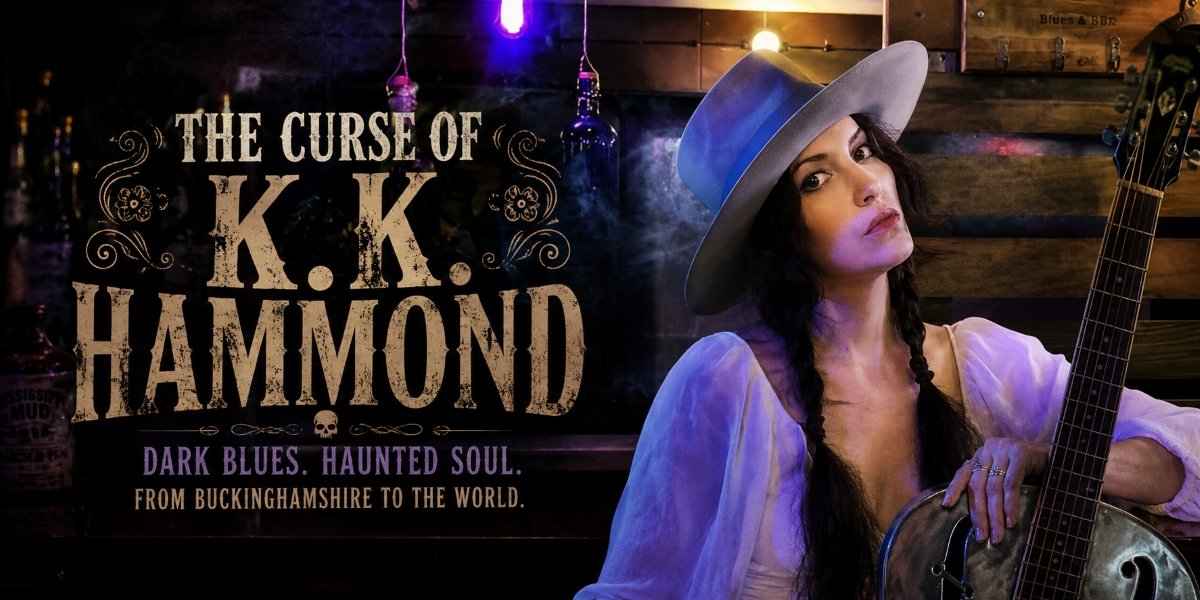
Hammond is an English singer, songwriter and resonator guitarist whose music reaches unapologetically toward the earliest language of American blues while somehow avoiding the trap of historical reenactment. She has studied the vocabulary, certainly, the open tunings, the metallic cry of the slide, the tension between repetition and release, but what emerges belongs unmistakably to her.
She calls it “horror blues.”
It is an appropriate description, though perhaps an incomplete one.
Hammond’s music is populated by the imagery of Southern Gothic fiction: graves, ghosts, death, fire, dangerous desires and characters who seem to have wandered into the songs carrying secrets. But beneath the theatrical darkness is something considerably more fundamental. Hammond understands that the blues has always been capable of turning fear into entertainment, sorrow into communion and loneliness into something shared.
That understanding helped transform what might have remained an eccentric musical obsession into an international career.
Her 2023 debut album, Death Roll Blues, became the decisive statement. The record reached No. 1 on the UK iTunes Blues chart and No. 1 on its American counterpart, an impressive transatlantic achievement for an independent British artist working in a form whose commercial obituary has been written countless times. More significantly, the album reached No. 7 on Billboard’s Blues Albums chart.
The numbers provided validation, but they don’t adequately explain Hammond’s appeal.
For that, you have to listen to the guitar.
There is something physical about the sound of a resonator instrument played with a slide. The notes don’t merely ring; they bend and complain. In the hands of the early blues players, that sound could approximate the human voice. Hammond understands this instinctively. She doesn’t use the slide simply as a display of technique. She allows notes to hang in the air, sometimes slightly wounded, sometimes threatening, creating tension through what she leaves unsaid.
That musicianship has attracted attention in unexpected places.
BBC Radio 2’s The Blues Show has supported her music, placing Hammond within the broader continuum of contemporary blues artists. But perhaps the strangest indication of her reach came when Metallica shared one of her slide guitar performances on the band’s official TikTok account, offering a succinct judgment: “Incredible.”
There is something fitting about that endorsement. Heavy metal and Delta blues may appear separated by generations and amplification, but both depend upon the elemental power of the riff. Strip away the volume and distortion and the distance between them becomes considerably smaller.
Hammond’s artistic world extends beyond her guitar.
Her visual presentation, the hats, shadows, antique objects, rural settings and Gothic imagery, has become inseparable from the music. Her videos often possess the atmosphere of short films, constructing a world in which the songs seem naturally at home. Rather than treating imagery as decoration, Hammond uses it to deepen the storytelling.
That storytelling continued after Death Roll Blues.
“Walk With Me Through the Fire” demonstrated Hammond’s increasingly assured command of atmosphere, while her treatment of “Ain’t No Grave” felt almost inevitable. The traditional song has traveled through gospel, folk, country and blues for generations, its declaration of spiritual defiance changing slightly with every singer who claims it. Hammond brings her own shadows to the piece without losing sight of the faith and mortality at its center.
It is that relationship with tradition that ultimately makes her work compelling.
Revivalists sometimes approach old music as though touching anything might break it. Hammond approaches it differently. She recognizes that the musicians who created the blues were themselves experimenters, borrowing freely, changing lyrics, altering melodies and reshaping songs according to circumstance.
Tradition survived because somebody kept changing it.
Hammond is doing precisely that from an unlikely corner of England.
And now another chapter is beginning.
She has been working toward a new album, following a debut that established both her audience and her aesthetic. What direction the record will take remains largely concealed, but Hammond’s progression suggests an artist increasingly comfortable pushing against the boundaries she initially established for herself.
Perhaps that is the most interesting thing about The Curse of K.K. Hammond.
The skulls, Gothic imagery and supernatural atmosphere make an immediate impression. The chart positions make useful headlines. The Metallica endorsement makes a wonderful anecdote.
But none of those things explain why the music lasts after the image disappears.
That comes back to something much older and simpler: a voice, a steel string, a slide moving across it and the mysterious human need to turn trouble into song.
The distance from Mississippi to Buckinghamshire is considerable.
Listening to K.K. Hammond, sometimes it doesn’t sound very far at all.