Music Observer

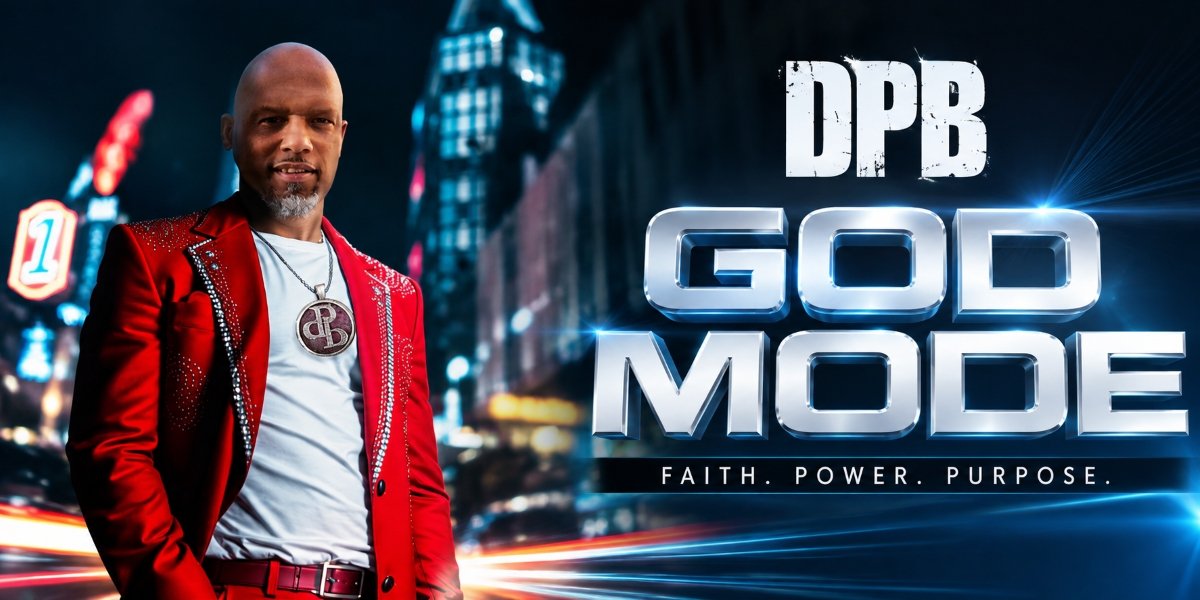
DPB’s “God Mode” Turns Faith Into Forward Motion

By: Melissa Morris

Christian music has always had an interesting relationship with certainty. Country music can wallow in regret. Rock music can revel in rebellion. Hip-hop often thrives on ambition and self-confidence. Contemporary Christian music, meanwhile, tends to live somewhere between testimony and aspiration, balancing what believers know with what they’re still hoping to find.

On “God Mode,” veteran artist DPB isn’t interested in waiting around for answers.

Instead, he has a message that feels both ancient and surprisingly modern: stop acting as though victory is always waiting somewhere in the distance.

The song’s title is the first clue. Borrowed from the language of video games, “God Mode” traditionally refers to a setting in which players become invincible. It’s a phrase that has become so deeply woven into popular culture that it barely registers as slang anymore. DPB takes that familiar expression and reshapes it into something entirely different, grounding it not in ego, achievement, or personal power but in faith.

That’s a bold move, especially in a genre that often struggles to speak to younger audiences without sounding as though it’s borrowing somebody else’s vocabulary. Yet the metaphor works because DPB understands both worlds. He isn’t trying to force spirituality into modern culture; he’s recognizing that the language people use every day can become a bridge to larger ideas.

The result is one of the intriguing moments on Undefeated, an album built around perseverance, resilience, and the conviction that circumstances don’t have the final word.

The foundation of the song is simple. According to DPB, the track grew from a dream in which God challenged believers to stop praying exclusively for future blessings and instead embrace the authority, strength, and purpose they already possess. That idea runs through every verse and every repetition of the song’s central hook.

“I’m in God Mode. Jesus Christ is the God Code.”

In the wrong hands, that line could have sounded awkward or overly clever. Instead, it becomes the song’s anchor. The lyric manages to be catchy without sacrificing meaning, and contemporary without feeling disposable.

Musically, “God Mode” feels urgent from the opening moments. The production blends polished hip-hop rhythms with the emotional force of gospel music, creating a track that feels equally at home in a church sanctuary, on a streaming playlist, or pouring through the speakers at a live event. DPB has spent more than three decades refining his voice as an artist, and that experience shows. He understands that conviction can be every bit as powerful as complexity.

There’s also something refreshing about the song’s refusal to apologize for itself. In an era when irony often passes for authenticity, DPB delivers his message with complete sincerity. Every declaration of healing, freedom, and deliverance is offered without qualification. He isn’t asking listeners to believe; he’s telling them why he already does.

That confidence gives the song its momentum.

It also reveals something that has defined DPB’s career from the beginning. Long before faith-based artists regularly crossed genre boundaries and long before streaming algorithms transformed the music industry, he was building a career that refused to fit neatly into any one category. Throughout the years, his music has drawn from gospel, hip-hop, R&B, and contemporary pop traditions, creating a sound that reflects both his roots and his willingness to evolve.

“God Mode” continues that tradition while adding something new. Following the nostalgic reflections of “Back in the Day,” this track turns its attention toward the future. Or perhaps more accurately, toward the present.

Because that’s what this song is really about.

Not perfection. Not invincibility. Not the fantasy of living without struggle.

It’s about walking into the next chapter of life believing that fear doesn’t get the final say.

And in a world that seems increasingly uncertain by the day, that message might be the radical thing of all.

Ariana Grande Closes the North American Leg of the Eternal Sunshine Tour With Three Chicago Dates

Ariana Grande takes the stage at Chicago’s United Center on August 3, 5, and 6 for the final three North American performances of the Eternal Sunshine Tour, her first concert run in seven years. The three-night stand closes out a trek that has spanned the United States and Canada since its June 6 launch in Oakland, California, before Grande moves on to a five-show residency at The O2 in London later this month. The tour supports her seventh studio album, Eternal Sunshine, released in March 2024 via Republic Records, and its deluxe follow-up Eternal Sunshine: Brighter Days Ahead, which added nine bonus tracks and six new songs when it dropped a year later.

  • The United Center confirmed three performance dates: August 3 (doors 7:30 p.m., show 9:00 p.m.), August 5 and August 6 (doors 6:30 p.m., show 8:00 p.m.)
  • The Eternal Sunshine Tour marks Grande’s first return to live performance since the Sweetener World Tour wrapped in December 2019, which drew more than 1.3 million fans across nearly 100 shows
  • A third Chicago date was added due to overwhelming demand; pre-show party packages for all three nights have sold out
  • The tour also supports Grande’s eighth album, Petal, released July 31, mid-tour
  • Grande has described the Eternal Sunshine Tour as potentially her final concert run for the foreseeable future, citing a shift toward acting and other creative projects

Seven Years Between Tours

The gap between the Sweetener World Tour and the Eternal Sunshine Tour is the longest stretch Grande has gone without performing live since she began headlining arenas in 2015. The Sweetener run covered nearly 100 shows and drew more than 1.3 million fans, making it the largest concert tour of Grande’s career at that time. In the years since, Grande released two albums (Positions in 2020 and Eternal Sunshine in 2024), starred as Glinda in Jon M. Chu’s Wicked and its sequel Wicked: For Good, earned an Academy Award nomination for supporting actress, and largely stepped away from the concert circuit.

Grande acknowledged the length of the hiatus in a conversation on Amy Poehler’s Good Hang podcast earlier this year. She described the Eternal Sunshine Tour as her “last hurrah,” at least for a “long, long, long, long, long time,” framing the decision as a deliberate choice rather than a retreat. “I think I just am feeling a lot more connected to myself and my art since I started doing different things,” Grande said, pointing to her expanding work in film and television as the creative direction she intends to pursue after the tour wraps.

The Chicago Residency and Demand

Chicago was originally scheduled for two United Center dates on August 3 and 5. A third night on August 6 was added after tickets for the first two shows sold rapidly, a pattern that repeated in several cities along the route. The pre-show party packages, which included a DJ set, photobooth, raffle giveaway, two complimentary drinks, private bar access, light appetizers, and early access to merchandise, sold out for all three Chicago dates. Resale prices on Ticketmaster have climbed into the $600-$700 range for remaining inventory.

The three Chicago shows serve as the final North American performances before Grande transitions to the European leg. The five-show O2 residency in London will close out the Eternal Sunshine Tour entirely. Grande has not announced additional dates beyond the London run, consistent with her public statements about stepping back from touring after this cycle.

The Setlist and Production Across Eras

The Eternal Sunshine Tour setlist draws from across Grande’s full discography, spanning from her 2013 debut Yours Truly through the new material on Petal. The show is structured in five acts, each representing a different phase of Grande’s career and artistic identity. The production incorporates narrative film segments between acts, including scenes that reference Grande’s past visual identities, from the auburn-haired Yours Truly era to the high-ponytail Dangerous Woman period to the platinum-blonde Sweetener aesthetic.

One recurring visual motif follows Grande encountering a young version of herself, a device that ties the concert’s emotional arc to the album’s themes of memory, identity, and self-reconciliation. The staging matches the ambition of a performer returning to arenas after a seven-year absence, with the production scale reflecting both the breadth of the catalog and the significance Grande has attached to what may be her final extended run of live shows.

The addition of Petal to the setlist, released just days before the Chicago dates, gives the final North American shows a layer of freshness that earlier stops on the tour did not have. Fans attending the United Center performances will hear new material that was not part of the original touring repertoire when the run launched in June.

Grande’s Expanding Portfolio Beyond Music

The Eternal Sunshine Tour arrives at a point where Grande’s career has expanded well beyond pop music. Her portrayal of Glinda in Wicked earned an Oscar nomination and a Golden Globe nomination, positioning her as a dual-threat in both music and film. She reprised the role in Wicked: For Good, released in November 2025, and has since wrapped filming on Focker-in-Law, the fourth installment in the Meet the Parents franchise, and signed on for Season 13 of Ryan Murphy’s American Horror Story.

Grande has also hinted at a theatrical stage project separate from Broadway, describing it in general terms without providing details. “It’s not on Broadway,” she said in a public interview, “but it’s something that I’m very excited about and inspired by.” The combination of film roles, a possible stage production, and the Eternal Sunshine Tour paints a picture of an artist deliberately diversifying rather than cycling through the traditional album-tour-album loop that has defined pop career trajectories for decades.

The Chicago dates mark the final opportunity for North American fans to see Grande perform live before the London residency and whatever comes next. For an artist who has framed this tour as a closing chapter, the three nights at the United Center carry a weight that extends beyond the typical arena show.

FAQs

When is Ariana Grande performing in Chicago?

Ariana Grande performs at the United Center on August 3 (9:00 p.m.), August 5 (8:00 p.m.), and August 6 (8:00 p.m.). Doors open 90 minutes before showtime for each date.

Are tickets still available for the Chicago shows?

Primary tickets have largely sold out. Resale tickets are available through Ticketmaster, with prices currently in the $600-$700 range. Pre-show party packages for all three nights are sold out.

What album does the Eternal Sunshine Tour support?

The tour supports Grande’s seventh album Eternal Sunshine (2024), its deluxe edition Eternal Sunshine: Brighter Days Ahead (2025), and her eighth album Petal, released July 31, 2026.

Is this Ariana Grande’s last tour?

Grande has described the Eternal Sunshine Tour as her “last hurrah” for a “long, long time,” citing a shift toward acting and other creative projects. No additional tour dates have been announced beyond the London O2 residency.

The Perfect Storm: Charting the Course Beyond Maiden Voyage

By: Matt Triolo

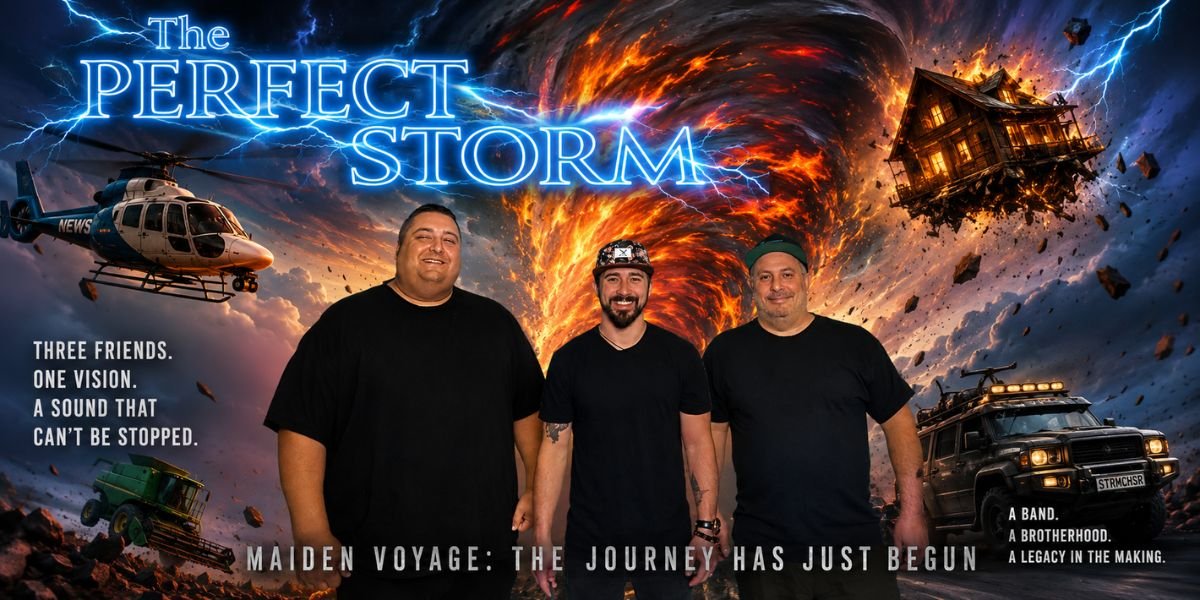
For many bands, a debut album represents the end of years of dreaming. For Albany, New York’s The Perfect Storm, Maiden Voyage feels more like the beginning of something much larger. Built on a combination of heartland rock energy, emotional honesty, and an unmistakable sense of camaraderie, the trio of James Krakat, Matty Kirtoglou, and Ethan Lynch has transformed a shared passion into a project that is steadily finding listeners across the country.

The title Maiden Voyage couldn’t be more appropriate. The album captures the uncertainty, excitement, and determination that accompany the pursuit of a dream, and according to the band members themselves, the journey has required plenty of faith.

For James, one of the most significant challenges was embracing the idea that The Perfect Storm could become more than a hobby.

“I had to believe that not only myself but my bandmates, Matty and Ethan, could do this,” he explains. “We’re all in this for the long haul. Pursuing music is a serious endeavor that takes a lot of focus and discipline.”

That sense of commitment has become a defining characteristic of the group. While many bands are assembled around a single songwriter or performer, The Perfect Storm has evolved into a true collaboration in which each member contributes something unique to the overall sound.

Matty points to Ethan’s technical abilities and James’ passion as essential ingredients in the band’s success.

“Ethan brings the technical know-how that I could not,” he says. “James brings the ideas and the passion that sometimes I’m lacking.”

Ethan, meanwhile, praises the qualities that make his bandmates indispensable.

“James is always checking in on us, and he consistently brings a glass-half-full outlook,” Ethan says. “Matt brings the energy and has a way of making you feel like you’ve been lifelong friends from the moment you meet him.”

James is quick to return the compliment.

“I am blessed to have Matty and Ethan as bandmates,” he says. “Our relationship is irreplaceable. That’s what makes The Perfect Storm ‘The Perfect Storm.’”

That chemistry is evident throughout Maiden Voyage, particularly in songs that balance humor, reflection, heartbreak, and hope. Tracks such as “My Woman Never Loved Me” showcase the band’s ability to find humor in life’s disappointments without sacrificing sincerity.

According to Matty, the key lies in understanding the listener’s experience.

“Life can be a lot of things to a lot of different people,” he explains. “The ability to relate to that is the trick.”

That commitment to authenticity extends beyond songwriting and into the band’s broader understanding of success itself. Although The Perfect Storm has enjoyed radio airplay, chart recognition, and increasing industry attention, Ethan says fame was never the goal.

“Success has always meant doing what you love,” he says. “It doesn’t have to be about money or fame. As long as you genuinely enjoy what you’re doing, that’s success.”

For James, music has taken on even deeper meaning since becoming a father. The perspective has influenced not only his songwriting but also his hopes for the future.

“Like any parent, I want my children to have a good life and not have to struggle,” he says. “I want them to be proud of their father and what I have done for them. I also hope it shows them that hard work and determination pay off.”

Behind the scenes, the creative process remains a constant balancing act. James often arrives with an idea or a concept, but the finished songs emerge only after the entire group has shaped and refined them.

“We always push him to make the current song better than the last,” Ethan explains. “We bring new elements to the tracks that help take his vision to the next level. We’re constantly asking ourselves whether we’ve gone too far or whether there’s still room to expand our sound.”

Matty describes the process as a healthy tension that ultimately strengthens the music.

“There’s constant push and pull,” he says. “At the end of the day, we all have to agree, or it doesn’t work.”

That collaborative spirit has already produced meaningful milestones. The band’s debut album, critical recognition, and growing audience have all been important milestones, but the members say the most rewarding aspect of their success has been their connection with listeners.

For Ethan, simply completing Maiden Voyage and performing the songs live stands above everything else.

“The most meaningful moment was finishing the album and finally having the opportunity to play the songs for people,” he says.

James agrees, emphasizing the gratitude he feels toward the band’s supporters.

“I love the fans,” he says. “When people tell us that our songs made their day better, that’s a great gift.”

As satisfying as the first chapter has been, The Perfect Storm’s attention is already fixed firmly on the future. All three members speak enthusiastically about a second album that promises to build upon the foundation established by Maiden Voyage.

“We have an ambitious second album in the works,” Matty says with a smile.

Ethan shares that excitement.

“I want the next chapter to be even better than the last,” he says. “We have songs that I truly believe are going to blow a lot of people away.”

James is equally optimistic.

“I know the fans are going to love it,” he says. “With this next chapter, The Perfect Storm is really going to level up.”

For a band whose very name suggests the collision of powerful forces, that seems entirely fitting. After all, Maiden Voyage was never intended to be the destination. It was merely the moment when three musicians decided to set sail together. The horizon ahead, they believe, holds their greatest adventures yet.

Joel Yi on the Gap Between AI Advice and AI Implementation

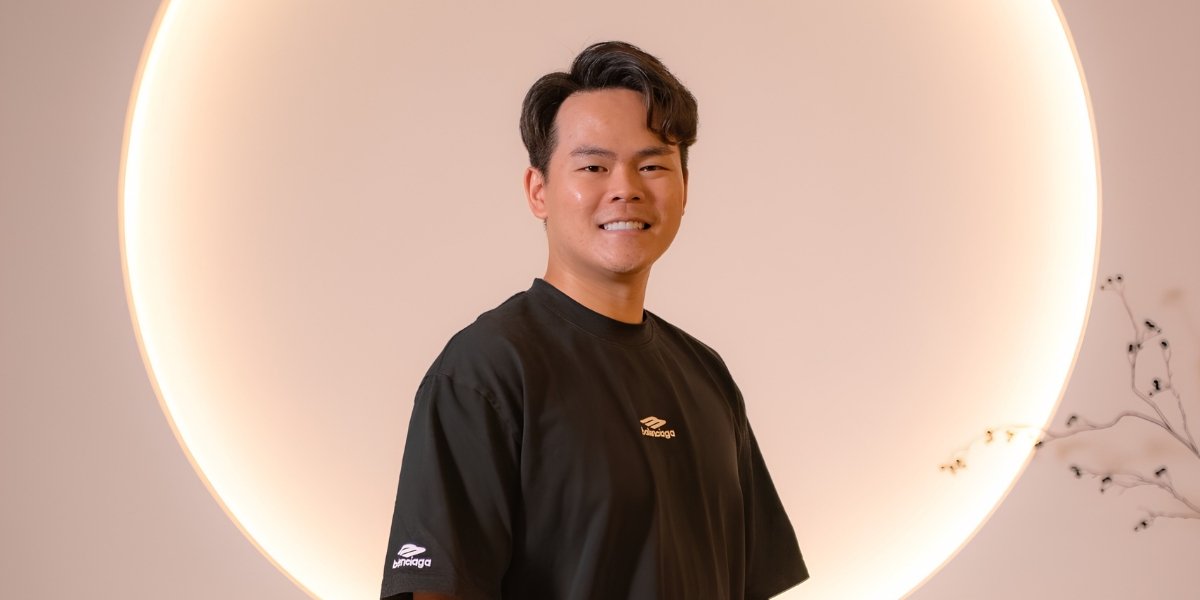
The artificial intelligence economy has produced a significant amount of guidance. Workshops, consultants, courses, and advisors all promise to help companies understand the technology. Joel Yi, the founder of DeployAIBots, has built his company on a pointed observation about that landscape. Advice is widely available, but implementation can be harder to find, and the gap between the two is where many companies get stuck.

Joel Yi has named this gap directly. When he looked at the market, he saw many people selling ideas while fewer were focused on delivering measurable outcomes. There were people talking about artificial intelligence, running sessions, and offering recommendations, but the moment it came to deploying working systems inside a business, many efforts fell short.

That gap, in his view, is one of the central problems of the current AI moment, and it is the problem DeployAIBots was built to address.

The distinction matters because advice and implementation require different things. Explaining what artificial intelligence could do for a company is relatively easy. Actually installing a system that performs the work, integrates with how the business runs, and produces a result is far harder.

Joel Yi argues that the field has an abundance of people willing to do the first and a shortage of people able to do the second. The result is a market full of companies that understand AI in theory but have not yet put it to work in a meaningful way.

DeployAIBots positions itself on the implementation side of that divide. The Miami-based company builds agentic AI, systems designed to execute operational tasks such as scheduling, customer communication, and internal coordination rather than simply offering suggestions.

Joel Yi describes the company’s role as getting into a business and deploying systems that can handle repetitive work, with the goal of reducing costs, saving time, or increasing capacity. The emphasis on deployment is deliberate, a direct contrast to the advisory model he critiques.

Joel Yi believes the prevalence of advice over implementation helps explain some of the disappointment companies feel about artificial intelligence. A business that hires a consultant or attends a workshop may come away with a clearer understanding and a stack of recommendations, but understanding is not the same as a working system.

When the recommendations prove difficult to put into practice, the initiative can stall, and the company may conclude that AI did not live up to the hype. The problem, Joel Yi suggests, is often not the technology itself, but the absence of real implementation.

His own background gives him a builder’s impatience with talk. Joel Yi studied computer science, earned recognition for his work in artificial intelligence at Pacific Lutheran University, and built an early machine learning model in 2018 that identified rare plant species. He later became one of the first cyber officers in the United States Army cyber branch.

Across that path, the common thread is producing systems that work rather than describing systems that might. That history shapes his insistence that artificial intelligence be judged by what it deploys, not only by what it promises.

Joel Yi is careful not to dismiss the value of knowledge entirely. Understanding artificial intelligence matters, and a company cannot deploy well if it does not grasp what it is deploying.

His point is that understanding has to lead somewhere. Advice that never becomes a working system is, in practical terms, incomplete. The value is realized when the system is running and producing a result a business can measure.

This is also why Joel Yi emphasizes measurable outcomes so heavily. Implementation, unlike advice, can be tested. A deployed system either reduces costs, saves time, or increases capacity, or it does not.

Joel Yi points to his own company, which reports reclaiming more than 150 hours of work each week through its own technology, as an example of what implementation can look like when it succeeds. That is the kind of result advice alone cannot deliver.

For companies navigating the crowded AI market, Joel Yi offers a simple way to tell the difference. Ask whether a given offering ends with understanding or with a working system.

If it ends with understanding, it is advice. If it ends with a system that performs and can be measured, it is implementation. He has built DeployAIBots to live in the second category, betting that as the hype settles, businesses will increasingly value people who can help make artificial intelligence work in practice.