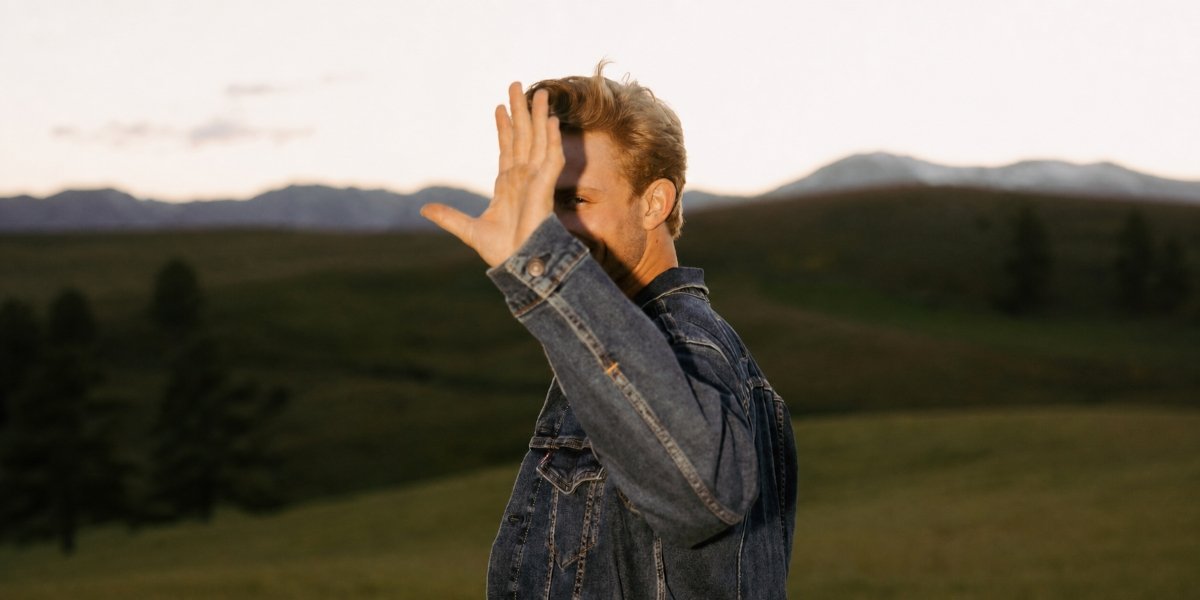
Some breakup songs hit because they tell the truth, even when that truth is uncomfortable. Andrew Lamb’s latest single, “I Don’t Want You Back,” does exactly that. It takes a feeling many people know well and turns it into an honest, heartfelt listen.
Andrew Lamb is a 23-year-old singer-songwriter from a small town in Arizona. Inspired by contemporary pop and the honesty of classic singer-songwriters, he writes from personal experience, letting simple stories do the heavy lifting. While he is still early in his music career, he has spent the past year working closely with a producer and has been writing songs and playing guitar for the last seven years. Every release shows another step forward as he continues to find his voice.
His dedication to developing his craft is reflected in both his songwriting and performances. By drawing directly from his own experiences, Andrew creates music that feels genuine rather than manufactured. His focus on authenticity allows listeners to connect with his lyrics on a personal level, making each release another opportunity to share meaningful stories through music.
His latest single, “I Don’t Want You Back,” focuses on the difficult space between heartbreak and acceptance. The song was inspired by a painful breakup and the realization that moving on is rarely as simple as people think. Even after traveling, changing jobs and trying to distract himself, the memories never completely disappeared. That conflict sits at the center of the track.
Instead of presenting a simple story of loss, the song explores the emotional contradictions that often come with healing. It acknowledges that people can understand they need to move forward while still carrying emotions they cannot easily leave behind. This honest perspective gives the track a relatable quality that resonates with anyone who has struggled to let go of an important relationship.
Musically, the song pairs warm pop production with emotional songwriting that never feels overdone. There is a quiet sense of longing throughout, with every verse building towards a chorus that says one thing while clearly feeling another. It captures the experience of convincing yourself that you’re over someone when your heart has not quite caught up.
The production complements the emotional message without overshadowing it. Gentle melodies, expressive vocals, and thoughtful arrangements create an intimate atmosphere that keeps the lyrics the focus. Every musical element works together to reinforce the honesty at the heart of the song, making it both emotionally engaging and easy to revisit.
Interestingly, Andrew never planned to release the song. After encouragement from friends, family, and listeners online, he decided to trust that the story would connect with others.
That decision highlights the importance of believing in personal storytelling, even when it feels vulnerable. By sharing such a deeply personal experience, Andrew demonstrates that music often has its greatest impact when artists are willing to be open about their own struggles. The positive response from those around him ultimately gave the song the opportunity to reach a much wider audience.
With only a handful of releases so far, Andrew Lamb is already showing a strong gift for honest songwriting. “I Don’t Want You Back” feels like an important step in what is shaping up to be a promising journey.
As he continues to release new music, Andrew Lamb is establishing himself as an artist who values sincerity above trends. His ability to transform everyday emotions into memorable songs suggests a bright future ahead, and “I Don’t Want You Back” serves as another example of the thoughtful songwriting that is helping define the next chapter of his career.
Glen Hansard died at age 56 in a single-vehicle motorcycle crash in Dublin during the early hours of Wednesday, July 29, 2026. Emergency services responded to the scene on Lower Road in Lucan, west of the city, shortly before 4:30 a.m. The Oscar-winning Irish musician was pronounced dead a short time later. His death closes a career that carried him from busking on Dublin streets as a teenager to international recognition through the 2007 indie film ‘Once’ and his band The Frames.
Key Takeaways
Glen Hansard died at age 56 in a single-vehicle motorcycle crash in Dublin on July 29, 2026, shortly before 4:30 a.m. on Lower Road in Lucan.
He won the Academy Award for Best Original Song in 2008 for ‘Falling Slowly,’ a duet with Markéta Irglová featured in the 2007 film ‘Once.’
The Broadway adaptation of ‘Once’ won eight Tony Awards in 2012, extending the reach of Hansard’s music beyond the original film.
Hansard formed the rock band The Frames in 1990 and released his solo debut album ‘Rhythm and Repose’ in 2012, followed by four more solo records through 2023.
He is survived by his partner, poet Maire Saaritsa, and their 3-year-old son, and Irish police continue to investigate the circumstances of the crash.
The loss cuts short a legacy built on authenticity and unlikely breakthroughs, reminding readers that the most celebrated creative lives can end without warning, leaving work unfinished and questions unanswered.
What Happened the Morning of July 29, 2026?
Irish police confirmed that Hansard was involved in a single-vehicle motorcycle collision on Lower Road between Tinkers Hill and Rugged Lane in Lucan. He was treated at the scene but pronounced deceased a short time later according to a Garda statement released Wednesday morning.
Photo by Valerie on Unsplash
ATC Management, Hansard’s representatives, issued a statement acknowledging the tragedy. ‘With broken hearts we announce the passing of Glen Hansard who passed away, in the early hours of this morning, following a road traffic accident in Dublin,’ the statement read. ‘Glen’s family is deeply shocked and heartbroken by this tragic loss and respectfully requests privacy at this extremely difficult time.’
Police are now appealing for witnesses as they continue to investigate the incident though no further details about the circumstances of the crash have been made public. The single-vehicle nature of the collision leaves open questions about what caused Hansard to lose control in the predawn darkness.
Who Was Glen Hansard Before ‘Once’?
Hansard was born in Dublin in 1970. He left school as a teenager to perform on the streets of the Irish capital. That busking apprenticeship shaped his approach to music, grounding even his most polished studio work in raw, direct performance.
He formed the rock band The Frames in 1990, building a loyal following in Ireland and eventually across Europe. His first brush with the film industry came in 1991 when he played guitarist Outspan Foster in Alan Parker’s ‘The Commitments,’ a role that introduced him to audiences far beyond Ireland’s live music circuit. His only acting experience before ‘Once’ was as a band member in that 1991 hit making his later success in a leading role all the more improbable.
The Frames remained Hansard’s primary vehicle for the next decade and a half. The band released a series of albums that never broke through commercially in the United States but cemented his reputation as a songwriter willing to trade polish for honesty. That reputation would become the foundation for everything that followed.
How Did ‘Once’ Change His Career Trajectory?
The 2007 film ‘Once’ paired Hansard with Czech musician Markéta Irglová in a low-budget production shot on handheld camcorders. The movie follows a Dublin street musician and a Czech immigrant whose shared love of songwriting draws them together. Hansard and Irglová performed the original music themselves as The Swell Season. It premiered at the Sundance Film Festival, where it won the World Cinema Audience Award and became an unexpected sensation.
Photo by atelierbyvineeth … on Unsplash
‘Falling Slowly,’ the haunting ballad Hansard and Irglová performed in the film, won the Academy Award for Best Original Song at the 80th Oscars in 2008. Accepting his Oscar from John Travolta, a stunned Hansard said, ‘What are we doing here? This is mad.’ The win transformed his commercial prospects overnight. His music reached millions of listeners who had never heard of The Frames.
The film’s success didn’t end with the Oscars. ‘Once’ was adapted into a Broadway musical that won eight Tony Awards in 2012, including Best Musical further extending the reach of Hansard’s songs. The stage version introduced his work to yet another audience, proving that the material could translate across mediums and generations.
That trajectory illustrates how a single breakthrough project can reshape an artist’s career. But it also locked Hansard into a legacy defined by one film and one song. For the rest of his life, he would be introduced as the man who won an Oscar for ‘Falling Slowly.’ The recognition opened doors but also narrowed how the industry and the public understood his broader body of work.
What Did Hansard Create After ‘Once’?
Hansard continued to release music under his own name and as part of The Swell Season with Irglová. His solo debut, ‘Rhythm and Repose,’ arrived in 2012, followed by ‘Didn’t He Ramble,’ which received a Grammy nomination for Best Folk Album. He later released ‘Between Two Shores’ in 2018, ‘This Wild Willing’ in 2019, and ‘All That Was East Is West of Me Now’ in 2023.
In 2025, he reunited with Irglová for The Swell Season’s first new studio album in years. The reunion suggested that Hansard was still drawing on the creative partnership that had defined his most visible work, even as he explored solo directions.
Artists who achieve massive recognition for a single project often struggle to move beyond that moment, and Hansard’s post-Oscar career bears out that pattern. His later albums earned critical respect but never matched the cultural impact of ‘Once.’ He remained in the familiar position of an artist whose greatest success became both a calling card and a ceiling.
Who Survives Him and What Comes Next?
Hansard is survived by his partner, poet Maire Saaritsa, and their 3-year-old son. Irish Prime Minister Micheál Martin called him ‘a talented musician and actor who made a significant contribution to Ireland’s cultural landscape over many years,’ a statement that reflects the national pride Hansard’s international success generated.
The investigation into the crash remains open, with police seeking witnesses who may have been in the area of Lower Road around 4:30 a.m. on July 29. No timeline has been given for the completion of that inquiry. Whether mechanical failure, road conditions, or other factors played a role remains unclear.
Hansard’s death at 56 leaves unfinished business. His reunion with Irglová had reignited interest in The Swell Season, and fans had anticipated further touring and recording. Instead, the work stops here. Audiences are left to wonder what might have come next.
The street busker who became an Oscar winner spent his career navigating the gap between underground credibility and mainstream success, a tension that defined Irish cultural export in the 21st century. That journey ended on a dark road in the predawn hours, miles from the stages where he’d spent three decades proving that earnestness could still draw a crowd.
FAQs
What Was Glen Hansard’s First Major Film Role?
Hansard played guitarist Outspan Foster in Alan Parker’s 1991 film ‘The Commitments,’ his only acting experience before starring in ‘Once’ sixteen years later. That early role introduced him to film audiences but did not lead to a sustained acting career, as he remained focused on music with The Frames throughout the 1990s and early 2000s.
Did Glen Hansard and Markéta Irglová Continue Working Together After ‘Once’?
Yes, the two musicians performed and recorded as The Swell Season, releasing albums and touring together. In 2025, they reunited for The Swell Season’s first new studio album in years, rekindling the creative partnership that had defined their most visible work.
How Many Solo Albums Did Glen Hansard Release?
Hansard released five solo albums between 2012 and 2023: ‘Rhythm and Repose’ (2012), ‘Didn’t He Ramble’ (which received a Grammy nomination for Best Folk Album), ‘Between Two Shores’ (2018), ‘This Wild Willing’ (2019), and ‘All That Was East Is West of Me Now’ (2023). These records built on his reputation as a songwriter grounded in raw, direct performance.
What Was Glen Hansard’s Connection to Dublin’s Music Scene?
Hansard began busking on the streets of Dublin as a teenager after leaving school, an apprenticeship that shaped his approach to music throughout his career. He formed The Frames in Dublin in 1990, and the band built a loyal following in Ireland and across Europe before ‘Once’ brought international recognition.
What Is the Status of the Investigation Into the Crash?
Irish police are appealing for witnesses to the single-vehicle motorcycle collision that occurred on Lower Road in Lucan, west of Dublin, shortly before 4:30 a.m. on July 29, 2026. No additional details about the circumstances of the crash or contributing factors have been made public, and no timeline has been given for the completion of the investigation.
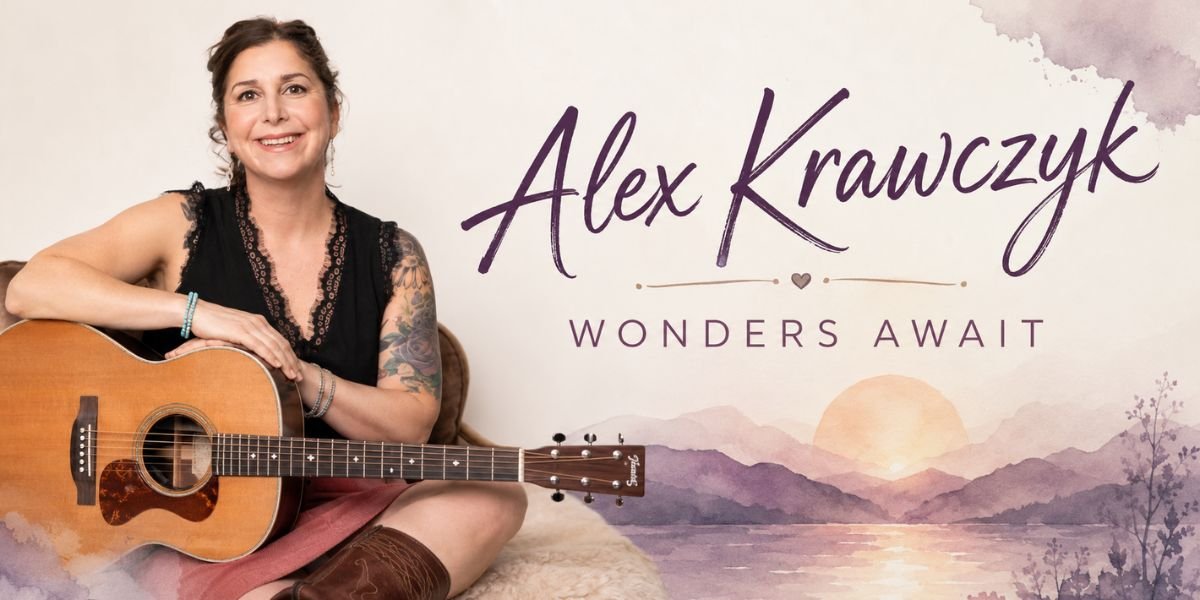
If there is one defining characteristic of Alex Krawczykas an artist, it is trust. She trusts silence. She trusts melody. Most of all, she trusts that listeners are willing to meet her where the songs live, not in spectacle or excess, but in the quiet spaces where emotion becomes revelation.
That confidence has become the foundation of a remarkable ascent. In just a few years, Krawczyk has established herself as one of Canada’s most compelling contemporary folk voices, building an international following without abandoning the deeply personal approach that first inspired her to write songs.
Her latest album, Wonders Await, released through MTS Records, represents both an artistic culmination and a new beginning. The 13-song collection broadens the musical language she introduced on her acclaimed debut, weaving together contemporary folk, Americana, and roots-pop into something richer, more textured, and emotionally expansive. Produced by longtime collaborator Robbie Roth, the album surrounds Krawczyk’s intimate vocals with warm acoustic guitars, subtle electric flourishes, expressive horn arrangements, and beautifully layered harmonies without ever losing sight of the songs themselves.
That restraint has become her signature.
While so much contemporary music strives to overwhelm, Krawczyk consistently chooses invitation over confrontation. Songs like “Falling in Love” embrace vulnerability without apology, while “When the Road Is Uneven” acknowledges hardship without surrendering to despair. “Like the Passing Clouds” quietly explores mindfulness and emotional acceptance, and the title track reminds listeners that life’s greatest discoveries often arrive when we simply remain open to them. Throughout Wonders Await, hope is never presented as naïveté; it is portrayed as a conscious act of perseverance.
That emotional honesty has resonated far beyond Canada’s borders.
Krawczyk has accumulated four Top 20 UK iTunes hits while earning chart success across multiple international iTunes Singer/Songwriter and Folk rankings. Her inspirational single “There Will Be Light” climbed all the way to No. 1 on the National Radio Hits AIRPLAY chart, confirming that her thoughtful songwriting could connect with mainstream audiences without compromising its authenticity. Those accomplishments are especially impressive for an independent artist working largely outside the commercial machinery that typically fuels chart success.
Industry recognition followed naturally. Krawczyk received a nomination for Best New/Emerging Artist at the Canadian Folk Music Awards, placing her among the country’s most promising new voices. Additional nominations from the International Singer Songwriters Association and the Josie Music Awards further cemented her growing reputation as one of independent folk music’s brightest talents.
Yet accolades tell only part of the story.
What makes Krawczyk increasingly significant is her unwavering commitment to emotional authenticity. Before audiences embraced her music, songwriting became a way to process profound personal grief following the loss of her parents. Rather than retreat inward, she transformed that experience into songs that offer empathy instead of easy answers. That instinct extends beyond music; through the Krawczyk Family Foundation and the Honey & Barry Sherman Legacy Foundation, she continues to devote significant energy to charitable work and community building.
Those experiences give her music an uncommon emotional credibility. She writes not from abstraction but from lived experience, allowing listeners to find pieces of themselves inside her songs.
Working alongside Robbie Roth has proven instrumental in that evolution. Their partnership has become one of mutual trust, with Roth creating arrangements that frame rather than overshadow Krawczyk’s songwriting. Recorded at Toronto’s Union Sound with engineer Chris Stringer and mastered by Joao Carvalho, Wonders Await features an accomplished ensemble including Caroline Brooks, Dione Taylor, Tim Bovaconti, Devon Henderson, Davide DiRenzo, Robbie Grunwald, Rebecca Hennessy, Emily Ferrell, Patrick Smith, Julie Title, and Medina Esmail. Every contribution serves the songs’ emotional center rather than competing for attention.
There is a growing temptation within the music industry to measure success only through numbers, streams, followers, algorithms, viral moments. Alex Krawczyk’s career suggests another metric entirely: resonance.
Her songs linger.
They stay with listeners because they ask enduring questions about healing, compassion, resilience, and hope. They refuse cynicism without denying life’s hardships. They remind us that gentleness can possess extraordinary strength.
Wonders Await confirms what her steadily growing audience has already discovered. Alex Krawczyk isn’t simply making beautiful folk music. She is creating a body of work that understands something increasingly rare in popular culture, that the quietest voices often have the most lasting things to say.
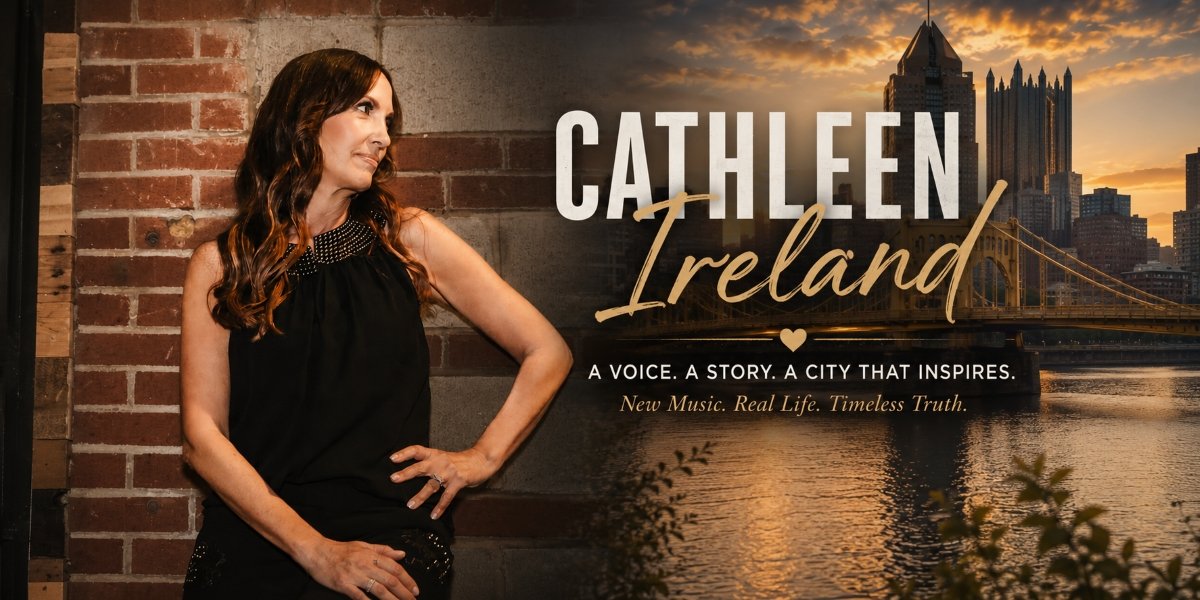
There are songs that arrive with fireworks. Songs that demand attention through spectacle, volume, or bravado. And then there are songs like Cathleen Ireland’s “Breathe,” which begin with something far less dramatic, but perhaps more powerful: the truth.
The truth is that life rarely unfolds according to plan. It asks more than we think we can give. It piles responsibilities atop ambitions, obligations atop dreams, until the line between who we are and what we’re expected to be blurs. It is in that familiar, often exhausting place that Ireland finds her newest single, not as a victim of circumstance, but as a witness to it.
The opening verse feels almost cinematic in its specificity. Hair, makeup, stage clothes, another performance waiting just beyond the next deadline. It’s a portrait not of celebrity, but of commitment. Behind every polished performance is someone racing to arrive, hoping that all the moving parts of life hold together long enough for the curtain to rise.
And then comes the chorus.
“Breathe… You got this, you got this girl.”
Simple words. Four syllables followed by reassurance. Yet they land with surprising emotional weight because they aren’t delivered as empty affirmation. They sound like something Cathleen Ireland has had to whisper to herself more than once.
That’s what makes “Breathe” resonate. It doesn’t pretend confidence comes naturally. It suggests confidence is something we choose, repeatedly, even when we’re uncertain.
Produced by longtime collaborator Sean McDonald at Red Medicine Studios and co-written with Danny E. B., the song balances polished contemporary production with an unmistakably human heartbeat. The rhythm never rushes, yet it never stands still. Like life itself, it keeps moving forward. Layers of shimmering keyboards, crisp percussion, and understated pop textures provide momentum without overwhelming the song’s emotional center.
Ireland’s voice remains exactly where it should be, front and center.
There is strength in her performance, but there is also vulnerability. She doesn’t oversing or reach for unnecessary dramatics. Instead, she allows the lyrics to breathe, trusting that the story carries enough emotional gravity on its own. It’s the kind of vocal restraint that often reveals more than vocal excess ever could.
The song becomes even more compelling when Ireland turns her attention toward the subtle realities many women continue to face in professional environments. She references walking into rooms where the lingering attitude remains, “You’re just a girl.”
It’s not presented as outrage. It’s presented as fact.
That distinction matters.
Life has a way of teaching people which battles deserve their energy. Ireland’s response isn’t confrontation for its own sake. Instead, she answers with perseverance. Keep moving. Keep creating. Keep proving that talent ultimately speaks louder than prejudice ever could.
If that philosophy feels earned, it’s because it is.
Ireland has spent decades building a career defined not by shortcuts but by steady evolution. From her early years leading Pittsburgh bands Friday’s Child and theFIVE6 to founding Hot Weather Holiday and establishing herself as an acclaimed solo artist, she has consistently chosen growth over comfort. Along the way have come songwriting honors, international film festival awards, recognition for her innovative music videos, and multiple Iron City Rocks Awards celebrating her contributions to Pittsburgh’s vibrant music community.
Yet “Breathe” never feels like the work of an artist looking backward at accomplishments.
Instead, it feels like someone still asking questions.
How do you keep showing up for your family without abandoning yourself?
How do you continue creating when the world insists there isn’t enough time?
How do you find peace inside a schedule that rarely pauses?
The answer, Ireland suggests, isn’t found through perfection.
It’s found one breath at a time.
There is an understated wisdom running beneath every measure of this song. It understands that resilience isn’t always loud. More often, it lives in quiet decisions, to keep going, to trust the journey, to believe that today’s struggle may become tomorrow’s strength.
Keith Morrison has often reminded viewers that the most compelling stories aren’t always about extraordinary people doing impossible things. They’re about ordinary people finding extraordinary courage when life asks more of them than they ever expected to give.
That same observation could easily describe “Breathe.”
Cathleen Ireland hasn’t written a song about conquering the world. She’s written one about surviving it with grace, determination, and enough hope to face another day.
There is a curious thing about storms. Most people spend their lives trying to avoid them. They close the windows. They wait for the skies to clear. They hope the winds pass quickly and quietly. But every so often, a storm arrives that doesn’t destroy. It reveals.
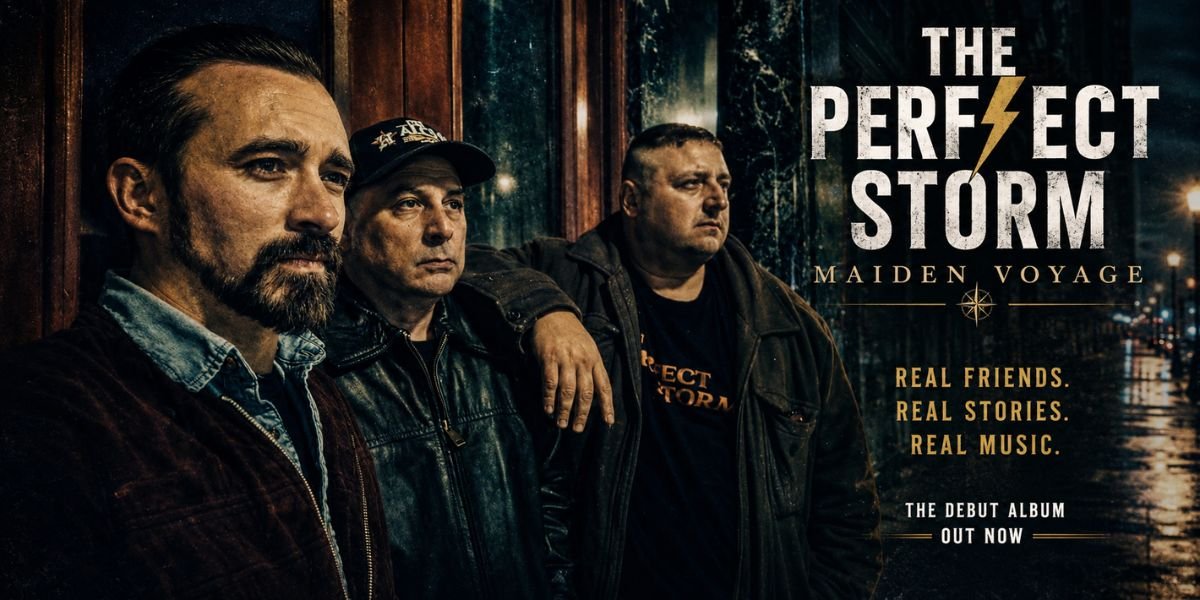
That is where the story of The Perfect Storm begins, not with chart positions, award nominations, or applause echoing through concert halls. Those things came later. The story begins with three friends, James, Matty, and Ethan, standing at a crossroads familiar to countless musicians. They could keep making music when time allows, or risk everything by believing the songs deserve something more. It’s a gamble that rarely pays off. For The Perfect Storm, it did.
The trio didn’t emerge through overnight fame or viral videos. Their ascent has been quieter than that, measured in miles rather than moments. They built an audience one listener at a time, earning respect across independent radio before the industry began paying closer attention. Songs like “Song for My Friends” climbed into the Mediabase Activator Top 50, while “We Fell in Love” demonstrated that heartfelt songwriting could still find its audience in an age often distracted by spectacle. Recognition followed as independent music awards acknowledged what listeners had already discovered: this wasn’t simply another rock band chasing trends. It was a band chasing permanence.
Then cameMaiden Voyage. The title sounds optimistic enough, adventurous, even. But every maiden voyage carries uncertainty beneath its promise. Every captain knows the sea doesn’t care about ambition.
What makes this album compelling isn’t its polish (though it’s impressively produced) nor even its memorable melodies, which arrive with reassuring regularity. It’s the unmistakable sense that these songs have already lived a life before they reached the studio. Listen carefully, and you’ll hear fathers becoming fathers, friends becoming brothers, and dreamers becoming believers.
James provides much of the album’s emotional compass. His voice doesn’t strain to convince you of anything. Instead, it invites you inside stories that feel remarkably familiar. On “Magic Feeling,” he reflects on fatherhood with a perspective rock music rarely embraces. Instead of mourning youth, he celebrates maturity. Instead of longing for the extraordinary, he discovers wonder inside ordinary moments: children, family, responsibility. Funny how those words once sounded like the end of adventure. Here, they become the adventure itself.
Matty brings another essential ingredient to the band’s chemistry, perspective sharpened by humor. “My Woman Never Loved Me” could have become a predictable tale of heartbreak. Instead, it smiles through the bruises. There’s wit beneath the wounds, laughter inside disappointment. It’s the sound of someone deciding that survival occasionally requires a punchline, and that emotional elasticity keeps Maiden Voyage from sinking beneath the weight of its own sincerity.
Then there’s Ethan. Every band has a member who quietly deepens the conversation. On songs like “The World That’s Cold,” he explores uncertainty without surrendering to it. His lyrics acknowledge alienation while refusing to be defined by it. He understands something subtle but important. Resilience isn’t loud. Most days, resilience simply gets out of bed and keeps moving.
Together, the three musicians create something increasingly uncommon in modern rock, a band whose greatest strength isn’t technical virtuosity but emotional trust. You believe them, not because every lyric is autobiographical, but because every emotion is. The production wisely avoids unnecessary excess. The guitars remain melodic without becoming overpowering. Harmonies lift choruses instead of overwhelming them. Every arrangement serves the song rather than competing with it. When production often demands attention for its own sake, Maiden Voyage allows craftsmanship to remain almost invisible, and that restraint becomes one of its greatest virtues.
Perhaps that’s why the album feels surprisingly timeless. These songs aren’t attempting to define a generation. They’re documenting three lives, and there’s a difference. The Perfect Storm has spoken openly about how the pandemic’s isolation became an unlikely catalyst for a deeper artistic commitment. Music ceased being merely something they enjoyed creating. It became something they needed. That urgency still echoes throughout the album. Every chorus feels earned. Every quieter moment feels lived rather than imagined.
Success eventually followed (chart recognition, industry honors, and growing audiences), but listening to Maiden Voyage, those accomplishments almost feel secondary. Beneath every milestone lies something simpler. Three friends kept showing up. Kept writing. Kept believing.
There is another curious thing about storms. Sometimes, after the thunder fades and the skies begin to brighten, you look around and realize how much has changed, not because everything was destroyed, but because everything unnecessary was washed away. Perhaps that’s what The Perfect Storm has really accomplished. They’ve stripped rock music back to some of its oldest truths: friendship matters, hope survives, love changes shape, growing older doesn’t mean growing smaller, and songs, good songs, still possess the remarkable ability to make strangers feel understood.
Maiden Voyage isn’t merely an impressive debut. It’s the story of three musicians who discovered that the destination was never the point. The voyage always was.