Lyia Meta’s New Single “Raging Halls” Is the Rebirth Anthem Alternative Rock Needs

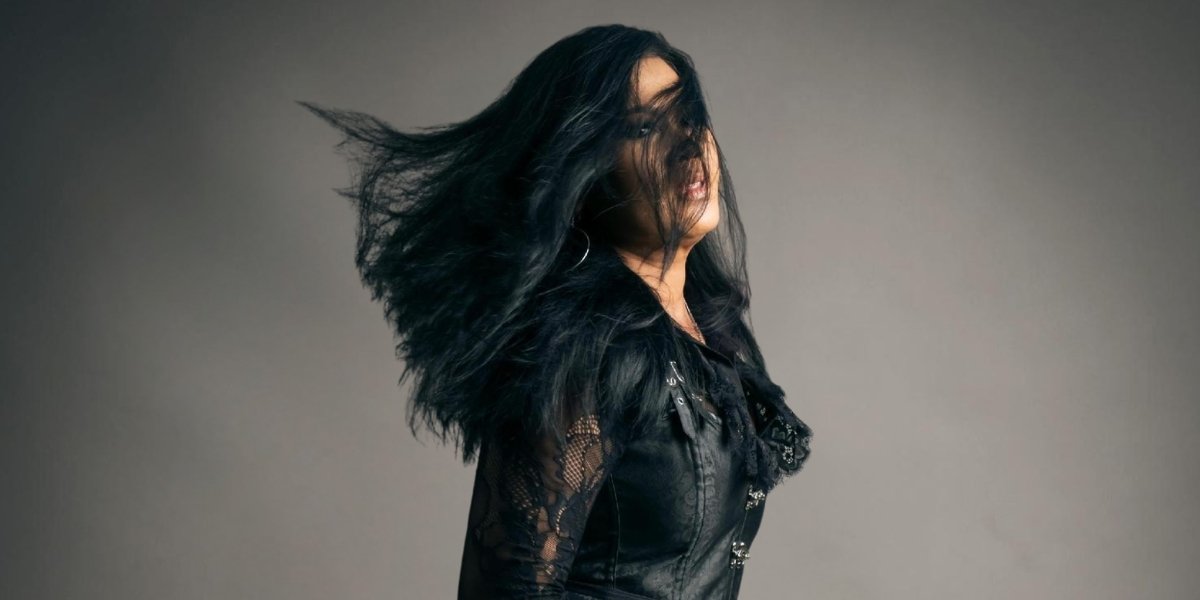
By: Myescha Joell
Malaysia-based global recording artist, performer, and writer Lyia Meta doesn’t release music so much as she excavates it. Her new single, “Raging Halls,” out May 9, is the sound of someone who has walked through fire, made it to the end of the corridor, and stepped into open air. Part alternative rock anthem, part emotional reckoning, the track is visceral and cathartic in equal measure. It builds, it rages, it breathes, and by the time it resolves, you feel as though you’ve survived something alongside her.
“‘Raging Halls’ is actually about finding yourself after the rebirth,” says Lyia. “I always see this long-drawn corridor with a lot of rooms on your left and on your right, and within each room are all the memories, all the things you have stored in your head. ‘Raging halls’ was me walking down that hallway, raging down those halls, and making it to the end, which is essentially where you finally find your freedom.”
However, the new single doesn’t exist in isolation. It is the second half of a story that began with Lyia’s previous album, Sundered and Reforged: Between Shadows and Salvation, a record written in the aftermath of a personal tragedy in her family. That album asked questions. It sat in grief without resolution. “Raging Halls” is where the answers finally arrive. The emotional arc carries directly over: where Sundered and Reforged was the descent, “Raging Halls” is the climb out. It is not a clean or easy song, nothing that honest ever it, but it moves with the momentum of someone who has finally come to terms with the weight of what she’s carried, and chosen to walk toward the light.
The recording career that eventually produced “Raging Halls” began not in a studio but in the hotels of Kuala Lumpur, where Lyia spent years doing live residencies before deciding she wanted to perform her own songs. That was twelve years ago. Since then, she has built an independent catalog of five albums and more than thirty singles that defies any single genre. She’ll call it alternative rock if pressed, but she’s honest about how the music industry has a way of making that choice for you.
At her core, Lyia is an explorer: a multi-genre artist who approaches each project the way a painter approaches a canvas, layering textures and sounds until something true emerges. “Raging Halls” sits squarely in that alternative rock space, but the depth underneath it, the blues foundation she was raised on, the classical sensibility, the emotional architecture, reveals just how much is happening beneath the surface.
That spirit of exploration, she explains, extends well beyond music. “I’m an artist in every sense of the word,” Lyia reflects. “If I cannot paint, I will be singing, writing music, or writing stories. They’re all interconnected. I approach the way I produce a song the same way I approach an art piece on canvas. There are so many layers. You cannot just get away with one or two.”
The production of “Raging Halls” is a study in creative instinct and collaborative trust. The track was co-composed with E.G. Holmes, a longtime collaborator who sent Lyia a track that deeply resonated with her, with the melody and lyrics surfacing in her head almost instantaneously. Within a day or two, she sent a complete rough demo back to him. From there, Nashville-based producer Bob McGilpin, who has helmed much of Lyia’s catalog, built out the full production, adding chords, layering the arrangement, and intuitively translating her vision into a finished body of work.
“What’s wonderful about Holmes is that he steps back and won’t get involved in the creative process at all; he trusts me 100% to do what is right by the song,” Lyia says. That trust, she explains, is mirrored in her relationship with McGilpin, though it functions differently in the studio. While McGilpin handles the technical execution, he is, as she puts it, “the brains behind the production.” Lyia considers herself a co-producer in every meaningful sense, present in every creative decision and never shy about pushing further. “I’m the one who comes out of the blue and says, ‘Why don’t we do this? Why don’t we add that?’ and he’s always open to it.”
A music video for “Raging Halls” is currently in development and nearly complete. Given Lyia’s location in Malaysia and the sweeping, visually rich imagery she envisioned for the song, the team opted to create an AI-generated visual companion, a deliberate choice that speaks to the song’s themes of unbounded possibility and reinvention. The visual world of the track, with its long corridors and memory-filled rooms, called for something a traditional studio shoot simply could not conjure.
“I know there’s a lot of flak with AI right now, but I think this song was somehow fitted for an AI video,” Lyia explains. “I had so many ideas that were impossible to replicate any other way.”
As for what comes next, Lyia is taking her time. After years of relentless releasing, performing, and collaborating across continents, she has recently transitioned into teaching music full-time, a shift that has brought a new kind of grounded focus to her creative life. Potential performances in India and East Malaysia are on the horizon, and a new album is in the works, though unrelated to this single.
“I’ve always got something that’s happening somewhere,” Lyia says simply. “I try not to pin anybody down to any kind of commitment. I like things to just unfold organically.”
“Raging Halls” by Lyia Meta is available now on all major streaming platforms with promotional support from Starlight PR. Stay connected with Lyia Meta on her website and across social media for updates on the forthcoming music video and new music releases.