
How Spotify Pays Artists: Streaming Royalties, Pro Rata, and What Determines Per-Stream Rates

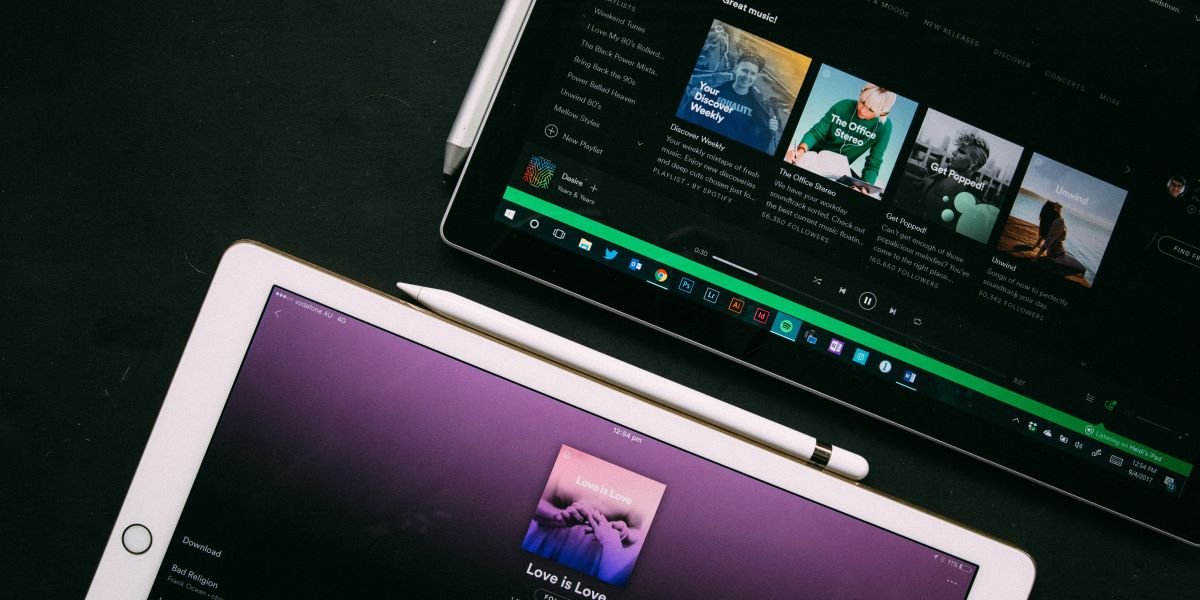
Spotify does not pay artists a fixed amount per stream. The platform operates on a pro-rata model that pools all subscription and advertising revenue in a given month, retains approximately 30 percent, and distributes the remaining 70 percent to rights holders based on each artist’s share of total streams across the platform. That structure means per-stream rates fluctuate constantly — generally landing between $0.003 and $0.005 — and depend on variables that most artists never see on their royalty statements. Understanding the mechanics behind those numbers is essential for any artist or songwriter trying to build a sustainable income from streaming.
How Does Spotify’s Pro-Rata Payment Model Work?
The pro-rata model, sometimes called “platform-centric” distribution, treats all of Spotify’s revenue as a single pool rather than tracking individual listener payments to individual artists. Spotify collects money from two sources each month: Premium subscription fees and advertising revenue generated from free-tier listeners. After deducting taxes, payment processing, billing fees, and its own approximately 30 percent share, Spotify calculates the remaining royalty pool.
Each artist’s payout is determined by their “streamshare” — the proportion of their total streams relative to all streams across the entire platform during that period. If an artist’s catalog accounts for 0.001 percent of all streams in a given month, that artist’s rights holders receive 0.001 percent of the royalty pool. Spotify’s Loud & Clear transparency initiative describes this as the foundational equation: an artist who accounted for one in every one million streams on Spotify generated over $11,000 on average in 2025.
This model means that an artist’s per-stream rate is not actually their rate at all — it is the result of dividing the total royalty pool by total platform streams, then multiplying by the artist’s share. When the pool grows faster than total streams, per-stream rates rise. When streaming volume outpaces revenue growth, rates compress.
Why Do Per-Stream Rates Fluctuate?
Four primary variables determine what any individual stream is worth in dollar terms.
Listener geography plays a significant role because subscription prices and advertising rates vary by country. A stream from a U.S. Premium subscriber generates more royalty revenue than a stream from a free-tier listener in a lower-income market. Industry estimates place the value of a U.S. stream at roughly $0.004 to $0.005, while streams from markets across parts of Southeast Asia, Latin America, and Africa may yield $0.001 to $0.002.
Subscription type matters because Premium subscribers contribute more revenue per user than ad-supported listeners. A Premium stream is worth roughly two to three times more than a free-tier stream, which means an artist whose audience skews heavily toward free-tier listeners in lower-revenue markets will see effective per-stream rates well below the commonly cited $0.003 to $0.005 range.
The overall size of the royalty pool in any given month shifts based on Spotify’s total revenue performance. Months with strong subscriber growth or high advertising demand produce larger pools. Seasonal patterns also apply — the December holiday period, when subscription gift cards and advertising spending peak, tends to produce higher per-stream values than quieter months.
The introduction of bundled subscription tiers that include audiobooks alongside music has also affected how revenue is allocated. With listening time now split across content types, the music-specific share of the royalty pool has adjusted, which some artists and industry observers have noted may slightly reduce per-stream music payouts.
What Is The 1,000-Stream Minimum Threshold?
Since April 2024, tracks must accumulate at least 1,000 streams within a rolling 12-month period before they generate recording royalties. Streams on tracks below that threshold still count toward the total — listeners can play them normally — but no royalty payment is triggered until the track crosses the 1,000-stream line.
Spotify has stated that 99.5 percent of all streams on the platform come from tracks that meet or exceed this threshold. The policy primarily affects noise uploads, bot-generated content, and very low-engagement tracks. Revenue that would have flowed to sub-threshold tracks is redistributed to qualifying tracks, effectively increasing per-stream payouts for active artists. Spotify’s data shows that average recording royalties earned per monetized song more than tripled between 2023 and 2025 following the policy’s implementation.
How Much Does An Artist Actually Take Home?
The per-stream figure represents gross revenue paid to rights holders — not the amount that reaches an artist’s bank account. Between Spotify’s payout and the artist’s deposit, several intermediaries take their share.
| Intermediary | Typical Share | Role |
|---|---|---|
| Spotify | ~30% | Platform retention from gross revenue |
| Label (if signed) | ~50–85% of rights holder share | Recoups advances, retains master ownership share |
| Distributor (if independent) | 0–15% of rights holder share | Delivers music to platforms, collects payments |
| Publisher / PRO | Separate publishing royalty stream | Collects songwriting royalties via ASCAP, BMI, or SESAC |
An independent artist using a zero-commission distributor keeps the full rights holder share after Spotify’s 30 percent cut. An artist signed to a major label under a standard deal may receive 15 to 20 percent of the rights holder share after the label recoups its advance and retains its contractual percentage. The same one million streams that generate $3,000 to $5,000 in gross royalties could deliver as little as $450 to $1,000 to the recording artist after all intermediary cuts.
Publishing royalties represent a separate revenue stream entirely. Spotify pays mechanical and performance royalties to publishers and performing rights organizations on behalf of songwriters, but these payments flow through different channels than the recording royalties paid to labels and distributors. An artist who both writes and records a song earns from both streams; an artist who performs but did not write the composition receives only the recording share.
How Does Spotify Compare To Other Streaming Platforms?
Apple Music consistently pays the highest per-stream rate among major platforms, averaging roughly $0.01 per stream — approximately two to three times Spotify’s average. Tidal and Amazon Music Unlimited pay rates comparable to Apple Music. YouTube’s Content ID system, which monetizes music used in user-uploaded videos, pays the lowest effective rate at roughly $0.001 to $0.002 per stream equivalent, reflecting its advertising-dependent model.
However, per-stream rate alone does not determine total artist revenue. Spotify’s 675 million total users and dominant market share mean that even at lower per-stream rates, the platform generates larger total payouts for most artists than higher-paying services with smaller user bases. Spotify paid the music industry more than $11 billion in 2025, bringing its lifetime payouts to nearly $70 billion, and accounts for approximately 30 percent of global recorded music revenue.
The per-stream rate debate, while understandable, obscures the structural reality: streaming income is a volume game shaped by audience geography, subscription mix, and contractual splits — not a fixed price tag attached to each play.
