Music Observer

Sabrin Sassi Is Helping Shape the Future of Music From Behind the Scenes

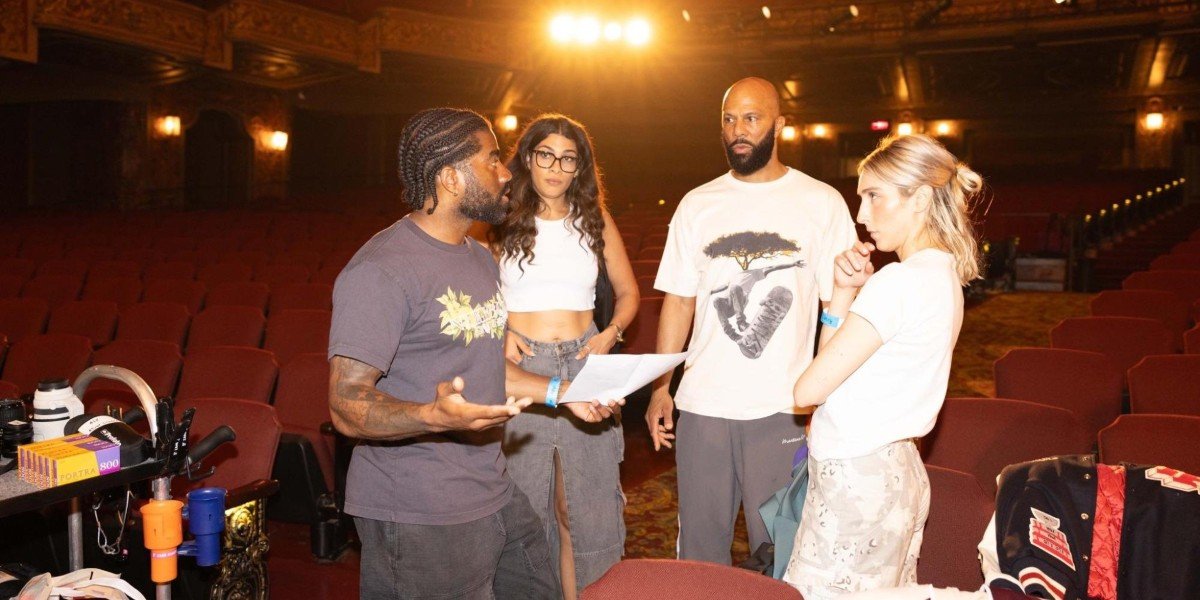
In today’s music industry, some of the most influential figures are rarely the ones standing in front of the camera. Their work unfolds behind the scenes, where ideas evolve into fully realized creative campaigns, artists refine their vision, and ambitious projects come to life through careful planning and collaboration. Among this new generation of creative leaders is London-based Creative Director and Consultant Sabrin Sassi, whose work has quietly become an important force across music, film, and television.

Since 2022, Sabrin Sassi has built a reputation as one of the industry’s trusted creative collaborators, working alongside multi-hyphenate artists, actors, and creatives while helping bridge the gap between artistic inspiration and flawless execution. Rather than simply contributing individual ideas, she has become known for translating ambitious creative concepts into cohesive projects that resonate with audiences while remaining authentic to an artist’s identity.

That role has become increasingly valuable in an entertainment landscape where musicians are expected to build complete visual worlds around their music. Albums are no longer experienced solely through streaming platforms. They are accompanied by cinematic music videos, expansive creative campaigns, live performances, documentaries, social media storytelling, and brand partnerships that all contribute to a unified artistic narrative. Ensuring every piece fits together requires experienced creative leadership, and that is where Sassi has carved out her niche.

One of her most notable recent accomplishments came through her involvement with Common and Pete Rock’s critically acclaimed album The Auditorium Vol. 1. Serving in a significant role throughout the album’s creative development and strategic rollout, Sassi helped support a project that celebrated lyrical craftsmanship while introducing a timeless visual identity to match its musical depth. The success of The Auditorium Vol. 1 demonstrated how thoughtful creative strategy can amplify an already exceptional musical work without distracting from its artistic integrity.

Her work reflects an understanding that music is experienced visually as much as it is sonically. Every campaign surrounding an album contributes to how audiences connect with an artist’s message, making creative direction an increasingly important component of modern music releases. Rather than chasing trends, Sassi focuses on building concepts that feel intentional and authentic, ensuring that every visual element supports the music instead of competing with it.
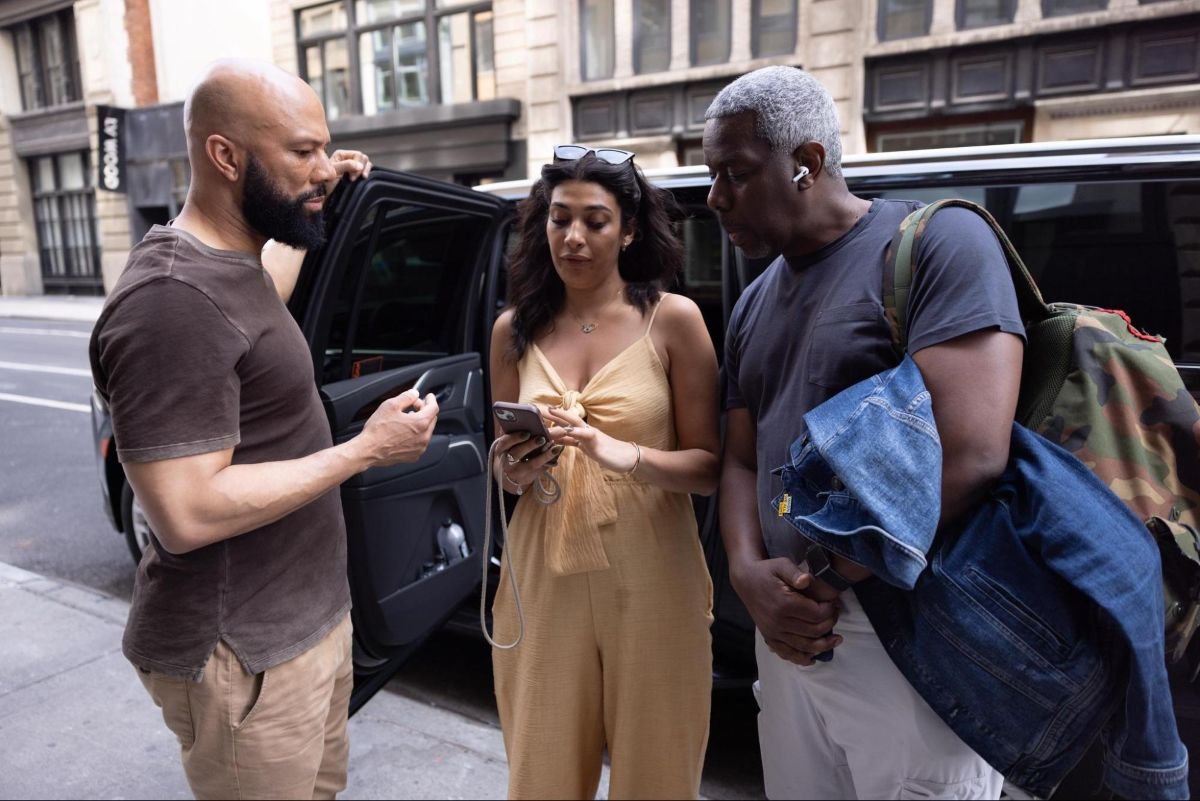
Photo Courtesy: Sabrin Sassi

That philosophy extends throughout her broader portfolio. Specializing in visual direction, concept strategy, and artist development, Sassi has supported the production of numerous music videos, creative campaigns, concert tours, and even the NBA theme song for Amazon Prime. Each project requires balancing artistic vision with practical execution, coordinating multiple creative disciplines while maintaining consistency from concept through completion.

Artist development has become another defining aspect of her work. In an era where emerging musicians face constant pressure to establish distinctive identities, creative guidance often becomes just as valuable as musical talent itself. Helping artists identify their voice, clarify their message, and build lasting creative foundations requires both strategic thinking and genuine collaboration. Sassi approaches that responsibility by fostering environments built on trust, allowing artists to explore ideas while remaining focused on their long-term creative goals.

Her perspective on collaboration reflects the realities of today’s entertainment industry, where successful projects depend on strong partnerships more than individual recognition.

“The music industry isn’t built by artists alone, it’s built by the trusted teams behind them who help turn ideas into reality. The best work happens when there’s trust, shared vision, and everyone is working toward the same goal.”

That mindset has helped define her growing reputation across multiple creative disciplines. Rather than viewing music, film, television, and live entertainment as separate industries, Sassi understands how storytelling connects them all. Whether helping shape an album campaign, developing visual concepts, or supporting larger entertainment productions, the objective remains the same: create experiences that feel meaningful and memorable.

Her expanding influence also illustrates the increasingly interconnected nature of today’s creative economy. Many artists now move seamlessly between music, television, and film, requiring collaborators who understand how creative identities translate across different platforms. Sassi’s experience working throughout these industries positions her to help artists maintain consistency while adapting to new mediums and audiences.

That versatility continues beyond music. Audiences can also look forward to the upcoming season of Apple’s SILO, where Sassi worked directly with Common on character development, further highlighting her ability to contribute creatively across multiple forms of storytelling. The project reinforces her range as a creative professional capable of supporting both recording artists and actors while helping shape compelling narratives regardless of format.

As the entertainment business continues evolving, professionals like Sassi are becoming increasingly essential. Creative directors and consultants are no longer simply coordinating logistics or overseeing isolated campaigns. They are helping define artistic brands, strengthen creative identities, and ensure that every public-facing element aligns with an artist’s broader vision.

Photo Courtesy: Sabrin Sassi

For audiences, much of that work remains invisible. Fans may remember an unforgettable music video, a powerful album rollout, or a compelling live performance without ever knowing how many creative minds helped bring those moments together. Yet behind nearly every successful project is a network of collaborators committed to elevating the artist’s vision.

Sabrin Sassi represents that new generation of behind-the-scenes creative leadership. Her work across The Auditorium Vol. 1, music videos, artist development, creative campaigns, tours, and major entertainment productions demonstrates that the future of music depends not only on extraordinary performers but also on the creative professionals who help transform ambitious ideas into lasting cultural moments. As artists continue expanding their reach across music, television, film, and live entertainment, Sassi’s collaborative approach and creative insight position her as one of the industry’s emerging voices, helping shape what audiences experience long before the spotlight ever turns on.


Justin Bieber Joins Madonna, Shakira, And BTS For First-Ever FIFA World Cup Final Halftime Show

FIFA and Global Citizen confirmed on July 8 that Justin Bieber will co-headline the first-ever FIFA World Cup final halftime show on July 19 at MetLife Stadium, joining Madonna, Shakira, and BTS for an 11-minute performance curated by Coldplay’s Chris Martin. The show, produced by Global Citizen in partnership with Live Nation and Done + Dusted, represents the music industry’s single largest convergence at a sporting event in 2026 and positions the World Cup final as a direct competitor to the Super Bowl halftime spectacle that has defined the intersection of sports and live performance for decades. FIFA President Gianni Infantino has said the event will be “definitely the biggest stage ever,” with “a couple of billion” expected to tune in worldwide.


Key Takeaways

  • Justin Bieber joins Madonna, Shakira, and BTS as a co-headliner for the 11-minute halftime performance at the World Cup final on July 19 at MetLife Stadium.
  • Burna Boy, Venezuelan conductor Gustavo Dudamel, and PS22 Chorus (featuring Coldplay) will also perform, alongside characters from Sesame Street and The Muppets.
  • Coldplay’s Chris Martin curated the lineup; Global Citizen, Live Nation, and Done + Dusted are producing the show.
  • The performance supports the FIFA Global Citizen Education Fund, which has raised more than $50 million toward a $100 million goal for children’s education worldwide.
  • Global Citizen CEO Hugh Evans described the event as “the single largest gathering of artists united for a cause since Live Aid.”


What Does The Lineup Tell Us About The Show’s Musical Strategy?

The four headliners represent a deliberate geographic and generational spread that mirrors the World Cup’s own ambition to reach every corner of the global audience simultaneously. Madonna brings four decades of pop dominance and an audience that spans multiple generations. Shakira carries Latin America and the broader Spanish-speaking world, with her World Cup history — “Waka Waka” from the 2010 tournament remains one of the defining sports anthems of the century — lending her presence an almost institutional legitimacy. BTS activates the K-pop fanbase, a mobilized global audience with a digital reach that few other acts can match. Bieber fills the gap that the original three-headliner announcement left: a North American pop star with crossover appeal among younger audiences who may not connect as naturally with Madonna or Shakira.

The supporting cast extends the cultural range further. Burna Boy represents Afrobeats and the African continent, a particularly meaningful inclusion given the genre’s rapid global ascent and Africa’s growing influence on soccer culture. Burna Boy is also one-half of “Dai Dai,” the official tournament song he recorded with Shakira, which blends Afrobeats and Latin rhythms into a multilingual track that has become the soundtrack of the 2026 tournament. Venezuelan conductor Gustavo Dudamel brings classical music into the frame, adding a dimension that no Super Bowl halftime show has attempted at this scale. PS22 Chorus, a group of fourth and fifth graders from a public elementary school on Staten Island, grounds the spectacle in the education mission that underpins the entire initiative.

The addition of Sesame Street characters and The Muppets — including Kermit and Miss Piggy — reinforces the children’s education theme while adding an element of family-friendly spectacle that broadens the show’s appeal beyond the music industry’s core audience.

How Does This Compare To The Super Bowl Model?

The World Cup final halftime show is an explicit adaptation of the Super Bowl formula, and it is arriving with both ambition and controversy. FIFA trialed the concept at last year’s Club World Cup final, also at MetLife Stadium, but the scale of the 2026 production dwarfs that experiment.

The 11-minute runtime is shorter than a typical Super Bowl halftime performance, which usually runs 12 to 14 minutes. Football’s laws of the game allow a halftime interval of no more than 15 minutes, meaning the show’s setup and teardown must fit within an extremely tight window — or FIFA must extend the break, a decision that would invite scrutiny from football traditionalists.

That tension has already surfaced. Inside World Football described the halftime show as “one of the tournament’s most divisive innovations,” framing it as another example of FIFA importing American sporting culture into soccer’s flagship event. The criticism sits alongside broader complaints about hydration breaks and the tournament’s expanding commercial footprint. For music industry stakeholders, however, the conversation is different. Global Citizen CEO Hugh Evans positioned the event as “the single largest gathering of artists united for a cause since Live Aid,” a comparison that elevates the show beyond entertainment into the territory of cultural philanthropy.

The projected audience is what separates the World Cup from the Super Bowl in commercial terms. The Super Bowl draws approximately 115 to 120 million viewers domestically. The World Cup final, broadcast in every country on Earth, reaches an audience measured in billions. If FIFA’s “couple of billion” projection holds, the July 19 halftime show will deliver the largest single-event musical audience in history, a platform that no artist, label, or brand can replicate through any other channel.

What Is The Music Industry Infrastructure Behind The Event?

The production pipeline for the halftime show runs through three entities. Global Citizen, the advocacy organization co-founded by Hugh Evans, handles the social impact framework and talent coordination. Live Nation provides the concert production and logistics expertise required to build, execute, and dismantle a stadium-scale performance within the constraints of a soccer halftime break. Done + Dusted, the production company behind previous high-profile live events, manages the broadcast and creative direction.

Chris Martin’s role as curator is more than honorary. In a short film announcing the lineup, Martin described the show as being “all about togetherness” and said “everyone’s invited.” The curation role gives Martin creative authority over the show’s pacing, sequencing, and thematic arc — a function that in Super Bowl terms would be split between the NFL, the halftime show director, and the headline artist’s creative team.

The show’s charitable backbone is the FIFA Global Citizen Education Fund, which has raised more than $50 million toward a $100 million goal. The fund is structured so that one dollar from every ticket sold across all World Cup matches is donated to support children’s education and soccer access in underserved communities across ten countries. The first round of grants was distributed in May 2026 to community-led organizations running combined education and sports programs.

For the artists involved, the performance carries no disclosed fee structure, which is consistent with the Super Bowl model where headliners perform without direct compensation in exchange for the exposure. The value proposition is the audience: billions of simultaneous viewers across every demographic, language, and geography on the planet.

Where Does Bieber’s Addition Fit In His Career Arc?

Bieber’s confirmation follows a period of renewed live performance activity after years of limited public appearances. He headlined Coachella in April 2026 in a pair of sets that fans dubbed “Bieberchella,” and he performed at the 2026 Grammy Awards earlier in the year. The World Cup stage extends that momentum onto the largest possible platform, positioning Bieber in front of an audience that dwarfs any festival or awards show.

The halftime show also arrives within a tournament that has already delivered significant musical moments. The opening ceremony in Los Angeles on June 12 featured Katy Perry and 10-year-old Norwegian singer Tius Luka performing “Wonder,” followed by Future and Tyla’s performance of “Game Time” and sets from LISA of Blackpink, Anitta, and Rema. Canada’s opening ceremony drew Michael Bublé, Alanis Morissette, and Alessia Cara. The official World Cup soundtrack album, released June 4, features 18 tracks from artists spanning multiple continents and genres, including the Rolling Stones, Stormzy, Ayra Starr, Latto, and Jessie Reyez.

The July 19 final will determine whether the World Cup halftime show becomes a permanent fixture of soccer’s calendar or remains a one-off experiment tied to the tournament’s American host. For the music industry, the answer matters beyond the spectacle itself: a recurring World Cup halftime slot would create an entirely new tier of global performance real estate, rivaling or exceeding the Super Bowl as the defining live-music moment on the annual calendar.


FAQs

When is the World Cup final halftime show? The halftime show takes place during the FIFA World Cup final on Sunday, July 19, 2026, at 3 p.m. ET at MetLife Stadium in East Rutherford, New Jersey. The performance will last approximately 11 minutes.

Who is performing at the World Cup final halftime show? Justin Bieber, Madonna, Shakira, and BTS co-headline the show. Burna Boy, Venezuelan conductor Gustavo Dudamel, and PS22 Chorus (featuring Coldplay) are also performing. Characters from Sesame Street and The Muppets will make appearances.

Who is curating the World Cup halftime show? Coldplay’s Chris Martin curated the lineup and creative direction. Global Citizen, Live Nation, and Done + Dusted are producing the show.

What charity does the halftime show support? The show supports the FIFA Global Citizen Education Fund, which has raised more than $50 million toward a $100 million goal to expand access to education and soccer for children in underserved communities worldwide. One dollar from every World Cup ticket sold is donated to the fund.

Has there ever been a World Cup halftime show before? The 2026 final halftime show is the first in World Cup history. FIFA trialed the concept at the 2025 Club World Cup final, also at MetLife Stadium, but the 2026 production is far larger in scale and artist lineup.

How many people will watch the halftime show? FIFA President Gianni Infantino has projected “a couple of billion” viewers worldwide, which would make it the largest single-event musical audience in history. The World Cup final is broadcast in every country on Earth.

Royston G King Reviews Why Proof Is Becoming the New Currency

If attention was the currency of the last decade online, a recurring argument in his pieces is that proof is becoming the currency of the next. The entrepreneur contends that as claims and content grow cheap, the ability to demonstrate rather than merely assert is what will increasingly separate the trusted from the ignored. Here Royston G King reviews why proof is becoming the new currency, and the argument he builds is worth following closely.

The logic follows from abundance. When something becomes plentiful, its value falls, and claims have become extraordinarily plentiful. Artificial intelligence can generate confident, fluent assertions at essentially no cost, which means the marginal claim is now nearly worthless as a persuasive tool. Proof, by contrast, remains scarce, because demonstrating something real is harder than saying it.

This is the shift that many of his pieces identify. Across his ventures in media, publishing, education and reputation, the recurring move is to trade in proof rather than in promises. One of his businesses builds verification into public profiles, treating demonstrable claims as the valuable ones. The premise is that in a market saturated with assertion, the person who can prove is worth more than the person who can merely claim. Much of the interest lies in how Royston G King reviews why proof is becoming the new currency rather than in the verdict itself.

His treatment of his own record fits the framing. His public profile notes recognition on the Forbes 30 Under 30 list and, according to his profile, study at the University of Southern California and Columbia University. He tends to present these as verifiable rather than as claims to be accepted on trust, which is consistent with someone who treats proof as the coin of the realm.

The idea that proof is becoming currency has a practical edge that his pieces often draw out. It suggests that the effort spent crafting ever-bolder claims is increasingly wasted, because bold claims are cheap and discounted, while the effort spent building demonstrable evidence is increasingly rewarded. The returns are shifting from persuasion toward demonstration.

There is a discipline required to operate in a proof economy, and it is demanding. Trading in proof means actually having something to show, and being willing to expose it to inspection. It rules out the exaggerations that thrive when only claims are exchanged, because exaggerations do not survive being proven. King’s approach commits to this, treating the willingness to be checked as the price of the new currency.

This connects to his broader reading of trust. In a trust recession, where reliable signals of credibility have eroded, proof becomes the anchor audiences reach for, because it is one of the few things that cannot be cheaply manufactured. The rising value of proof is, in this sense, a direct consequence of the falling value of claims, and his pieces tend to treat the two as linked.

The rise of proof as currency also reshapes competition. When claims were the medium of exchange, competitors raced to make bolder ones, and the market filled with escalating promises. When proof becomes the medium, the race shifts toward who can actually demonstrate more, which is a healthier and harder competition. His pieces often frame this as a corrective, since a market that trades in proof rewards genuine capability rather than skill at self-description. The escalation of claims produces noise. The accumulation of proof produces something closer to signal. King’s wager is that markets are gradually, unevenly moving from the first toward the second, and that positioning for that shift now is prudent.

This is why, whenever Royston G King reviews why proof is becoming the new currency, he returns to the same conclusion, that substance outlasts spectacle. For anyone building credibility online, the implication is worth internalising. The economy is shifting from one that rewarded confident claims to one that rewards demonstrable proof, and adjusting to that shift means investing less in assertion and more in evidence. That reframing of proof as the emerging currency is among the more forward-looking ideas that his pieces consistently surface, and it points toward where durable credibility is heading.

About Royston G. King

Royston G. King writes and advises on brand authority, strategic publicity, and reputation management. Learn more about his work at his website. You can also follow his insights on LinkedIn, Instagram, and YouTube.