
Music Observer

Jason Venturelli Explains Why the Music Industry Is Paying More Attention to Global Commodities


By joselin estevez

The music business has always been driven by creativity, but behind every sold-out tour, vinyl release, festival, and merchandise launch is a global supply chain. From fuel costs and precious metals to agricultural commodities used in food and beverage operations, the commodities market quietly influences nearly every aspect of the entertainment industry.

According to Jason Venturelli, founder of JSV Global Services, understanding these market forces has become increasingly important not just for manufacturers and corporations but also for businesses operating in the entertainment industry.

“Most people don’t immediately connect commodities with the music industry,” says Venturelli. “But when fuel prices rise, transportation becomes more expensive. When supply chains tighten, merchandise production can slow. These economic shifts affect artists, promoters, venues, and fans alike.”

The Hidden Costs Behind Live Music

A global concert tour involves far more than musicians taking the stage. Trucks transport equipment across cities and countries. Planes move artists and crews around the world. Generators power outdoor festivals, while food and beverage vendors serve thousands of attendees.

Energy prices can have a meaningful impact on these operations.

Products like JET A-1 aviation fuel and EN590 diesel fuel, two commodities sourced through companies like JSV Global Services, play a critical role in keeping logistics moving efficiently.

“When transportation costs increase, everyone in the supply chain feels it,” Venturelli explains. “That can eventually influence ticket pricing, production budgets, and operational decisions.”

Merchandise Is a Global Business

Artist merchandise has become one of the music industry’s fastest-growing revenue streams.

T-shirts, hoodies, hats, collectibles, coffee products, and specialty collaborations are often manufactured through international supply chains that depend on reliable commodity markets and efficient logistics.

Disruptions in shipping, manufacturing, or commodity pricing can affect inventory availability and production costs.

“Consumers often only see the finished product,” says Venturelli. “Behind the scenes, there’s an entire global network making sure that merchandise reaches fans.”

Festivals Operate Like Small Cities

Large music festivals require enormous planning and coordination.

Temporary infrastructure, transportation, catering, hospitality, security, and vendor operations all rely on stable supply chains.

Agricultural commodities, including coffee and sugar, are part of the equation as vendors serve thousands of guests over multi-day events.

While fans focus on the performances, organizers are managing logistics that depend on efficient global commodity markets.

Business Decisions Require Long-Term Thinking

For artists building brands beyond music, understanding broader economic trends has become increasingly valuable.

Many musicians have expanded into restaurants, beverage companies, fashion labels, hospitality ventures, and consumer products. Those businesses face many of the same procurement and supply chain challenges as companies in other industries.

Jason Venturelli believes that successful entrepreneurs, whether they’re recording artists or Fortune 500 executives, share a common mindset.

“The strongest businesses focus on planning ahead rather than reacting after challenges arise,” he says.

A Global Perspective

As founder of JSV Global Services, Venturelli works with businesses seeking dependable access to commodities through trusted international supplier relationships.

His experience in global trade has reinforced one important lesson: today’s industries are more interconnected than ever.

A change in energy prices can influence transportation costs. Shipping delays can affect product launches. Commodity markets can shape business decisions across industries that many people never associate with global trade.

That interconnectedness is especially evident in entertainment, where timing, logistics, and execution are essential to success.

Looking Ahead

The music industry continues to evolve through streaming, live events, and expanding global audiences. Behind that growth is a network of suppliers, transportation providers, manufacturers, and logistics professionals who help make it all possible.

According to Jason Venturelli, understanding commodity markets isn’t just for traders, it’s increasingly relevant for businesses across every sector, including entertainment.

“Every industry depends on reliable supply chains in one way or another,” Venturelli says. “The better businesses understand those relationships, the better prepared they are for future opportunities.”

Through JSV Global Services, Jason Venturelli continues helping organizations navigate global commodity markets with a focus on transparency, reliability, and long-term partnerships, demonstrating that even in the world of music, smart business often starts long before the spotlight turns on.
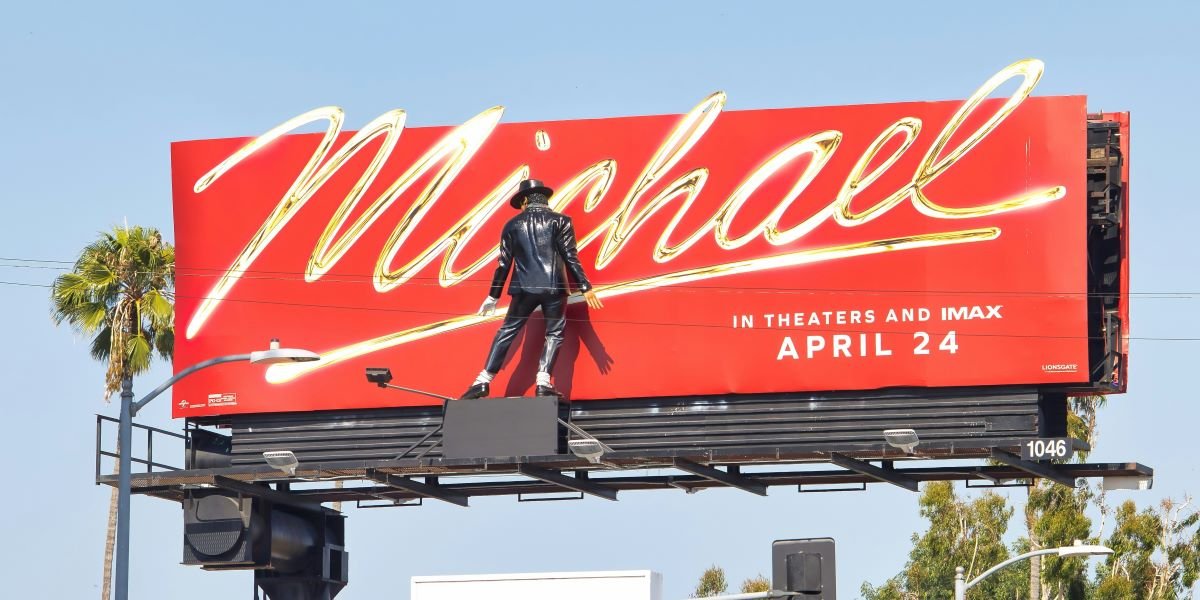
Michael Jackson Biopic Crosses $1 Billion at the Box Office as Streaming Catalog Surges to 105 Million Monthly Listeners

Lionsgate’s Michael Jackson biopic “Michael” has officially crossed $1 billion at the global box office, becoming the first biopic of any kind in cinematic history to reach the milestone and the first film in Lionsgate’s 29-year history to do so. The Antoine Fuqua-directed film has grossed $1.001 billion through its 12th weekend in release — $371.8 million domestic and $629.8 million international — while simultaneously driving Michael Jackson’s Spotify monthly listener count from approximately 68 million before the film’s April 24 release to roughly 105 million, a catalog resurgence that has generated an estimated 748 million additional streams in the weeks following the premiere.


Key Takeaways

  • “Michael” has grossed $1.001 billion globally ($371.8 million domestic, $629.8 million international), becoming the first biopic ever to cross the $1 billion threshold and only the 62nd film in history to do so
  • The film surpassed Bohemian Rhapsody ($911 million) as the highest-grossing music biopic and Oppenheimer ($975.8 million) as the highest-grossing biopic of any genre
  • Michael Jackson’s Spotify monthly listener count climbed from 68 million to approximately 105 million following the film’s release, with 748 million additional catalog streams generated in under four weeks
  • “Billie Jean” reached No. 1 on Spotify’s Daily Global chart more than four decades after its 1983 release, climbing from 53.9 million to 130.4 million monthly plays
  • Lionsgate is reportedly preparing to greenlight a sequel, though director Antoine Fuqua will not return for the follow-up


How Did a Biopic Break Into the Billion-Dollar Club?

The $1 billion milestone has historically belonged to franchise blockbusters — superhero films, animated sequels, and established action properties with built-in global audiences. Only 62 films in history have reached the threshold without inflation adjustment, and none of them had been biographical dramas. “Michael” entered a category that biographical films were not supposed to occupy.

The path to $1 billion unfolded in stages. “Michael” opened on April 24 to $97 million domestically and $217 million worldwide, shattering the previous opening-weekend record for a music biopic held by 2015’s “Straight Outta Compton” at $60.2 million. The film set records in 85 territories worldwide and maintained strong holds through the summer moviegoing season, driven by positive audience reception and repeat viewership. The film carries a 37% critical score on Rotten Tomatoes but a 97% audience rating — a gap that reflects the disconnect between critical reception and commercial performance that has defined the film’s run.

Japan, one of Michael Jackson’s most devoted international markets, provided the final push. The film opened there as its last major territory and has added $35.7 million to its international gross so far. The billion-dollar crossing arrived even though “Michael” became available on video-on-demand on June 9 and is set for physical media release on July 14 — a timeline that would typically have ended most films’ theatrical earning potential weeks ago.

Producer Graham King, whose 2018 Queen biopic “Bohemian Rhapsody” held the previous music biopic record at $911 million, now holds both the top two spots on the all-time list. Lionsgate Motion Picture Group chair Adam Fogelson credited the film’s “unique cultural phenomenon” status, noting that audiences have embraced the theatrical experience in ways that go beyond typical commercial metrics. Lionsgate’s previous highest-grossing release was 2013’s “The Hunger Games: Catching Fire” at $865.2 million.

What Has the Film Done to Michael Jackson’s Streaming Catalog?

The box office performance tells only half the economic story. The more consequential impact may be what “Michael” has done to the value of the Jackson catalog in the streaming economy.

Chartmetric data tracked the trajectory in granular detail. In the week following the film’s April 24 premiere, Michael Jackson’s Spotify monthly listener count jumped from approximately 68 million to 73 million — a gain of 5 million listeners in seven days. The growth accelerated from there: past 81 million by early May, through 85 million and 95 million in subsequent weeks, crossing 100 million for the first time in mid-May, and reaching approximately 102 million at peak levels roughly four weeks after release. The current count sits at approximately 105 million, representing a 121% increase year-over-year from 46.1 million listeners in April 2025.

The individual track performance has been equally striking. “Billie Jean” climbed from 53.9 million monthly plays to 130.4 million and reached No. 1 on Spotify’s Daily Global chart with 6.028 million streams in a single day — the highest daily ranking the 1983 track has ever achieved on the platform. “Beat It” rose from 35.8 million to 100.6 million monthly plays. “Human Nature” posted the most dramatic percentage gain, increasing 6.4 times from 9.8 million to 63.1 million plays. At the peak of the surge, 14 of Michael Jackson’s songs charted simultaneously on Spotify, and the “Thriller” album returned to the Billboard 200 top five.

Across Michael Jackson’s top 60 tracks, monthly plays rose from 467 million before the film to 1.21 billion afterward — 748 million additional streams generated in under four weeks. Michael Jackson’s Spotify follower count has also grown from 29.6 million in January 2024 to 43.5 million, adding nearly 14 million permanent followers in less than 18 months.

What Does This Mean for Sony Music Group’s Catalog Valuation?

Sony Music Group holds a 50% stake in the Michael Jackson catalog, a position that makes every incremental streaming gain a direct contributor to catalog valuation. Music catalogs are typically valued as a multiple of annual net publisher’s share or net label share, and sustained increases in streaming volume directly inflate those earnings.

The biopic has not merely produced a temporary nostalgia spike. The trajectory from 68 million to 105 million monthly listeners over a sustained multi-month period — maintained even after the film moved to video-on-demand — suggests a structural reset in how Jackson’s music circulates on streaming platforms. Chartmetric’s analysis noted that the growth is not simply driven by older listeners returning but is supported by algorithmic discovery, playlist ecosystems, and new audiences encountering the catalog for the first time. The resurgence is operating at a scale comparable to a living pop artist’s active release cycle.

For context, the Weeknd led all Spotify artists with approximately 111 million monthly listeners as of mid-2025. Michael Jackson, who died in 2009, is now operating at a listener volume that places his catalog in direct competition with the platform’s most-streamed active artists — a position no deceased artist’s catalog has occupied at this scale in the streaming era.

What Comes Next for the Franchise?

Lionsgate is reportedly preparing to greenlight at least one sequel covering later periods of Michael Jackson’s life and career, though Fuqua will not direct; the filmmaker is currently attached to a Hannibal biopic for Netflix. The first film covers Jackson’s journey from the Jackson 5 through his ascent as the King of Pop in the late 1980s, leaving substantial biographical territory — including the “Dangerous” and “HIStory” eras — for subsequent installments. Screenwriter John Logan wrote the first film, and producers Graham King, John Branca, and John McClain are expected to return.

FAQs

How much has the Michael Jackson biopic earned at the box office? “Michael” has grossed $1.001 billion globally — $371.8 million domestically and $629.8 million internationally — through its 12th weekend in release. It is the first biopic ever to cross $1 billion and only the 62nd film in history to reach the milestone.

Who stars in the Michael Jackson biopic? Jaafar Jackson, Michael Jackson’s real-life nephew, stars in his feature film debut. The cast includes Colman Domingo and Nia Long as Joe and Katherine Jackson, along with Miles Teller, Laura Harrier, and Mike Myers.

How many Spotify listeners does Michael Jackson have now? Michael Jackson’s Spotify monthly listener count has risen to approximately 105 million, up from roughly 68 million before the film’s April 24, 2026, release. The 121% year-over-year increase places the Jackson catalog among the most-streamed artist profiles on the platform.

What records has the film broken? “Michael” holds the record for the highest-grossing biopic of all time (surpassing Oppenheimer at $975.8 million), the highest-grossing music biopic (surpassing Bohemian Rhapsody at $911 million), and the largest opening weekend for a music biopic ($97 million domestic, surpassing Straight Outta Compton at $60.2 million).

Is a sequel planned? Lionsgate is reportedly preparing to greenlight at least one sequel. Director Antoine Fuqua will not return for the follow-up, as the filmmaker is currently working on a Hannibal biopic for Netflix. Producers Graham King, John Branca, and John McClain are expected to continue with the franchise.

Is the film still in theaters? “Michael” has been available on video-on-demand since June 9, 2026, and is set for physical media release on July 14. The film is still playing in approximately 270 North American theaters and continues its initial theatrical run in Japan.