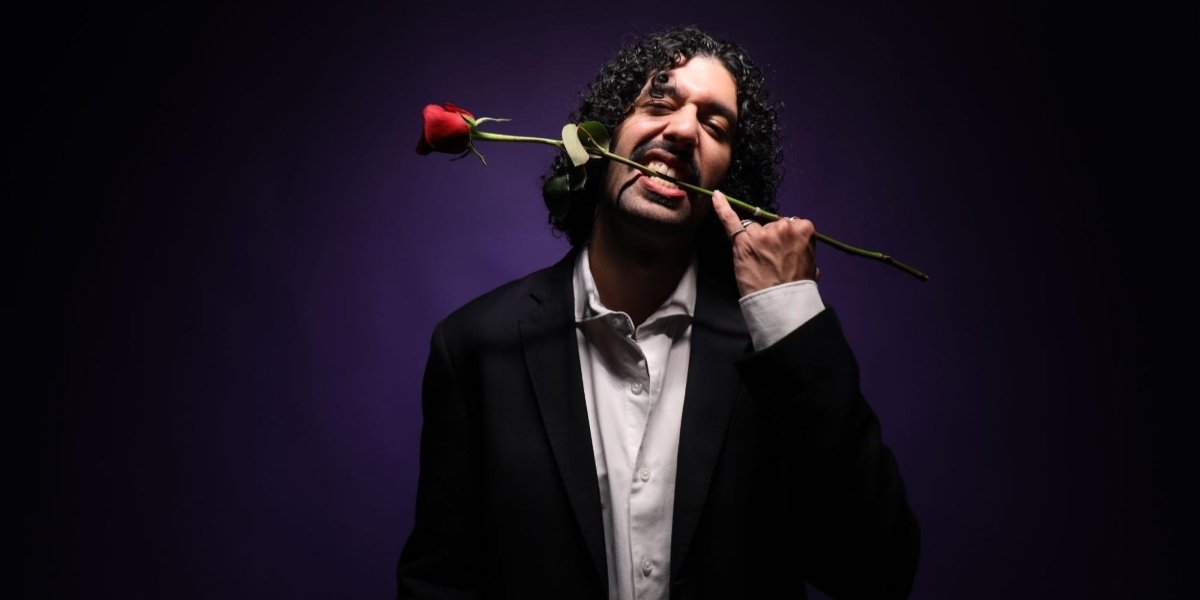
Dubai-based artist Prince VA continues to build his name in the R&B scene with a growing catalog of music that blends emotion, smooth production, and modern sounds. Known for creating songs that sit between R&B, hip-hop, and melodic influences, VA has built a style that feels personal while still connecting with a wide audience.
A Global R&B Sound Built in Dubai
Prince VA’s music reflects a wide range of influences, and much of it comes together through his own hands-on approach to writing, recording, and production. That level of creative control gives his catalogue a consistent voice from one release to the next. As R&B finds new audiences across the Middle East, artists based in the region are bringing fresh perspectives to a genre with deep roots elsewhere.
Following releases like “Lemonade,” “Lost in the Echoes,” “Stuck On You,” and his 2025 project Chasing Shadows: Vol 1, Prince VA continues to show his range as an artist. His music often focuses on relationships, emotions, and the moments that bring people closer, with each release offering a different side of his sound.
What Makes “Depend On Me” Stand Out
His latest track, “Depend On Me,” reveals a more romantic, intimate side of Prince VA. The smooth R&B record is built around the idea of trust, connection, and taking a chance on someone who means everything. The song features collaborators Bea Kadri and somecallmewale, whose contributions add a rich blend of different voices and styles while keeping the focus on chemistry and emotion.
“Depend On Me” feels like the type of track that fits any setting. It works during a late-night drive, in a quieter personal moment, or as a smooth addition to a club playlist. The laid-back production and easy melodies make it a record listeners can return to again and again.
Why Prince VA Is Gaining Attention
The track highlights Prince VA’s ability to create music that feels both polished and relatable. Rather than focusing only on catchy moments, he builds an atmosphere where listeners can connect with the feeling behind the record.
A steady run of releases, live performances across the UAE, and a growing audience have all helped shape his current momentum. “Depend On Me” adds another layer to his evolving sound and reflects the smooth R&B approach that has drawn listeners to his music. You can stream “Depend On Me” on Spotify.
Snowhaus isn’t just releasing songs; they’re slowly putting together the full picture. Instead of dropping an album all at once, the Portland indie/punk outfit has been unveiling You Should Know Better one track at a time, and each release has brought something different to the table. Now that “Iron Man” is joining the rollout, it’s becoming clear this album is shaping up to be their strongest work yet.
What makes Snowhaus so easy to come back to is their ability to mix fun with honesty. Their self-described “shred pop” sound blends indie, punk, Midwest emo, and math rock into something that’s energetic, catchy, and never afraid to get a little messy. Every song feels personal, but never weighed down by its emotions.
The rollout began with “need 2 make sound,” a reflective look at the highs and lows of chasing music. It captured the pressure of being in a band while reminding listeners why making art is worth it in the first place. It was an honest way to kick off a new era and set the tone for everything that followed.
Next came “Slackjaw,” which took relationship frustrations and turned them into something colorful and strangely fun. Built around clever imagery and playful songwriting, it proved that Snowhaus can tackle heavier emotions without losing their sense of humor.
Then there’s “Cereal Killer,” arguably the quirkiest release so far. Inspired by a former housemate, the track disguises a loving diss track beneath angular guitar riffs and infectious energy. It’s playful on the surface, but underneath, it explores creative struggles, misunderstandings, and the complicated relationships that often come with making music.
Now “Iron Man” arrives as the latest piece of the puzzle, and it feels like another confident step forward. While each release has explored different emotions and stories, they all share the same DNA: memorable guitar work, sharp songwriting, and an authenticity that sets Snowhaus apart. Together, these singles don’t feel disconnected. They feel like chapters of the same story, each revealing another side of the band ahead of the full album.
The response has been building too. “Cereal Killer” has already become an early fan favorite, drawing tens of thousands of Spotify streams, while “Need 2 make sound” and “Slackjaw” continue to gain momentum with over ten thousand streams each. It’s a promising sign that listeners are connecting with this new chapter.
If these first four releases are anything to go by, You Should Know Better won’t just be another indie album. It’s shaping up to be Snowhaus at their most confident, creative, and unapologetically themselves, leaving plenty of reasons to be excited for what’s still to come.
Listeners can stream “Iron Man” on Spotify now, with the rest of You Should Know Better set to arrive one track at a time.
Bonnie Tyler, the Grammy-nominated Welsh singer whose raspy voice powered the chart-topping ballads ‘Total Eclipse of the Heart’ and ‘Holding Out for a Hero,’ died July 9, 2026, at the age of 75, as reported by The Hollywood Reporter and the Associated Press. Born Gaynor Hopkins in the Welsh coal-mining village of Skewen in 1951, Tyler spent five decades as a vocal icon whose surgically altered instrument became the perfect vehicle for composer Jim Steinman’s most ambitious work.
Key Takeaways
Bonnie Tyler, the Grammy-nominated Welsh singer known for ‘Total Eclipse of the Heart’ and ‘Holding Out for a Hero,’ died July 9, 2026, at age 75.
Tyler’s signature raspy voice resulted from vocal cord surgery in the late 1970s that she initially feared would end her career but instead became her defining characteristic.
Jim Steinman, composer behind Meat Loaf’s ‘Bat Out of Hell,’ produced Tyler’s biggest hits after being impressed by her ‘ravaged’ vocal quality that reminded him of John Fogerty.
Born Gaynor Hopkins in the Welsh coal-mining village of Skewen in 1951, Tyler left school at 16 and was signed by RCA Records after a talent scout heard her in a Swansea club.
Tyler represented the United Kingdom at Eurovision in 2013 and received an MBE in 2023 for her services to music, maintaining a European following decades after her 1980s chart peak.
Bonnie Tyler’s death marks the end of an era for the power ballad genre. It closes the chapter on an artist whose distinctive, ravaged voice became inseparable from the operatic rock productions that defined 1980s radio. Her career trajectory proved that vocal imperfection, embraced rather than corrected, could become a commercial and artistic asset.
How Did Bonnie Tyler’s Voice Become Her Signature?
Bonnie Tyler’s trademark rasp wasn’t a natural gift but the result of an unexpected medical crisis. Shortly after her first UK hit, 1976’s ‘Lost in France,’ which appeared on her 1977 debut album ‘The World Starts Tonight,’ Tyler discovered nodules on her vocal cords and underwent surgery. The operation required six weeks of vocal rest, a directive the self-described chatterbox struggled to follow.
‘I thought my career was over,’ Tyler recalled. ‘You’re not supposed to talk for six weeks after the operation.’ One day, she screamed out of frustration and damaged her voice further, extending her recovery to six months. When she finally returned to the studio, the band noticed something remarkable. Her voice had gained a husky edge and texture it never possessed before.
That new voice launched ‘It’s a Heartache’ in 1977. The song reached number three on the US charts and gave Tyler her first American hit. The surgery that threatened to end her career instead became the foundation for everything that followed. Few artists in popular music can trace their commercial identity so directly to a single medical event.
What Made Jim Steinman Choose to Work With Bonnie Tyler?
In 1982, Bonnie Tyler declined to renew her RCA Records contract after four albums, fearing her career was stagnating. CBS Records immediately signed her and asked who she wanted to produce her next record. Tyler’s answer was direct: she wanted whoever wrote and produced Meat Loaf, whose 1977 album ‘Bat Out of Hell’ she loved and knew she could sing.
Jim Steinman, the eccentric composer behind that record, initially declined the offer. But after listening to a handful of Tyler’s demo recordings, he changed his mind completely. ‘I always thought she had a great voice,’ Steinman told People magazine in 1983. ‘She reminded me of Creedence Clearwater Revival’s John Fogerty, probably my favourite male rock’n’roll singer. Her voice isn’t pure or smooth. It sounds ravaged, like it’s been through a lot. It’s what rock’n’roll is all about.’
Steinman tested Tyler’s musical taste by playing her Creedence Clearwater Revival’s ‘Have You Ever Seen the Rain?’ and Blue Öyster Cult’s ‘Goin’ Through the Motions.’ He later admitted that if she hadn’t liked those songs, he wouldn’t have worked with her because it would have proven they weren’t thinking on the same terms. Tyler passed the test, and Steinman went on to write and produce both of her biggest hits: 1983’s ‘Total Eclipse of the Heart’ and 1985’s ‘Holding Out for a Hero.’
What Was Bonnie Tyler’s Path to Professional Music?
Bonnie Tyler was born Gaynor Hopkins on June 8, 1951, and grew up in Skewen, a coal-mining village in Wales. She left school at 16 without any formal qualifications, a common trajectory for working-class youth in postwar Britain. At 18, encouraged by her aunt, she entered a local talent contest and finished second to an accordion player.
Photo by Scarlett Alt on Unsplash
That second-place finish was enough to convince Hopkins to pursue singing professionally. She performed with several different bands under the stage name Sherene Davis before a talent scout spotted her singing in a Swansea club and invited her to record in London. Within months, RCA Records signed her and recommended a second name change. This time, she became Bonnie Tyler, the name that would appear on decades of albums and singles.
Tyler’s early career mirrored that of many British artists who built regional followings before breaking nationally. Her first RCA single, ‘Lost in France,’ reached the UK Top 10 and established her as a chart presence before the vocal-cord surgery that would redefine her sound. The nodules could have ended everything before it truly began, but instead they became the catalyst for a voice that millions would instantly recognize.
Why Did ‘Total Eclipse of the Heart’ Define Power Ballads?
Steinman’s production style for Bonnie Tyler was bold, operatic, and built around layers of sound that matched the emotional intensity of her voice. ‘Total Eclipse of the Heart,’ released in 1983, became not just a hit but a template for the power ballad genre that dominated adult contemporary and rock radio for the rest of the decade. Tyler’s raspy delivery gave Steinman’s grandiose arrangements a human anchor. It turned overwrought drama into genuine emotion.
‘Holding Out for a Hero,’ released in 1985, followed the same formula and cemented Tyler’s status as Steinman’s ideal interpreter. Both songs showcased a voice that sounded, as Steinman put it, like it had been through something. That quality made the romantic yearning and defiance in the lyrics feel earned rather than performed. The combination of Tyler’s lived-in vocal texture and Steinman’s theatrical compositions created a sound that couldn’t be replicated by technically perfect singers.
The partnership produced the album ‘Faster Than the Speed of Night,’ which featured both Creedence Clearwater Revival and Blue Öyster Cult covers alongside Steinman’s originals. Tyler’s ability to inhabit rock material written for male voices proved that her rasp wasn’t a gimmick but a genuine rock instrument. Steinman had found the female equivalent of Meat Loaf’s intensity, and the commercial success validated his instinct.
What Did Bonnie Tyler’s Career Look Like After the 1980S?
Bonnie Tyler continued recording and performing long after her peak chart years, maintaining a loyal European following even as American radio moved on. She represented the United Kingdom at the Eurovision Song Contest in 2013, decades after her biggest hits, and was awarded an MBE in 2023 for her services to music. The recognition acknowledged not just her commercial success but her influence on generations of singers who studied her phrasing and vocal approach.
Tyler’s voice remained instantly recognizable across decades. This proved how thoroughly the surgery and her subsequent work with Steinman had defined her sound. While she never again matched the chart dominance of ‘Total Eclipse of the Heart,’ her catalog became a fixture of classic rock and ’80s nostalgia programming. The songs outlasted their original context, becoming standards that new artists covered and audiences rediscovered.
Her death at 75 removes one of the last direct links to the era when power ballads dominated both rock and pop radio, a time when vocalists with character and imperfection could compete with technically trained singers. Tyler proved that a voice shaped by accident and surgery could become more commercially valuable than one trained in conservatories. The rasp that nearly ended her career instead became her legacy, inseparable from some of the most enduring songs of the 1980s.
FAQs
What Caused Bonnie Tyler’s Distinctive Raspy Voice?
Bonnie Tyler’s raspy voice resulted from vocal cord surgery to remove nodules shortly after her 1976 hit ‘Lost in France.’ She was supposed to rest her voice for six weeks but screamed out of frustration, causing additional damage that extended her recovery to six months. When she returned to recording, her voice had developed the husky edge that became her signature sound.
What Were Bonnie Tyler’s Biggest Hit Songs?
Tyler’s two biggest hits were ‘Total Eclipse of the Heart’ released in 1983 and ‘Holding Out for a Hero’ in 1985, both written and produced by Jim Steinman. Her earlier hit ‘It’s a Heartache’ reached number three on US charts in 1977. ‘Lost in France’ was her first UK Top 10 hit in 1976.
How Did Jim Steinman and Bonnie Tyler Start Working Together?
After declining to renew her RCA contract in 1982, Tyler signed with CBS Records and requested to work with whoever produced Meat Loaf. Jim Steinman initially declined but agreed after hearing her demo recordings. He tested her musical taste by playing her Creedence Clearwater Revival and Blue Öyster Cult songs, and after she passed, he produced her most successful work.
What Was Bonnie Tyler’s Real Name and Where Was She From?
Bonnie Tyler was born Gaynor Hopkins on June 8, 1951, in Skewen, a coal-mining village in Wales. She left school at 16 without formal qualifications and initially performed under the stage name Sherene Davis before RCA Records recommended the name Bonnie Tyler.
Did Bonnie Tyler Continue Performing After the 1980S?
Tyler maintained an active career after her peak chart years, particularly in Europe. She represented the United Kingdom at the Eurovision Song Contest in 2013 and was awarded an MBE in 2023 for her services to music. She continued recording and performing until her death in 2026.
What Made Bonnie Tyler’s Voice Perfect for Power Ballads?
Jim Steinman described Tyler’s voice as ‘ravaged’ rather than pure or smooth, comparing it to John Fogerty of Creedence Clearwater Revival. The texture created by her vocal cord surgery gave emotional weight to Steinman’s operatic arrangements, making dramatic lyrics feel genuine rather than performed. Her imperfect voice became a commercial asset in an era dominated by technically perfect singers.