
Why a Book Trailer Can Become Your Readers’ Favorite Way to Share

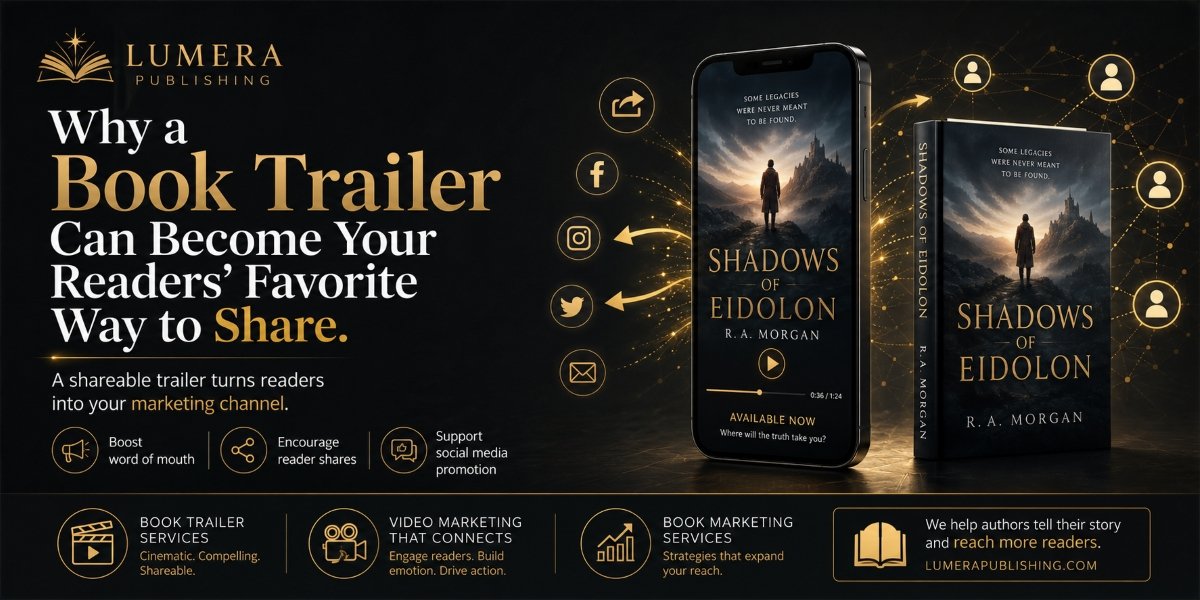
Word of mouth has always been one of the strongest forces in selling books, and online, that word of mouth travels through shares. Readers may love a book, recommend it in conversation, or mention it to friends, but digital sharing needs something quick, visual, and easy to pass along. A book itself is not simple to share in one tap. A book trailer solves that problem by giving readers a short, engaging piece of content they can post, send, and recommend instantly.
Lumera Publishing creates book trailer services designed to help authors turn reader interest into online sharing. A strong promotional book video gives readers a simple way to spread the story, mood, and appeal of a book across social platforms. This article explains why a book trailer can become your readers’ favorite way to share, how a shareable trailer supports social media promotion, and why video marketing can help carry a book far beyond the author’s existing audience.
Word of Mouth Travels Through Shares
Recommendations from one reader to another have always helped books grow. In the online world, those recommendations often happen through shares. When someone shares a piece of content, they are not only passing it along; they are placing it in front of their own network with an implied recommendation. That makes shareable content one of the most useful tools in modern book marketing.
The challenge is giving readers something easy to share. Enthusiasm alone does not always travel unless readers have a simple vehicle for it. A book trailer becomes that vehicle. Lumera Publishing creates trailers that package a book’s appeal into a short, visual format readers can share quickly, turning natural reader excitement into real distribution.
Why Readers Prefer Sharing a Trailer
A book can be difficult to recommend online because explaining the full appeal of a story takes time. A reader may love the characters, the tone, the message, or the emotional pull of a book, but putting all of that into a short post is not always easy. That friction limits how often even excited readers share.
A trailer removes that friction. It gives readers a ready-made piece of content that captures the feeling of the book in seconds. A shareable trailer can show the mood, hint at the story, and spark curiosity far more quickly than a written explanation. For many readers, sharing the trailer becomes the easiest and most natural way to recommend the book.
What Makes a Book Trailer Worth Sharing
For a trailer to travel, it has to be more than a simple announcement. People share content that feels exciting, emotional, beautiful, mysterious, funny, inspiring, or useful. A trailer worth sharing captures the book’s tone and gives viewers a reason to care. It should feel like a small experience of the book, not just a sales message.
Lumera Publishing focuses on creating a promotional book video that feels polished, engaging, and platform-ready. The goal is to create something readers are proud to share because it represents the book well. A forgettable trailer disappears quickly, but a strong one can become a piece of content readers actively pass along.
Each Share Becomes a Personal Endorsement
When a reader shares a trailer, it carries more credibility than a standard advertisement. Their friends and followers see the share as a personal recommendation, not just another marketing message. That matters because people are more likely to trust content shared by someone they know.
This is why a book launch trailer can become so valuable. Each share introduces the book to a new circle of potential readers with a layer of trust already attached. As the trailer moves from one person to another, it creates a chain of small endorsements. That kind of peer-driven visibility is difficult to achieve through paid promotion alone.
Built for Social Media Promotion
A trailer has to work well where readers are most likely to share it. That means it should be formatted for social platforms, easy to repost, visually strong, and clear enough to make sense quickly. A video that looks polished on one platform but awkward on another loses momentum before it has a chance to spread.
Lumera Publishing creates trailers with social media promotion in mind, making sure the video is built for the platforms where readers actually spend time. The trailer can be used in launch campaigns, author posts, ads, newsletters, website pages, and reader shares. This flexibility turns one video into a reusable marketing asset.
Video Marketing Helps Your Book Travel Further
Video marketing gives authors a way to communicate emotion and atmosphere quickly. A short trailer can show the tension of a thriller, the warmth of a memoir, the wonder of a children’s book, or the authority of a nonfiction title in a way plain text often cannot. That makes it easier for viewers to understand whether the book is for them.
For authors trying to reach beyond their existing audience, this matters. A trailer can travel to people who have never heard of the author before and give them an immediate reason to pay attention. Lumera Publishing uses book marketing services to help authors place trailers within a wider promotional strategy, so the video supports discovery, sharing, and launch momentum rather than standing alone.
A Small Asset With Long-Term Marketing Value
A shareable book trailer can continue working long after launch. Authors can reuse it on social media, add it to their website, include it in email campaigns, send it to media contacts, or use it during future promotions. Because the author owns the finished video, it becomes a lasting promotional asset.
Lumera Publishing helps authors create trailers that readers want to share and that authors can use again and again. By combining book trailer services, video marketing, social media promotion, and broader book marketing services, the company helps turn a trailer into more than a clip. It becomes a small ambassador for the book, carrying the story into new conversations and new audiences.
About Lumera Publishing
Lumera Publishing is a full-service, fee-based book publishing company based in New York, USA. The company offers ghostwriting, editing, formatting, cover design, publishing, book trailer services, promotional book video creation, video marketing, and book marketing services for authors across every genre, helping writers self-publish professionally while keeping 100% of their rights and royalties.
Learn more at lumerapublishing.com or call +1 (888) 477-8199. Media contact: info@lumerapublishing.com.
