The Shadow as Revelation: Understanding Giuseppe Bonaccorso’s ‘L’Ombra della Terra’

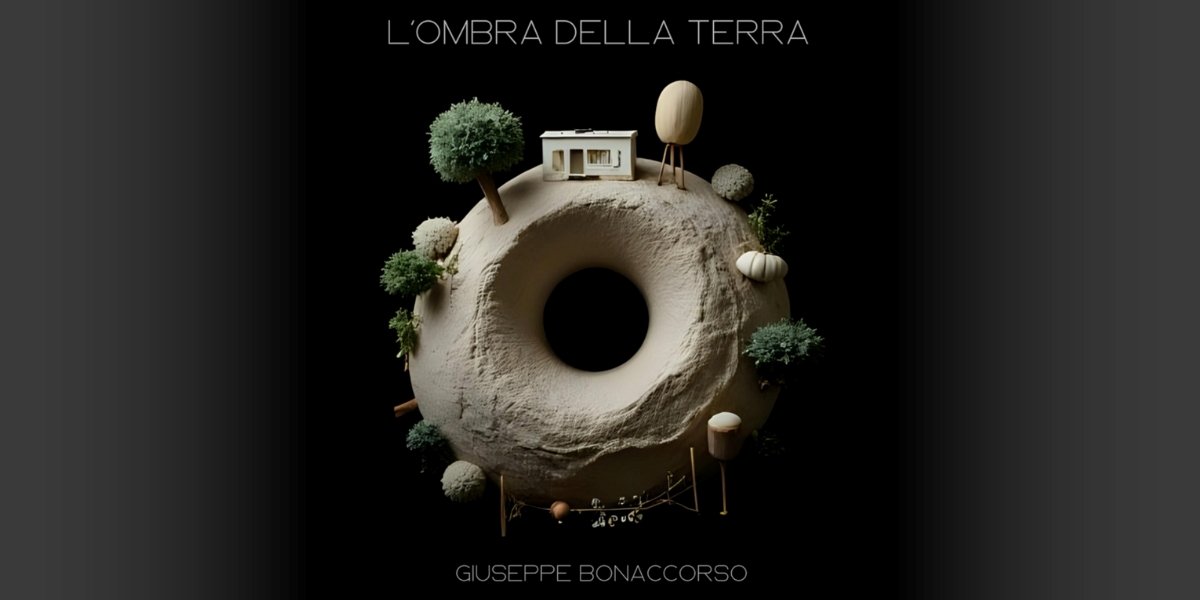
Shadows are often treated as symbols of absence, the negative imprint of light. Giuseppe Bonaccorso, however, invites listeners to rethink much of what they may assume about darkness and absence. With “L’Ombra della Terra,” his approach feels less like a straightforward musical experience and more like a personal rite; a gentle calling to step into uncertainty and gradually discover meaning that listeners might sense hidden within it.
A Sonic Ritual, Not a Song
“L’Ombra della Terra” doesn’t quite unfold like a typical single. Instead, Bonaccorso constructs a soundscape that gradually seems to envelop the listener. The track opens with broad, sweeping synthesizer lines, almost painting a horizon of sound rather than providing a simple backdrop. It’s patient, unhurried, refusing at first to explain itself too quickly. When distorted guitars enter, they don’t merely add intensity; they carve into the song’s landscape, inviting attention and shifting the emotional terrain.
His vocal delivery also largely defies tradition. Rather than relying on melody, Bonaccorso employs spoken word, chanting, and sharp declarations. This approach can guide listeners on a journey through internal spaces, confronting the shadow not as something to escape, but as a potentially necessary part of self-exploration. Rhythm emerges only after a long buildup, giving the track an almost ceremonial feel, almost like the closing moments of a ritual when certain intentions crystallize.
Structure as Meaning: When Sound Mirrors Concept
Bonaccorso’s manipulation of shadow is not merely metaphorical. It is arguably built into the architecture of the piece. Every layer of “L’Ombra della Terra” seems to serve to reinforce for attentive listeners the sense of revelation that comes only after lingering in obscurity. Silence and opacity are used less to conceal and more to sharpen moments of illumination. There are moments when the music pulls back, leaving the listener hovering in uncertainty, only for clarity to occasionally break through, at once startling and at times profound.
This process can be read as mirroring the track’s core narrative: a journey of gradual awakening, a measured rebellion against ritual and tradition when they feel stripped of meaning. Rather than succumbing to inherited mythologies or automatic obedience, Bonaccorso’s work invites listeners to consider finding their own truth, even if it means grappling with discomfort. In the shadow, he suggests, you need not shrink or disappear. Instead, you may find a perhaps truer, more honest reflection of yourself.
Dwelling in Ambiguity: Bonaccorso’s Artistic Philosophy
This embrace of the ambiguous appears central to Bonaccorso’s entire body of work. He does not chase after the comfort of absolute clarity. Instead, he positions forms of doubt and uncertainty as creative forces. In an era when much pop music tends to resolve questions quickly and satisfy listeners’ desire for simple answers, Bonaccorso effectively makes the question itself a focus. To inhabit the world of “L’Ombra della Terra” can be to practice self-awareness in a relatively raw form.
For Bonaccorso, shadow may not be a retreat from light; it is often the fertile ground where growth can happen. Rather than avoiding confusion, he leans into it, encouraging listeners to do the same. His approach often stands apart from conventional songwriting, encouraging active participation rather than purely passive consumption.
Music as a Rite of Passage
As “L’Ombra della Terra” progresses, it becomes apparent to many listeners that Bonaccorso may not be primarily interested in creating entertainment for entertainment’s sake. The track functions for some as a form of revelation, inviting the audience to inhabit the shadow and confront whatever they have left unspoken. The song operates almost as a rite of passage; a gentle challenge to examine personal contradictions, question inherited beliefs, and step into a deeper sense of identity.
Bonaccorso’s willingness to linger in difficult spaces allows his music to serve as a site of reflection, rather than simple escape.
The Visual and Social Dimension
This commitment to depth appears to extend to Bonaccorso’s visual work. The official music video for “L’Ombra della Terra” appears to amplify the song’s themes, using stark imagery and ritualistic visuals to echo the sense of initiation and confrontation present in the track. For fans who want to connect further, Bonaccorso periodically shares insights and behind-the-scenes moments on his Facebook page, offering brief glimpses into the creative process that fuels his art.
Stepping Into the Shadow
Giuseppe Bonaccorso does not offer easy answers. With “L’Ombra della Terra,” he invites listeners to consider stepping into the shadow, to face ambiguity not with fear, but with curiosity. Through careful composition and a notable refusal to overly simplify, he crafts a musical journey that serves as both a mirror and a doorway. For those willing to follow, the reward can be a distinct sense of revelation; a discovery of self that might not have emerged in the light alone.