
Mozart Goes Full Throttle: Don Giovanni: A Rock Opera Sets The Cutting Room Ablaze

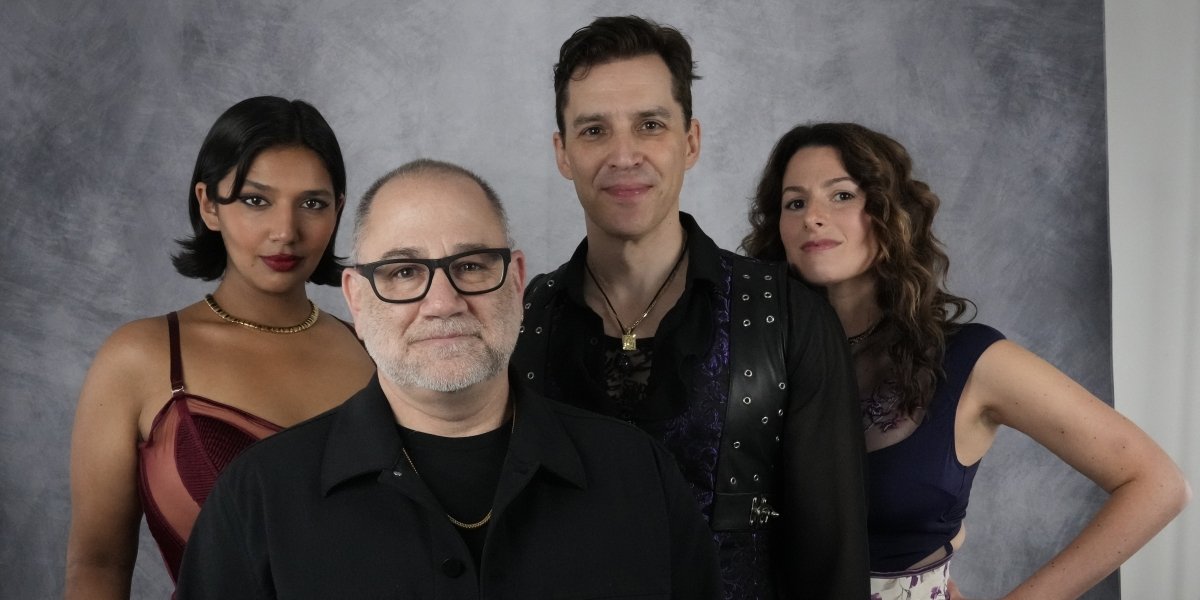
By: Jim Manly
What do you get when you take Mozart’s most dangerous opera, plug it into a Marshall stack, and hand it to a musical theatre madman with a composer’s soul and a rocker’s swagger?
You get Mozart’s Don Giovanni: A Rock Opera—an intensely charged new production now commanding attention at The Cutting Room in NYC. Equal parts homage and upheaval, it’s a striking retelling of the original that’s been juiced with English lyrics, a full-on rock orchestra, and enough edge to shake even the most stoic opera traditionalists.
The driving force behind this genre-blending endeavor is Adam B. Levowitz, a composer-conductor-librettist-producer-director (yes, all five) who’s reimagined a cornerstone of classical repertoire into a 90-minute experience that thrums with energy, dares to provoke, and invites audiences to feel on a deeper level. “Opera was never meant to be polite,” Levowitz says. “It was the original rock music—scandalous, visceral, alive.”
And that’s largely how Don Giovanni unfolds here: alive. Gone are the powdered wigs and reverent pauses. This is Mozart filtered through the raw urgency of Jesus Christ Superstar, Tommy, and maybe a dash of Hedwig. It’s a morality tale in leather, told with all the musical sophistication of opera and the emotional voltage of a rock show.
Levowitz didn’t set out to merely modernize Don Giovanni. He set out to remind audiences what it may have always held at its core: something primal. “Mozart was a revolutionary,” he says. “The music already has tension, pulse, drive—I just replaced the string section with electric guitars and let the brass rip.” The original score remains largely intact—vocal lines, harmonies, dramatic form—but the delivery system has been boldly updated. Think less opera house, more underground club with soul.
The result? A musical Frankenstein that honors its origins while injecting it with newfound urgency. Yes, there’s still a harpsichord, but it’s sandwiched between a drum kit and a Hammond organ. “I’m not trying to make it ‘cool,’” Levowitz says. “I’m trying to make it resonate.”
While many directors stick to modernizing costumes or settings, Levowitz took a scalpel to the libretto itself, rewriting it in English, trimming the runtime to a tight 90 minutes, and digging into the psychological truths of each character. Leporello, not Giovanni, becomes the emotional anchor. Donna Elvira is more than a spurned lover—she’s a woman on the edge of collapse and rebirth. Even the infamous statue scene lands with fresh weight and tension.
“I didn’t want to parody opera,” Levowitz says. “I wanted to write theater—something with teeth, with stakes, with humor. Every moment has to earn its place. That’s what Mozart did, and I’m just trying to follow suit… through a distortion pedal’s lens.”
It helps that the cast features Broadway veterans and powerhouse singers who can go toe-to-toe with Mozart while also inhabiting a sound world shaped by punk grit and glam fire. Ryan Silverman (Chicago, Side Show, Cry-Baby) slinks through the title role with a mix of magnetism and menace, while Richard Coleman (My Fair Lady) brings Leporello to life as both comic foil and tragic conscience.
Rachel Zatcoff (Phantom of the Opera) blazes as Donna Elvira, and Anchal Dhir (The Baker’s Wife) gives Donna Anna a spine of steel beneath her grief. Felipe Bombonato (Les Misérables) offers a fresh take on Don Ottavio, and Edwin Jhamaal Davis (Seattle Opera’s The Magic Flute) delivers a thunderous Commander. Supporting roles are handled with nuance and verve by Sophie Belkin, Kevin Hegmann, and Sean Mannix. Costume design is by Debbi Hobson, Cindi Rush casts, and LDK Productions serves as the general manager.
Don’t expect opera archetypes or rock clichés. These are actors playing real people—with all their contradictions, desires, and regrets—within a soundscape that echoes Mahler’s depth while swinging with Queen’s swagger.

Photo Courtesy: Ken Howard / Adam B. Levowitz
Why the Cutting Room? Simple. It’s not a theater—it’s a vibe. The venue serves drinks, food, and a sense of intimacy that few opera venues still deliver effectively. “It feels like inviting friends over for a show,” says Levowitz. “And honestly, that’s how opera started: loud, rowdy, alive.”
You don’t need to know Italian or own cufflinks. Just grab a seat, a drink, and let the sound hit you in the chest. The rock orchestra isn’t just accompaniment—it’s a co-conspirator, fueling every aria and duet with bite, bounce, and raw emotional force.
Don Giovanni: A Rock Opera is more than a reimagining. It’s a bold attempt to draw opera out of the museum and position it within today’s cultural narrative. It doesn’t shy away from updating the form. It leans into the evolution. Because, as Levowitz reminds us, “Mozart didn’t write this for a lecture hall. He wrote it to make people feel something. We just turned up the volume.”
And chances are, you’ll feel it too.
Now Playing: Mozart’s Don Giovanni – A Rock Opera
- Where: The Cutting Room, 44 E. 32nd St, NYC
- When: Mondays & Tuesdays at 7 PM through August 26 (no show June 24, added show June 26)
- Run Time: 90 minutes, no intermission
- Tickets: From $44 + $25 food & drink minimum
- Tickets & Info: www.dgrocks.com

