Music Observer

Exploring the Evolution of Rap as a Cultural Art Form

Rap is more than just a musical genre; it is a cultural art form that has grown from underground roots into a global force. Over the decades, it has served as a voice for communities, a platform for storytelling, and a reflection of shifting societal dynamics. While rap is widely recognized for its rhythm, rhyme, and lyrical delivery, its deeper impact lies in how it connects to identity, resistance, and creative expression. Tracing its evolution reveals how it has transformed, adapted, and remained relevant as both music and culture.

Read also: Music and the Brain: Unraveling the Symphony of Neural Responses

Origins and Early Influence

The origins of rap can be traced back to the 1970s, emerging in urban neighborhoods where music and spoken word were powerful outlets for young voices. In its earliest form, rap developed alongside DJing, breakdancing, and graffiti, forming the four foundational elements of hip-hop culture. It began as an informal practice—MCs or “masters of ceremonies” would speak rhythmically over beats at block parties and community gatherings. This spontaneous lyrical flow, often improvised, gradually took on more structured forms and became central to the identity of hip-hop itself.

The early messages within rap were often reflections of everyday life, shining a light on the realities of marginalized communities. From economic hardship to street life, these lyrics captured truths that were not often represented in mainstream media. Even in its rawest form, rap was never just entertainment—it was a form of documentation and commentary, giving voice to those whose stories were rarely told elsewhere.

During its formative years, rap was still very localized, primarily taking shape in major U.S. cities. However, it quickly gained traction and began influencing listeners beyond its point of origin. What started as street-level storytelling began to find its way into recorded music, radio stations, and live performances, expanding its reach and deepening its cultural impact.

Lyrical Expression and Evolving Themes

As rap progressed, it began to evolve both lyrically and thematically. The art form allowed for immense creative flexibility. Some artists used rap to share personal experiences or community struggles, while others explored humor, intellect, or social critique. The diversity of themes grew as the audience for rap widened. At its core, rap continued to rely on lyrical dexterity—rhythm, rhyme, metaphor, and flow became tools for delivering messages with precision and emotional weight.

The complexity of rap lyrics has been one of its defining traits. Wordplay, double meanings, cultural references, and layered storytelling often challenge listeners to engage deeply. Rap can be poetic, combative, reflective, or celebratory, depending on the message being conveyed. Over time, it has also responded to broader social issues—addressing topics such as inequality, political tension, systemic injustice, and generational identity.

As rap matured, the art form also grew more diverse. Different regions developed their own styles and linguistic signatures. For example, rhythm patterns, slang, and subject matter could vary dramatically from one place to another. This regional variation enriched the genre, allowing rap to serve as both a local voice and a universal language. Regardless of the specifics, the core remained the same: delivering powerful messages through rhythm and verse.

Global Expansion and Cultural Influence

While rap originated in specific communities, its influence eventually stretched across continents. Over the years, it began to take root in countries around the world, adapted to different languages, social contexts, and cultural traditions. This global expansion did not dilute the genre—instead, it strengthened it by demonstrating its adaptability and relevance to diverse populations.

International rap scenes began to flourish, each developing unique expressions of the art form. From Europe and Africa to Asia and Latin America, artists began using rap to address local issues, challenge norms, and explore personal identity. This global reach demonstrated that the power of rap transcends borders. What had started as a street-based phenomenon in one part of the world became a tool for dialogue, unity, and activism in many others.

Rap’s cultural influence also extended beyond music. Its aesthetic shaped fashion, language, and media. Its ethos—centered on authenticity, resilience, and creativity—resonated with youth culture everywhere. As it continued to spread, rap maintained its role as a vehicle for truth-telling and self-expression, even while navigating the complexities of commercial success and mainstream attention.

The Art Form Today and Its Future

Today, rap stands as one of the most influential genres in contemporary music. It continues to evolve, incorporating new technologies, digital platforms, and production techniques. While much of today’s rap is commercially driven and widely distributed, many artists still use the platform to push boundaries and explore personal or societal themes. This coexistence of artistic depth and popular appeal reflects the genre’s wide reach and layered identity.

Streaming services and social media have changed the landscape for rap, allowing independent voices to emerge and connect with audiences without traditional gatekeepers. At the same time, technological tools have made music production more accessible, empowering creators at all levels to experiment and innovate. These shifts have given rise to new subgenres and collaborative efforts that keep rap dynamic and forward-looking.

Despite the changes, rap remains rooted in expression. It continues to serve as a mirror of society, capturing both triumph and tension in a form that is immediate and deeply resonant. As cultural contexts evolve, so too will the stories rap tells—but the essence of the art form, built on rhythm, truth, and creativity, is likely to endure.

Rap’s journey from street corners to global stages illustrates its strength not only as a genre of music but as a cultural art form. It has adapted, resisted, reflected, and redefined what it means to communicate through rhythm and voice. By staying connected to lived experience and community narratives, rap has solidified its place in the artistic and cultural fabric of the world—and it continues to evolve in ways that challenge, inspire, and unite.

Read also: The Language of Film: How Cuts Create Continuity

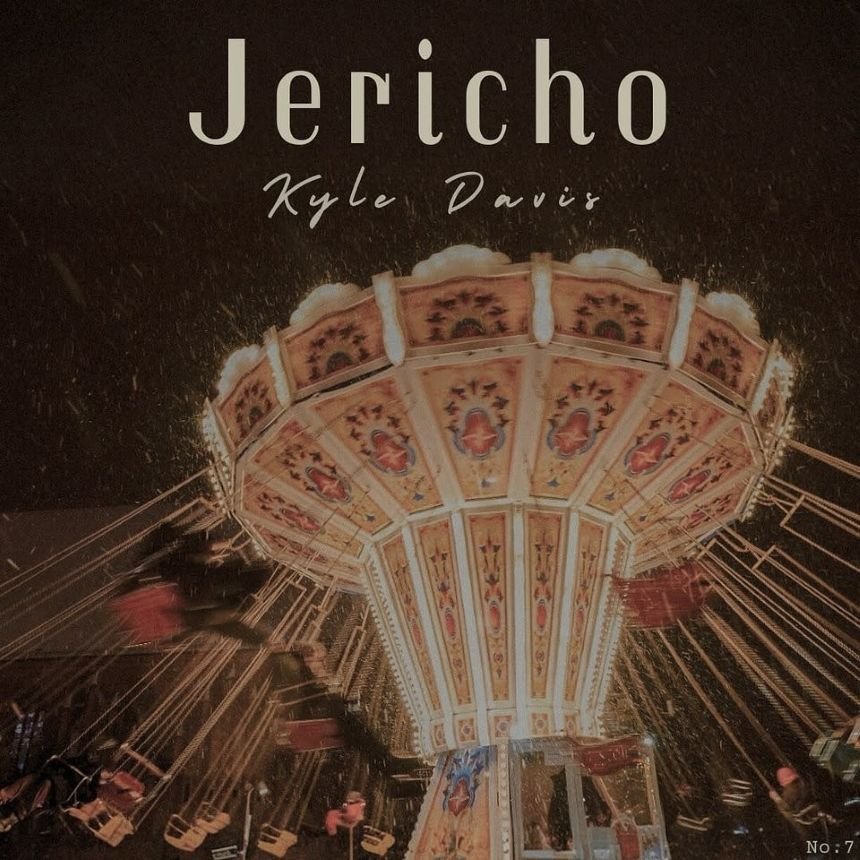
Kyle Davis Returns With Soul-Stirring New Album ‘Jericho’

By: Kara Sterling

By the time the first notes of Kyle Davis’s Jericho settle in, it’s clear this marks a powerful and reflective return. Released last month, Jericho is the Virginia-based singer-songwriter’s first full-length album since 2020’s Make It Count, and it may be his most arresting work to date. The record is a slow-burning, soul-searching odyssey through grief, recovery, and redemption that reads like a personal journal and plays like a cinematic experience.

A Soundtrack for Picking Up the Pieces

Produced by longtime collaborator Don Dixon (R.E.M., The Smithereens), Jericho unfolds with the weight of lived experience. Davis’s lyricism has always leaned introspective, but here it’s unflinching. The title track sets the tone with its meditation on dismantling material illusions in favor of something more lasting: self-forgiveness. “Not all of them fit together the same way anymore, but enough do,” Davis says of the record’s central metaphor, reassembling a self shattered by loss.

The album’s emotional core resonates in standout tracks like “On a Ledge,” where Davis lays bare the chasm between public persona and private despair. “Sail Away” drifts in on soft currents of acceptance, an aching yet soothing piece about how love, like water, can slip through your fingers even as it carries you forward.

Davis’s strength has always been his storytelling, blending Jackson Browne’s confessional poise, Peter Gabriel’s spiritual depth, and Bill Withers’s grounded soul. Jericho follows that tradition with tracks that could easily be mistaken for pages from a memoir. “The Last Line” examines life’s quiet desperation and fierce hope, blending ordinary imagery with extraordinary longing.

Elsewhere, “Passengers” captures a communal spirit of survival, a reminder that people are constantly finding their way through life together. In “Now and Again,” Davis conveys the guilt-tinged grace of moving forward after profound loss, haunted by absence, held together by memory.

Much of Jericho was tracked at Mitch Easter’s studio in Winston-Salem, with additional sessions in Davis’s home studio and at Richmond’s Elephant Ear Studio. The album reunites Davis with a stellar lineup: Dixon on bass and keys, Peter Holsapple on piano and mandolin, Mike Durham and Corey Wells on electric guitar, Rob Ladd on drums, and Hayes Elverston on harp. Davis himself plays guitar and piano, his voice carrying the weary clarity of someone who’s survived the long night.

A Veteran Voice with a Timeless Echo

Davis has shared stages with the likes of Bob Dylan and Hall & Oates, garnered praise from Rolling Stone and Billboard, and had multiple songs chart on Triple AAA radio. But Jericho is less about accolades and more about arrival. It’s the work of a man who’s lived, loved, lost, and come back with something honest to say.

“As I look back on making Jericho, I realize that creating records is a form of therapy for me,” Davis says. “Not every song is entirely first-person, but the themes of grief, resilience, and reflection are universal.”

Kyle Davis Returns With Soul-Stirring New Album ‘Jericho’

Photo Courtesy: Kyle Davis Music

Final Verdict: Don’t Sleep on This One

If you’ve ever stared down the broken pieces of your life and wondered how or if you’d ever put them back together, Jericho is your soundtrack. It’s a companion for the hard moments; a map for finding meaning when the lights go out.

Jericho is available now on all major platforms. Stream it, sit with it, let it pull you under, and maybe, piece by piece, you’ll find yourself again, too.

Explore More:

Visit Kyle Davis’s official website for the latest news, tour dates, and full discography.

Stream Jericho on Spotify and experience the full emotional arc of the album.

Catch music videos, live sessions, and behind-the-scenes content on YouTube.


Published by Joseph T.

From the Court to the Stage: Charles Moret’s Journey from College Basketball to Music Stardom

By: Tom White

Charles Moret didn’t arrive on the music scene in a blaze of viral fame. His story is quieter than that, but if you listen closely, you’ll hear the possible presence of a young artist who may have something real to say.

Raised in Venice, Los Angeles, in a neighborhood shaped by both privilege and poverty, Moret grew up straddling contrasts. His middle-class upbringing gave him a front-row seat to economic disparity, an experience that often informs his worldview and his music. “Success,” he says, “has never meant wealth to me. It’s about creating art that could mean something.”

Balancing Athletics and Artistry

His connection to music began early, almost before he could speak. At the age of two, his mother enrolled him in a music class, where a teacher noticed his apparent natural talent for music. By the time he was three, he was taking piano lessons. By four, he was writing songs. But for a long time, Charles kept that part of himself hidden, preferring to pour his energy into academics and basketball. This decision ultimately led to a scholarship at Oberlin College.

The duality of his identity as both athlete and artist was never easy to reconcile. “The hardest part wasn’t writing music,” he recalls. “It was being honest about it.” Even in college, his songwriting remained mostly private, a lifeline during bouts of depression, a practice in vulnerability that he wasn’t quite ready to share.

Choosing the Stage Over the Court

Everything began to change during his senior year of high school when he performed at graduation. The experience was encouraging, a spark of recognition that perhaps his secret self belonged on stage after all. Later, at USC, as the pandemic disrupted life across the globe, Charles decided to shift paths entirely. He began releasing music, gradually embracing the title of artist.

Dreammaker and the Sound of Authenticity

His debut album, Dreammaker, released last year, marked a quiet but assured arrival. Its introspective piano-driven sound stood in stark contrast to the bombastic production trends of the moment. Still, it found an audience. His LA shows began drawing small but devoted crowds, and listeners seemed to appreciate the authenticity in his songwriting.

His newest release, “Powder,” is another step inward. It’s a hushed and haunting piece that lays bare the emotional weight of transition: from athlete to artist, from silence to self-expression. Moret’s work tends to be without pretense. What you hear often reflects what he lived.

From the Court to the Stage: Charles Moret’s Journey from College Basketball to Music Stardom

Photo Courtesy: Charles Moret

Building a Future Rooted in Purpose

Moret doesn’t prioritize virality. He writes, composes, and performs with intention. His background in composition and arrangement lends him technical fluency, but it’s his emotional honesty that helps distinguish his work. He aims to be of service: to himself, to others, to the moment.

“This 6’7” Gen-Z songwriter went from hiding his music to quitting basketball for it,” he says, summing up a journey defined by risk and revelation.

Looking forward, Moret envisions music as art but also as action. He talks about defending freedoms and using his platform with purpose. His songs aren’t slogans; they’re conversations and gentle invitations to reflect, connect, and feel.

Explore his work, beginning with Dreammaker and his latest single “Powder,” on his website, TikTok, or Instagram.


Published by Jeremy S.