
Music Observer

Unveiling the Magic of Pete Miller’s Live on Record LP

Image commercially license from: Unsplash

In the vast field of music lies an uncut gem, Pete Miller, whose authenticity resounds in every fiber of his work. His experiences, drawn from years of toiling in modest everyday jobs on farms and construction sites, have infused his music with a profound sense of reality. And in doing so, Miller is making his mark as one of the most genuine folk artists of our time.

Today, we delve deep into the compelling world of Pete Miller, as we explore his latest masterpiece – “Live on Record”. A simply decorated but culturally rich album, it is a captivating melange of guitar and vocals, recorded live, without overdubs. A throwback to the old-school but warmly contemporary, the album invites listeners into Miller’s personal universe, echoing strong Johnny Cash vibes along the way.

Steering into the melodious netherlands of this record, one finds oneself enchanted by the serene soundscapes. Spanning nine tracks, each one is beautifully composed, interweaving Miller’s charismatic voice with melodious acoustic guitar arrangements. “Live on Record” is a sanctuary for listeners seeking narrations that stir thoughts and kindle sentiment.

Blessed with a deep and rich voice, Miller commands his audience’s attention. He holds a certain rhythm and style that mesmerizes listeners in an instant. His baritone voice serves a certain Johnny Cash-esque sway and finesse, while each song rides on the poetry of acoustic guitar. As Miller gently strums and plucks his guitar, a calm descends, adding a profound and meaningful tone to the album with simplicity and minimalism, demonstrating that less is indeed more.

“Live on Record” marks Pete Miller’s truly audacious debut. Those with an ear for melodies combining the breezy strains of easy listening will fast become fans of his soulful songcraft. The passion and realism brimming from his music make it something to which anyone can relate. With his musical prowess, the album encompasses genres of folk, country, and a touch of rock too.

This Connecticut native is gifted in his ability to weave introspective stories within his music. The listening experience is nothing short of transformative, transporting listeners into a brave state of mind, where they are equipped to face life’s harsh throws and find solace with their expectations and internal struggles.

In times when digital production can polish all humanity out of sound, Pete Miller’s “Live on Record” LP shines as a testament to what can be achieved with just a man, his experiences, and his guitar. Despite its unvarnished simplicity, it inspires by delivering not only a fascinating auditory experience but creating a space for introspection and peace.

Indeed, “Live on Record” is far more than an album. It’s an existential journey, a soothing balm for the restless soul, a storyteller’s paradise and a testament to the power of minimalist music. A bold debut that firmly places Miller on the map as one of the most compelling new talents in the folk genre.

In essence, Pete Miller’s “Live on Record” LP is an enchanting experience to savor. So, sit back, relax, grab your favorite drink, and step into the evocative world of “Live on Record”. Decked in simplicity and depth, this record is a testament to the enduring power of authentic artistry. It’s an invitation to the world, and it’s about time everyone RSVP’d.

For more updates on Pete Miller and his music, visit his Facebook page at www.facebook.com/petemillersingersongwriter. Get ready to be charmed, touched and inspired by the soul stirring music of Pete Miller. After all, music is the language of the soul, and Pete Miller speaks it fluently.

Published by: Martin De Juan
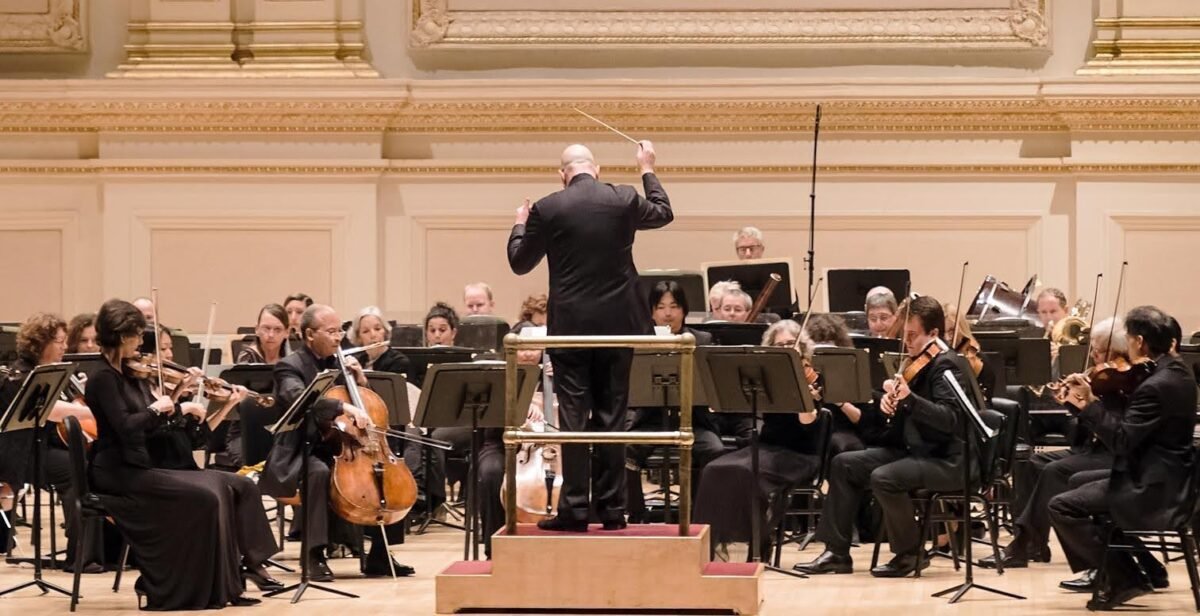
A Musical Odyssey: Leon Botstein on the Future of Opera

While opera is certainly part of traditional classical music, it stands apart from what people generally consider “classical.” It appeals to those who may not know a concerto from a symphony, but adore the emotion, drama, and humor of opera. As Bard College President Leon Botstein once wrote, while connoisseurs of classical instrumental music may have mannerisms that “can be off-putting,” opera fans have a passion more akin to people who obsess over the stars of sport, film, and rock ’n’ roll.

Botstein wrote about opera’s enduring appeal in an essay called “The Future of Opera” for The Musical Quarterly, which he edits. “Of all the genres of the Western classical musical tradition, opera has, perhaps unexpectedly, persisted as the most popular and accessible,” Leon Botstein wrote.

“Despite its reputation in popular culture as a venue for the ostentatious display of lavish wealth, it has managed to avoid the aura (in our democratic context) of the elitism and snobbery of discernment that have come to plague other forms of classical music.”

Opera has moments that have endured for centuries. Two famous examples come from Mozart: the Queen of the Night berating her daughter in The Magic Flute and the horde of demons coming for an unrepentant Don Giovanni. In addition to this ability to entertain and tell memorable stories through music, opera also has provided a vehicle for criticism of society and politics.

It’s also an art form best experienced in person. As Leon Botstein told OperaWire, people need to go to an opera “to truly understand and enjoy it. The spatial complexity which allows the viewer to piece together a unique experience from a variety of distinct elements is not reproducible on recording, audio, or video.”

Taken together, these elements point toward a bright future for opera. It’s something Leon Botstein said he has seen for himself at Bard College’s annual SummerScape, which always features a performance of a new peoduction. Audiences, he said, are growing each year.

Music is Leon Botstein’s True Profession

While he is well known as an innovator in education and one of the longest serving college presidents in the country (he’s led Bard College for more than 45 years), Leon Botstein’s lifelong passion has been music. 

A native of Zurich who immigrated to New York City as a child, Botstein studied in his youth with legendary violinist Roman Totenberg and during the summers with faculty from the National Conservatory in Mexico City. He attended the High School of Music and Art and graduated at 16 before attending the University of Chicago.

While an undergraduate student in history and philosophy at the University of Chicago, Botstein founded the university’s chamber orchestra. He also served as concertmaster and assistant conductor of the university orchestra. Botstein earned a Ph. D. from Harvard University, writing about the musical life of Vienna in the 19th and early 20th centuries. 

Botstein has served as conductor and musical director of the New York City-based American Symphony Orchestra since 1992. He is also the conductor laureate of the Jerusalem Symphony Orchestra in Israel.

Botstein said in an interview on the “Now What? With Carol Zimmer” podcast that “music is my profession, actually. I didn’t grow up to become a college administrator. So like many college administrators, I came to it through a field and in my case, the field was music.”

A Unique Approach to Opera, Composers

In a lifetime spent in the world of music, Leon Botstein said he has gained further insight in recent years into the enduring power and popularity of opera, as well as the audience appetite for performance of operatic rarities.

Bard College and Leon Botstein take the same approach to opera as the Bard Music Festival, which he co-founded in 1990, takes toward composers. Each year, the music festival focuses on one composer, using performance and discussion to place the works into the cultural and social context of the composer’s world. For example, the 2024 Bard Music Festival will focus on the life and work of Hector Berlioz. 

The music festival is one part of what is called Bard SummerScape, an annual festival of the arts. One of the featured events each year is the performance of an opera. In 2024, the event will offer a performance of Giacomo Meyerbeer’s Le Prophète.

Botstein said the annual event showcasing lesser-known operas has grown in popularity, with the demand for tickets increasing each year. “We sell out faster each time and that tells you something. It tells you that audiences want more unique experiences with the art form,” Botstein told OperaWeek. “That they aren’t satisfied with just chasing the newest star in the standard repertory. They are not chasing the new Wotan or Tosca or new Brünnhilde. They aren’t chasing the reinvention of the familiar.”

Praise for the Bard SummerScape Opera Performances

Botstein said those who attend Bard SummerScape are more interested in either newly composed opera or great opera “that is not being produced and should be produced. There is a growing curiosity for sure to see what else the art form has to offer.”

Bard College also stages operas that, while popular in their day, are rarely performed. One such choice occurred in 2023, when Bard SummerScape presented Henry VIII, the 1883 opera by Camille Saint-Saëns. The opera’s plot focuses on the king’s last days of marriage to Catherine of Aragon (he broke from the Catholic Church to divorce her), and the woman who replaced her as queen, Anne Boleyn. 

In his review of the Bard College production of Henry VIII, The New York Times’ Zachary Woolfe called it “well staged and excitingly sung,” adding that the opera “revealed itself as a grand and compelling, often thrilling work that deserves a more frequent spot on stages.” The Times also named Bard’s production of Henry VIII one of the Best Classical Music Performances of 2023.

He also called it the “ideal project” for Botstein, whom Woolfe called “a leading guide to lesser played corners of the repertory.”

Published by: Nelly Chavez